
Custom Software Development Project Timeline: Launch Guide
Building a production-ready application requires more than just writing code; it demands a structured approach to discovery, architecture, and deployment. Understanding the realistic timeline of software development is the first step toward a successful launch.
3-6 Months
Average MVP Build
2-4 Weeks
Discovery Phase
Weekly
Release Cadence
The Core Phases of a Software Development Timeline
A standard custom software development project timeline is typically divided into four major stages: Discovery, Design, Development, and Launch. Each phase has specific dependencies that influence the total duration.
01 / 05
phase 01 / 05
Discovery & Scoping
phase 02 / 05
Architecture & Design
phase 03 / 05
Engineering Sprints
phase 04 / 05
Hardening & QA
phase 05 / 05
Deployment & Launch
Phase 1: Discovery and Strategic Scoping
The first 2 to 4 weeks are dedicated to understanding the business logic. Without this, estimating software development time becomes guesswork that leads to missed deadlines.
- Stakeholder interviews and goal alignment
- Technical stack selection and build-vs-buy analysis
- User journey mapping and feature prioritization
- Risk assessment for complex integrations
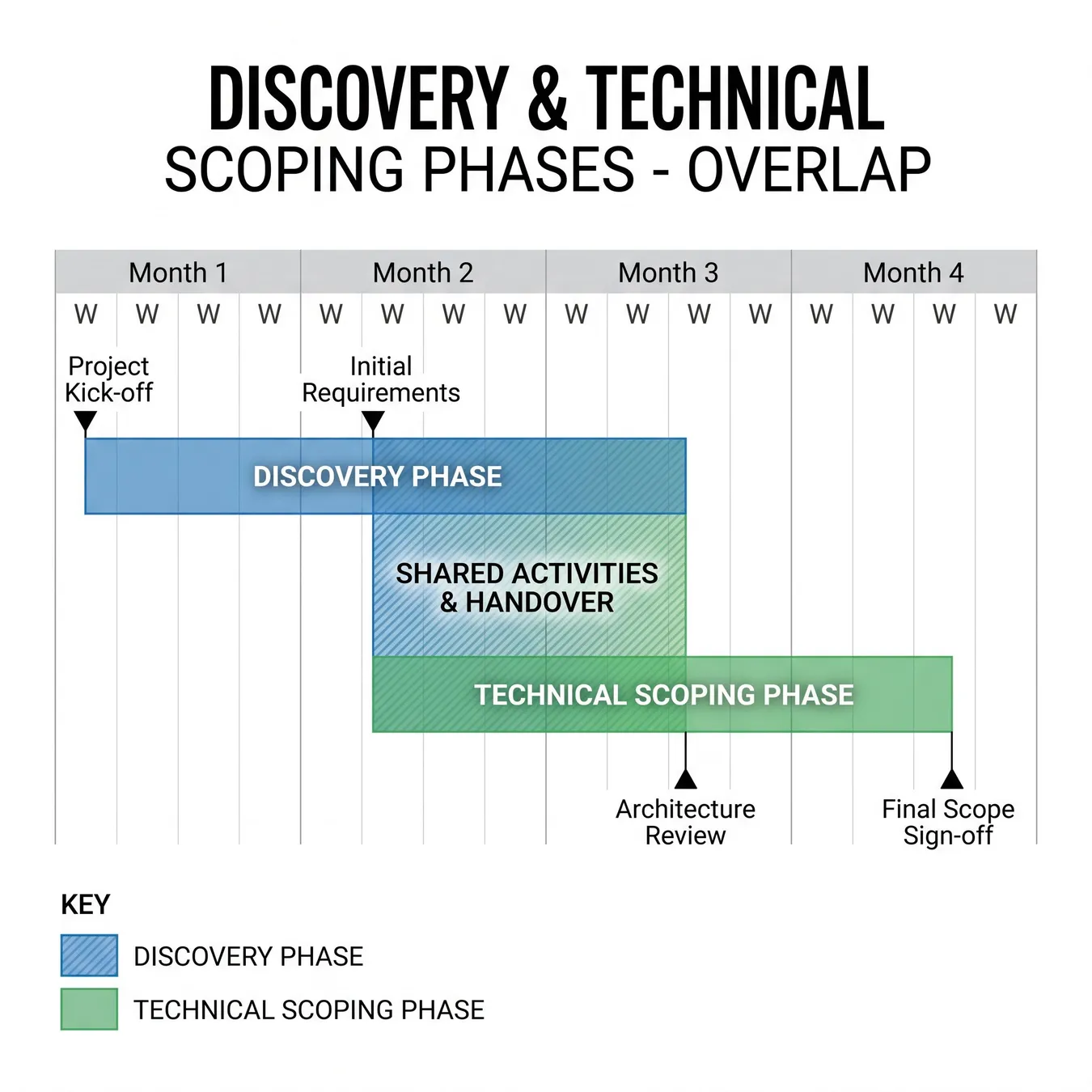
The discovery phase sets the foundation for all subsequent engineering sprints.
Phase 2: Architecture and UI/UX Design
This phase usually spans 3 to 6 weeks. It involves creating the blueprint for the system, ensuring that the frontend experience matches the backend capabilities.
Info.
// Design vs. Development
Phase 3: The Iterative Build and Engineering Sprints
The bulk of the timeline, often 3 to 9 months, is spent in development. Using agile project milestones allows teams to see progress in real-time rather than waiting for a single 'big bang' release.
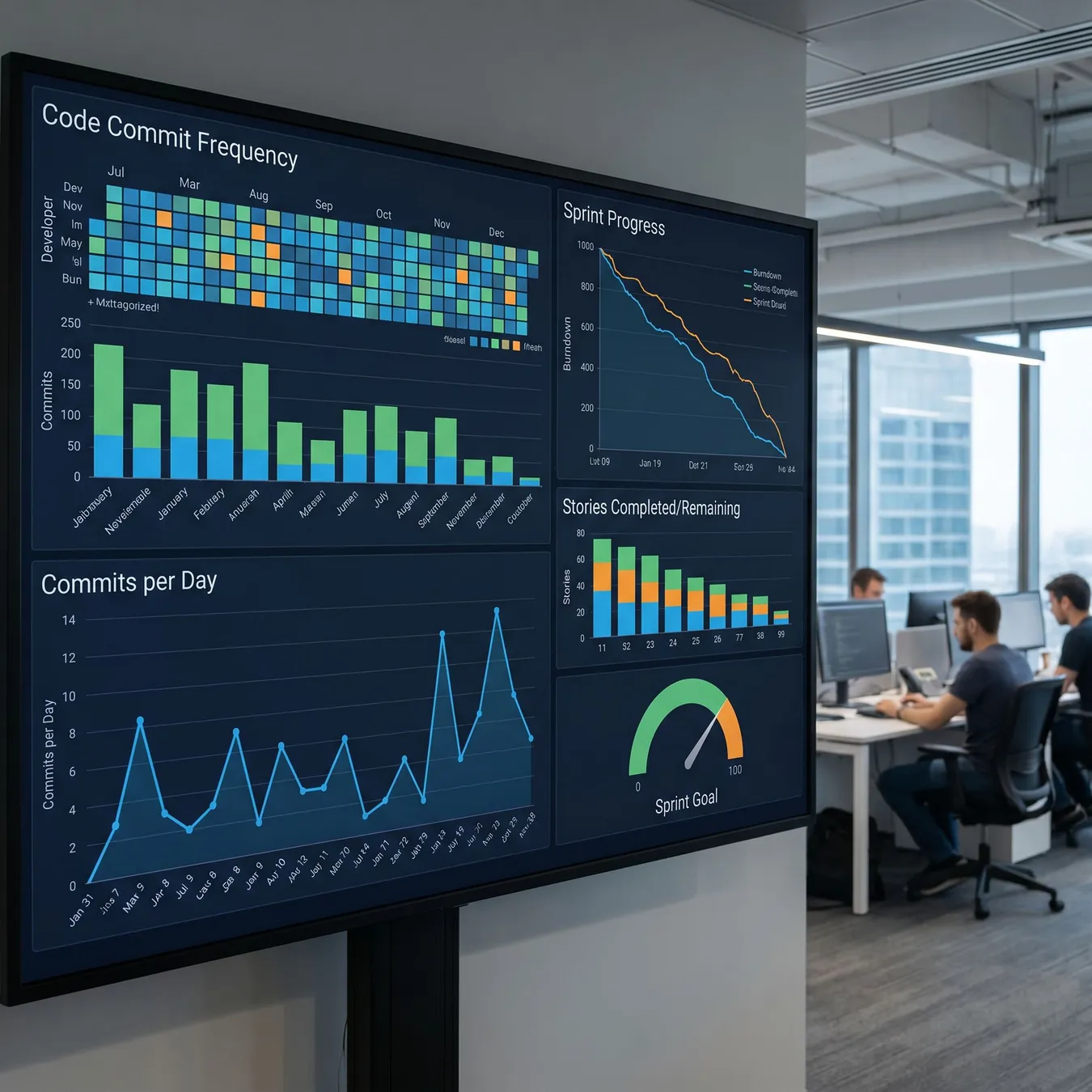
Engineering velocity is tracked through consistent sprint cycles.
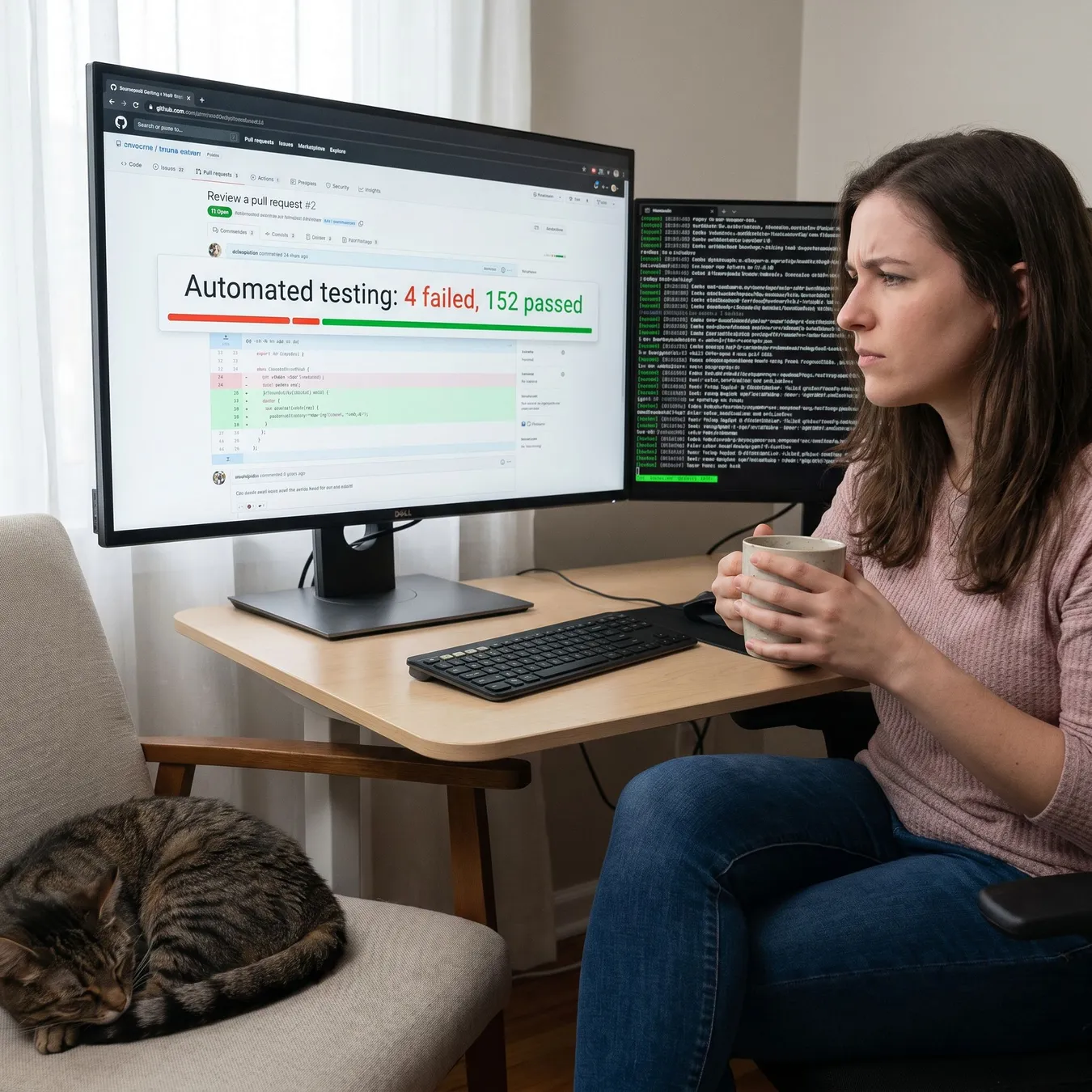
Continuous integration ensures that new code doesn't break existing features.
Factors That Influence Development Speed
Not all projects move at the same pace. Several variables can either accelerate or delay your launch date.
| Factor | Impact on Timeline | Mitigation Strategy |
|---|---|---|
| Third-Party APIs | High Delay Risk | Early integration testing |
| Legacy Data Migration | Moderate Delay | Data auditing in Discovery |
| Regulatory Compliance | High Complexity | Security-first architecture |
Strategies to Accelerate Your Launch
While quality cannot be rushed, certain engineering discipline shortens product development lifecycles without compromising the stability of the final product.
Prioritize a Minimum Viable Product (MVP)
Use automated testing from day one
Maintain a clear product backlog
Add new features mid-sprint
Ignore technical debt for speed
Skip the discovery phase entirely
Phase 4: Hardening and Production Readiness
The final 2 to 4 weeks focus on the critical steps before launching a product, including load testing and security hardening.
End-to-end user acceptance testing (UAT)
Database indexing and query optimization
SSL certificate and domain configuration
Final security vulnerability scan
Common Timeline Pitfalls to Avoid
Many projects fail to launch on time because of avoidable mistakes in the early stages of planning.
Trade-off
3 pros · 3 cons
Pros
Realistic buffer for testing
Clear definition of 'Done'
Strong technical leadership
Cons
Underestimating integration time
Vague requirements
Inconsistent feedback loops
Managing Stakeholder Expectations
Communication is the most effective tool for keeping a timeline on track. Regular demos and transparent reporting prevent end-of-project surprises.
A timeline is a living document. The goal isn't to predict the future perfectly, but to manage the variables so you can launch with confidence.
Studio 402 Engineering Team
Post-Launch: The Evolution Phase
Launch is just the beginning. A production-ready application requires ongoing maintenance and feature iteration based on real user data.
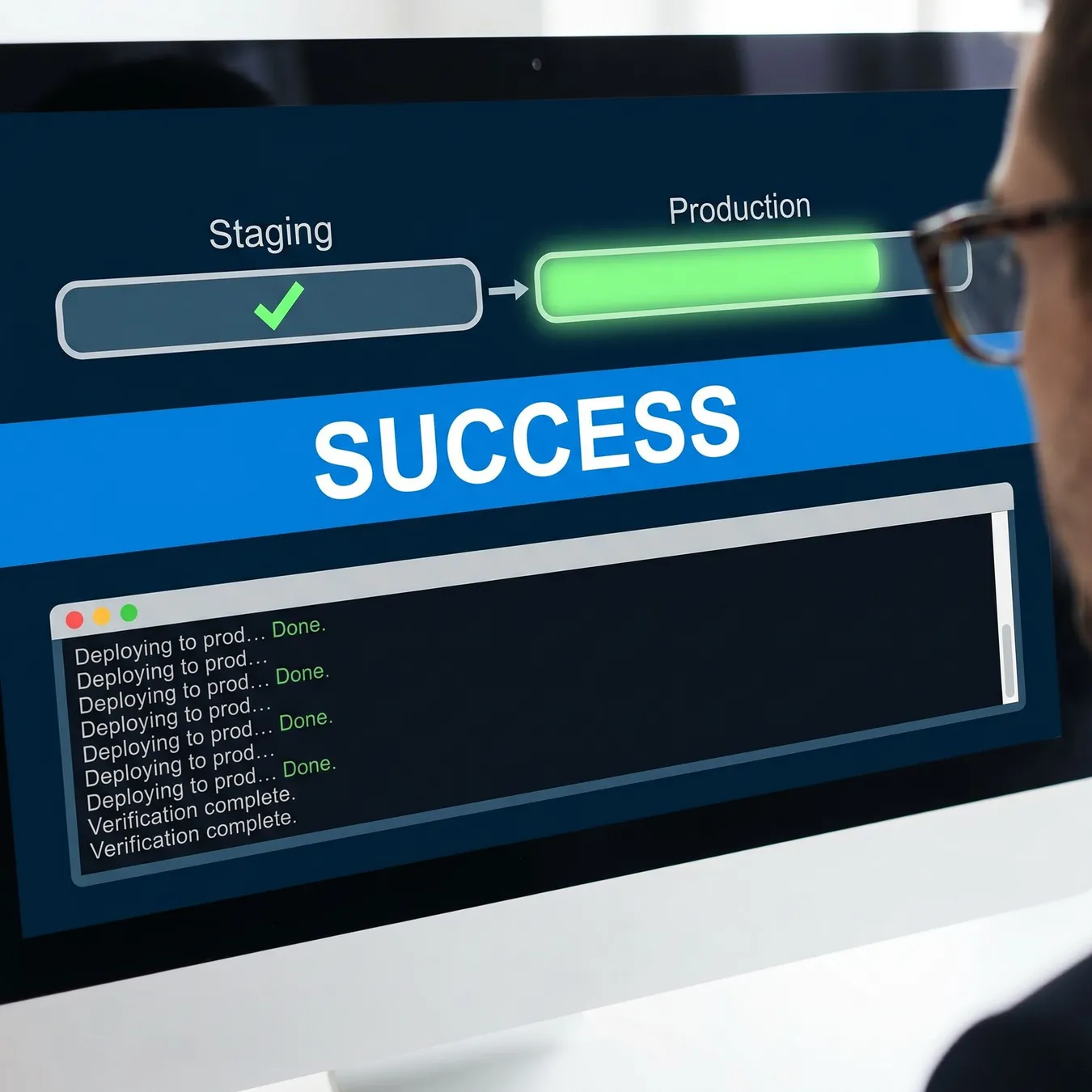
Modern CI/CD pipelines allow for safe, repeatable launches.
How Studio 402 Approaches Timelines
At Studio 402, we don't just build software; we engineer execution infrastructure. We bridge the gap between a founder's vision and a production-grade reality by applying rigorous architecture standards to every sprint.
Our Commitment to Production Quality
Whether you are building a new SaaS platform or rescuing a prototype that won't scale, our process is designed to provide predictability in an unpredictable environment.
Trusted by growth-stage teams to ship production-ready code.
From MVP to enterprise-grade systems.
Frequently Asked Questions About Timelines
Next Steps for Your Project
If you are ready to move from a vague idea to a concrete roadmap, the next step is a deep-dive discovery session to map out your specific requirements.
Ready to Build Your Production-Ready Software?
Let’s turn your roadmap into a reality. Contact Studio 402 to start a conversation about your custom software project.
Explore More Resources
Dive deeper into our methodologies and how we help companies scale their technical infrastructure.
- SaaS Build
- MVP Strategy
- Agile Delivery
- Engineering Ops
Keep reading
More in Custom Software & SaaS Development
Technical Depth and Scalability
Every timeline we build accounts for the long-term health of the codebase. We don't just ship features; we build foundations that grow with your business.

Architecture decisions made early in the timeline impact long-term scalability.
The Importance of Code Audits
For teams with existing codebases, our timeline often begins with a comprehensive audit to identify bottlenecks and security risks before adding new features.
- 01
Initial code review and security scan
- 02
Performance benchmarking
- 03
Refactoring plan development
- 04
Incremental feature rollout
Final Thoughts on Realistic Launching
A realistic timeline is your best defense against technical debt and failed launches. By following a structured phase-gate process, you ensure that every line of code serves a business purpose.