
Automating the Software Development Lifecycle with AI
Modern engineering teams are moving beyond basic CI/CD to automate software development lifecycle stages using intelligent agents and predictive models. This shift allows growth-stage companies to maintain high velocity without sacrificing the stability of their production environments.
40%
Reduction in manual code review time
2.5x
Increase in weekly deployment frequency
65%
Faster incident resolution with AI triage
The Core Pillars of AI Software Development Lifecycle Automation
To successfully automate the SDLC, teams must integrate intelligence into every phase, from planning to monitoring. This approach is a core part of modern software engineering, ensuring that every line of code is vetted against security and performance standards automatically.
- Automated requirement analysis and user story generation
- AI-driven code generation and refactoring suggestions
- Continuous security scanning and vulnerability detection
- Automated regression and performance testing
- Self-healing deployment pipelines and infrastructure
Implementing Software Development Lifecycle AI Tools
Choosing the right software development lifecycle ai tools depends on your current stack and scaling bottlenecks. Most teams start by automating the most repetitive tasks, such as unit test generation and documentation updates, before moving to agentic orchestration.
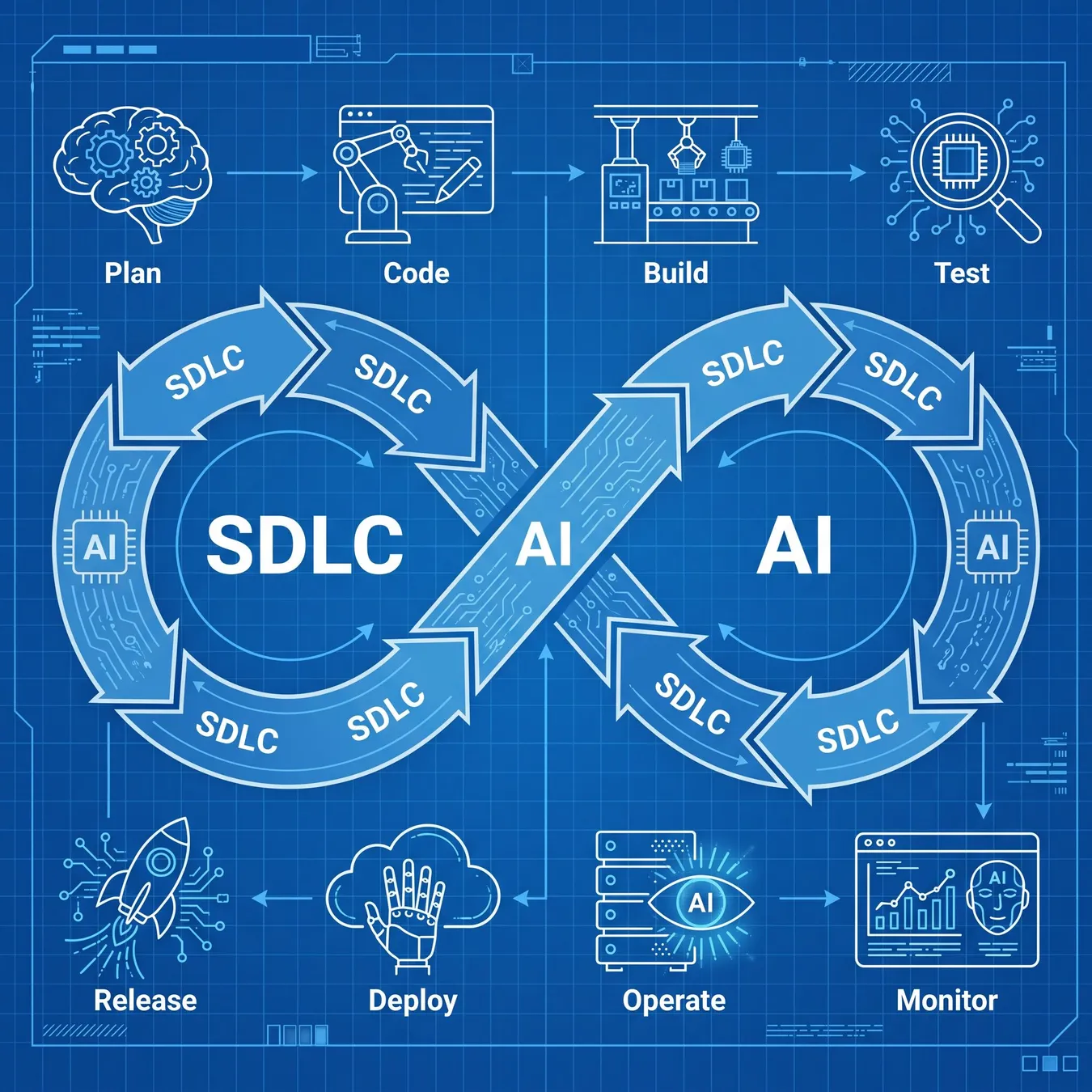
The AI-enhanced SDLC loop integrates intelligence at every stage of the delivery pipeline.
Automating the Planning and Design Phase
AI can analyze historical project data to predict sprint velocity and identify potential architectural risks early. By automating the translation of business requirements into technical specifications, teams reduce the 'lost in translation' errors that plague early-stage builds.
Tip.
// Predictive Planning
AI-Assisted Coding and Real-Time Reviews
The coding phase benefits most from ai software development lifecycle automation through real-time suggestions. However, the true value lies in automated gates that prevent insecure or unoptimized code from ever reaching the main branch.
Use AI to generate boilerplate and unit tests
Implement automated security linting in the IDE
Require human oversight for complex logic changes
Blindly accept AI-generated code without review
Use AI tools on sensitive data without local LLMs
Replace peer reviews entirely with automation
Modernizing Quality Assurance with AI
Manual testing is often the primary bottleneck in high-velocity teams. Implementing software quality assurance automation ensures that every pull request is validated against a comprehensive suite of functional and visual tests without human intervention.
| Testing Phase | Manual Approach | AI-Automated Approach |
|---|---|---|
| Unit Testing | Hand-written by devs | Generated from code logic |
| Regression | Scheduled manual runs | Continuous impact analysis |
| UI/UX | Visual inspection | Computer vision diffing |
Streamlining Infrastructure and Deployment
Automation shouldn't stop at the code level. Effective infrastructure deployment automation allows teams to provision environments and manage cloud resources using declarative code that is automatically validated for compliance.
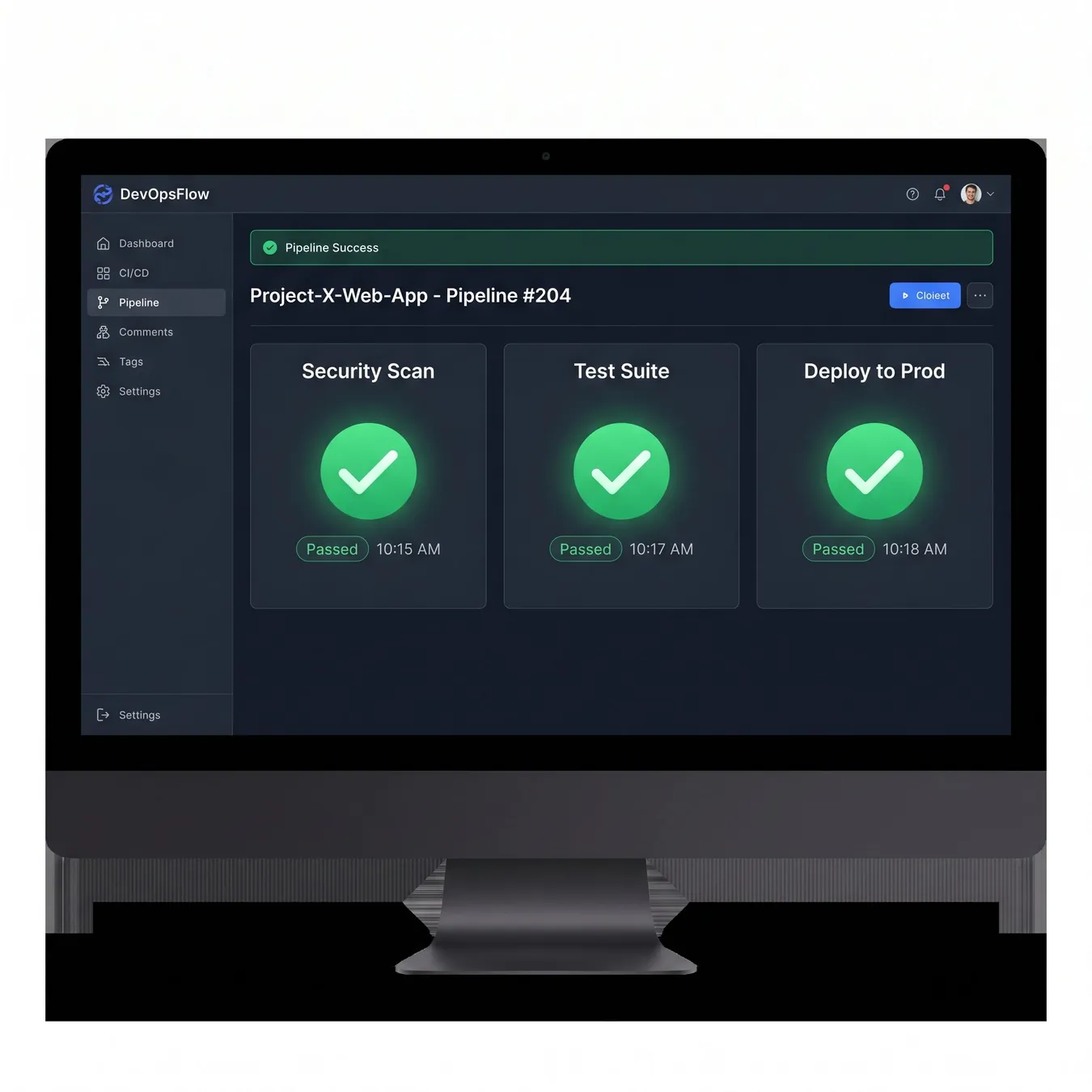
Automated deployment pipelines reduce human error in production releases.
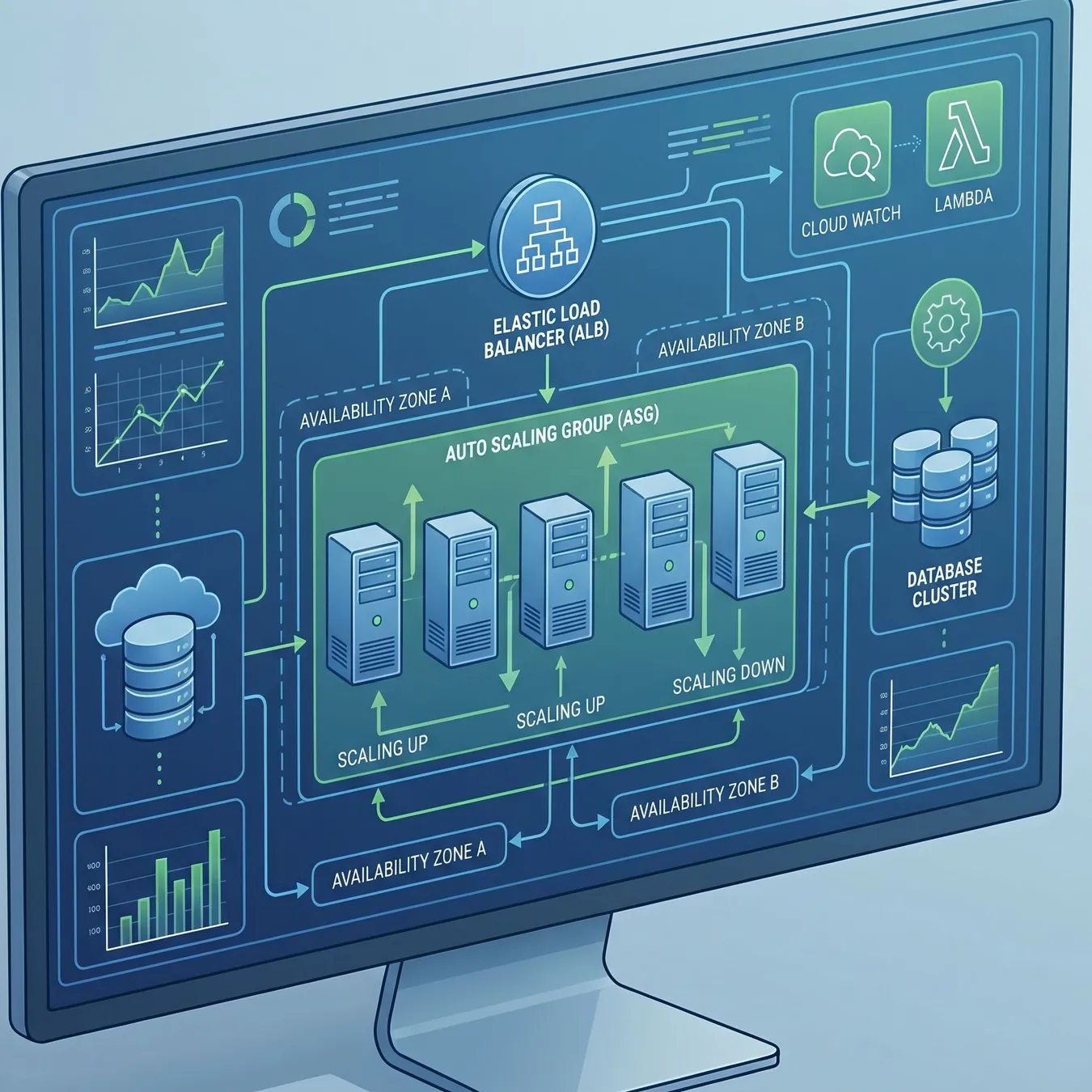
Infrastructure as Code (IaC) is the foundation of SDLC automation.
AI-Driven Security and Vulnerability Management
Security is often treated as a final check, but AI allows for 'shifting left.' Automated tools can now identify zero-day vulnerabilities and misconfigurations in real-time as developers write code, rather than waiting for a security audit.
Automated secret scanning in all repositories
AI-powered dependency vulnerability patching
Static and dynamic analysis (SAST/DAST) integration
Automated IAM policy least-privilege audits
The Role of Agentic AI in Engineering Workflows
The next frontier is agentic automation, where AI agents don't just suggest code but actively manage tasks like triaging bugs, updating Jira tickets, and even performing minor refactors across the entire codebase.
Automation is not about replacing engineers; it is about removing the cognitive load of repetitive tasks so they can focus on high-level system architecture.
Studio 402 Engineering Lead
Monitoring and Self-Healing Systems
In a fully automated SDLC, the 'Operate' phase uses AI to detect anomalies in production logs and automatically trigger rollbacks or scale resources before users experience downtime.
01 / 03
phase 01 / 03
Anomaly Detection
phase 02 / 03
Automated Triage
phase 03 / 03
Self-Healing Action
Scaling Automation for Growth-Stage Teams
As teams grow, manual coordination becomes the primary drag. Implementing enterprise intelligent automation principles early ensures that your engineering culture scales alongside your user base without a linear increase in overhead.
Common Pitfalls in SDLC Automation
Many teams fail by trying to automate everything at once. This leads to 'automation debt' where the tools themselves require more maintenance than the manual tasks they replaced.
Trade-off
3 pros · 3 cons
Pros
Consistent code quality across the team
Faster time-to-market for new features
Reduced burnout from repetitive manual QA
Cons
High initial setup and configuration time
Risk of over-reliance on AI suggestions
Potential for 'noisy' automated alerts
Measuring the ROI of SDLC Automation
To justify the investment, track DORA metrics: Deployment Frequency, Lead Time for Changes, Change Failure Rate, and Time to Restore Service. Automation should improve at least three of these within the first quarter.
The Future of AI-Native Engineering
By 2026, we expect the SDLC to be largely autonomous for standard SaaS features, allowing human engineers to focus exclusively on unique business logic and complex integrations.

The future of software is built on autonomous engineering pipelines.
How Studio 402 Implements Automated SDLCs
At Studio 402, we don't just build products; we build the systems that build products. We specialize in helping growth-stage teams transition from fragile, manual workflows to durable, AI-native engineering infrastructures.
Whether you are rescuing a prototype that won't scale or building a new platform from scratch, our approach ensures that automation is baked into the foundation, not bolted on as an afterthought.
Trusted by venture-backed startups to ship production-ready code.
Studio 402 has deployed over 50+ automated engineering environments.
Frequently Asked Questions
Next Steps for Engineering Leaders
If your team is struggling with slow release cycles or frequent regressions, it's time to audit your lifecycle. A transition to automated engineering is a strategic move that pays dividends in both product quality and team morale.
Ready to Automate Your Engineering Workflow?
Stop fighting manual bottlenecks. Let Studio 402 design and build a production-ready automated SDLC tailored to your product.
Keep reading
More in AI-Assisted Engineering & QA
- Engineering Ops
- AI Integration
- DevOps
- SaaS Scaling
Studio 402 provides the technical depth needed to turn fragile prototypes into durable systems. We help growth-stage companies ship faster and build foundations that grow.
Our team combines product engineering, platform depth, and AI-native systems design to deliver outcomes that survive real-world scale.
From MVP development to post-vibe-code rescue, we are the senior technical partner you need for high-stakes software execution.
Contact us today at studio@402.studio to discuss your project and see how we can harden your production environment.
We look forward to helping you build the future of your product with intelligent, automated systems.