
Custom Workflow Automation Software for Scaling Teams
Manual operational drag is the silent killer of growth-stage companies. As teams scale, the spreadsheets and disconnected tools that once worked become bottlenecks that stifle velocity. Implementing a custom workflow automation system is no longer a luxury; it is a requirement for maintaining production-ready scale in 2026.
- Operational Efficiency
- Custom Engineering
- Scalable Systems
- AI-Native
What is Workflow Automation Software?
At its core, workflow automation software is a digital infrastructure designed to orchestrate tasks, data, and human approvals without manual intervention. Unlike generic off-the-shelf tools, custom workflow automation solutions are engineered to fit your specific business logic and high-volume production needs.
- Trigger-based task execution
- Data orchestration between siloed platforms
- Conditional logic and branching paths
- Automated reporting and audit trails
- Human-in-the-loop approval gates

Visualizing complex automated logic within a custom platform.
The Benefits of Custom Workflow Automation Systems
Building a bespoke workflow automation system allows you to eliminate the 'no-code ceiling' where generic platforms fail to handle complex data structures or security requirements. These systems provide the durability needed for mission-critical operations.
85%
Reduction in manual data entry
10x
Increase in processing speed
0%
Human error in automated steps
Eliminating Operational Drag
Operational drag occurs when your team spends more time managing the process than doing the work. By utilizing process workflow management software, you can reclaim hundreds of hours per month that were previously lost to administrative overhead.
Key Components of Modern Automation Solutions
Modern workflow automation solutions must be more than just simple 'if-this-then-that' scripts. They require a robust architecture that supports high availability, security, and deep integration with your existing tech stack.
Secure API integrations with third-party services
Real-time observability and error logging
Role-based access control (RBAC)
Scalable cloud infrastructure
How to Identify Automation Opportunities
Not every process should be automated immediately. Start by identifying high-volume, repetitive tasks that follow a predictable set of rules. These are the primary candidates for automation.
| Process Type | Automation Potential | Complexity |
|---|---|---|
| Data Entry | High | Low |
| Customer Onboarding | High | Medium |
| Financial Reconciliation | Medium | High |
| Creative Strategy | Low | Very High |
Engineering Complex Workflow Automation
When your business logic involves multiple stakeholders and conditional branching, you need complex workflow automation that can handle edge cases without breaking. This level of engineering ensures that your systems remain stable as you grow.
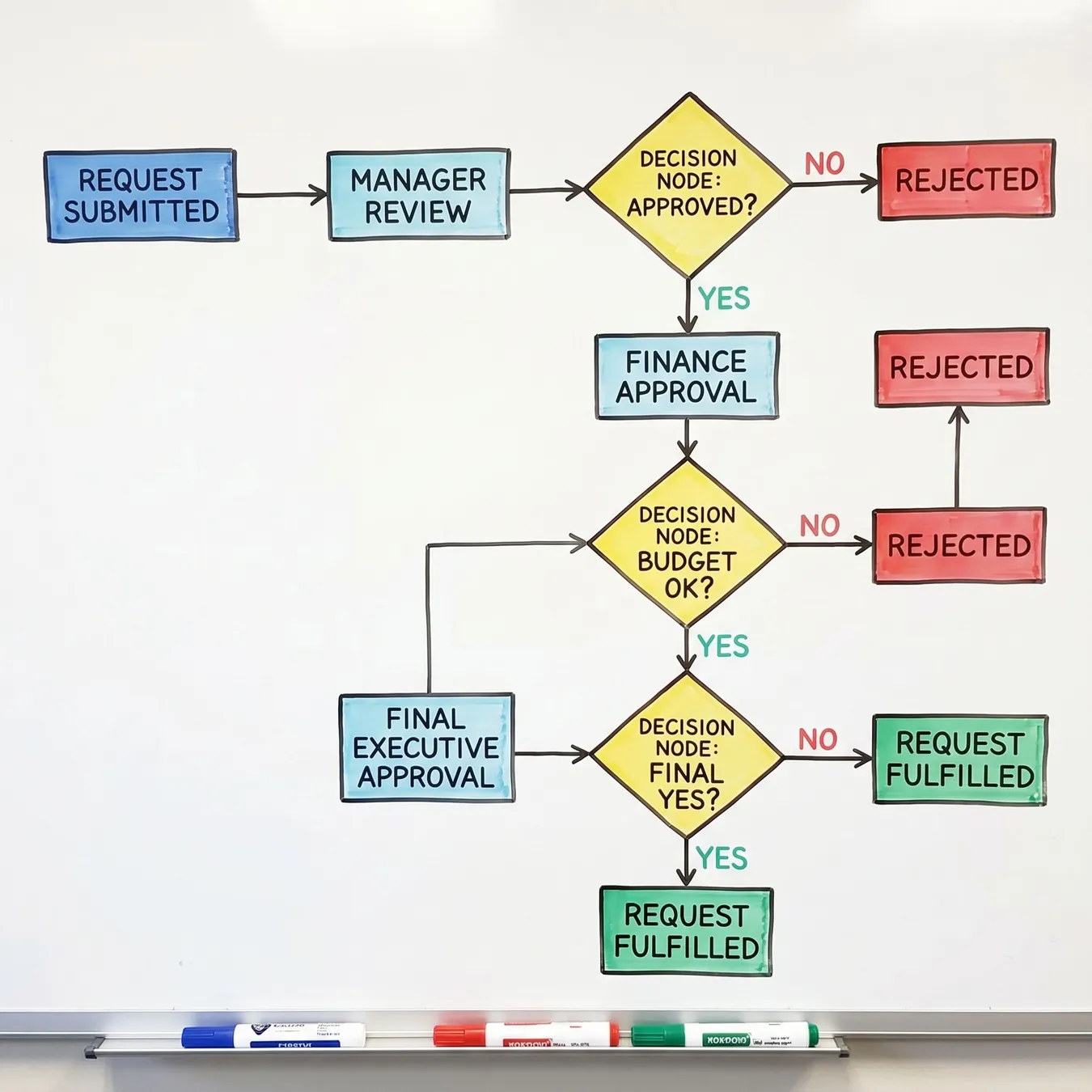
Complex branching logic.
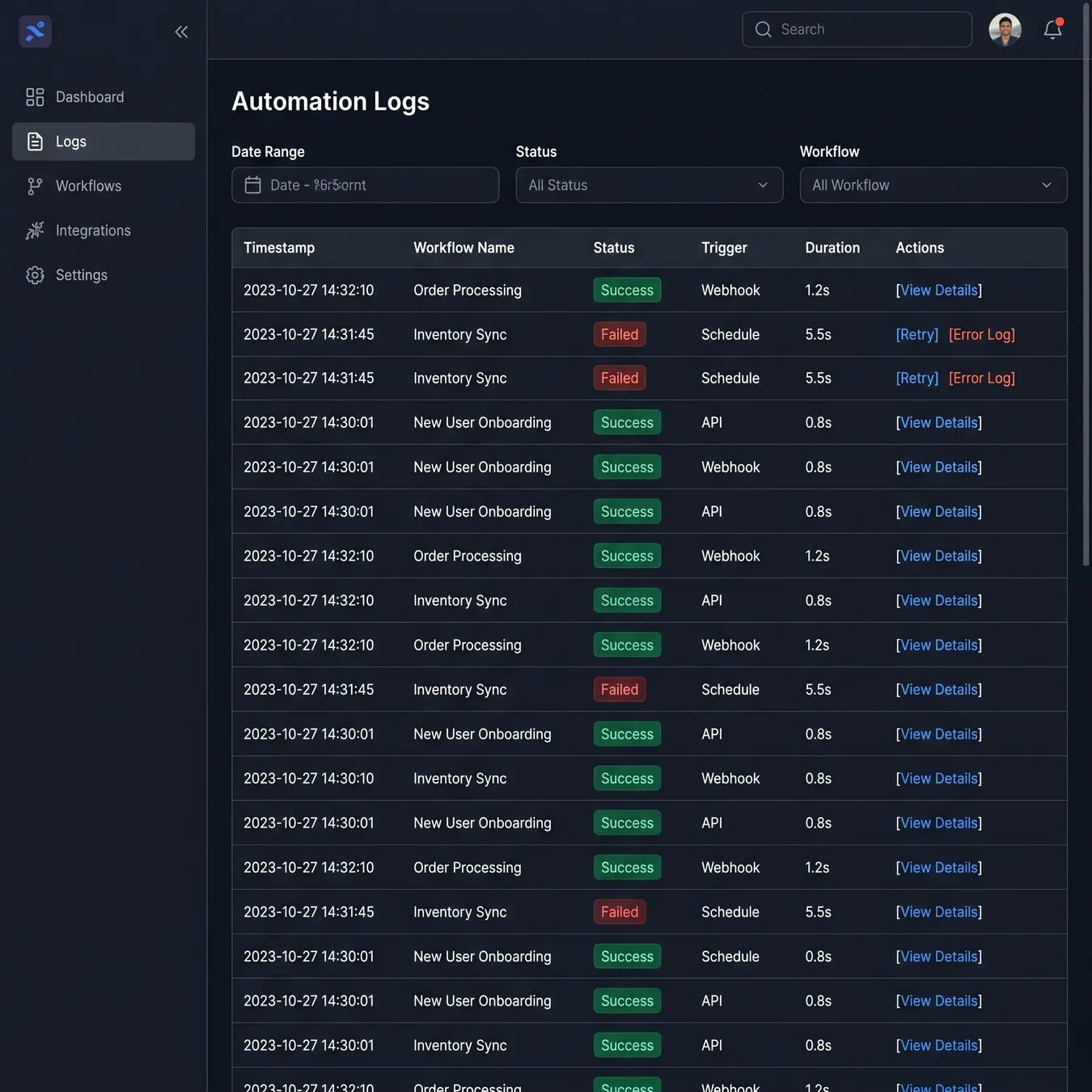
Operational transparency.
The Role of AI in Workflow Automation
In 2026, automation is increasingly driven by AI. Intelligent agents can now handle unstructured data, summarize communications, and make low-level decisions that previously required human intervention.
Tip.
// Pro Tip
Managing People-Centric Workflows
Automation isn't just about moving data; it's about coordinating people. Effective people workflow automation ensures that the right person gets the right information at the right time, reducing friction in team handoffs.
Common Pitfalls in Workflow Automation
Map the manual process fully before coding
Build in human-in-the-loop approval steps
Prioritize security and data privacy
Use modular architecture for easy updates
Automate a broken or inefficient process
Rely solely on fragile no-code triggers
Ignore error handling and edge cases
Hardcode credentials or sensitive data
Selecting Workflow Software Companies
Choosing between different workflow software companies requires evaluating their technical depth and understanding of your specific industry. A partner should offer more than just implementation; they should provide strategic architecture.
Step-by-Step: Implementing Your Automation System
01 / 04
phase 01 / 04
Discovery & Mapping
phase 02 / 04
Architecture Design
phase 03 / 04
MVP Development
phase 04 / 04
Hardening & Scale
Why Custom Platforms Outperform No-Code
Trade-off
4 pros · 3 cons
Pros
Unlimited scalability and performance
Complete control over data and security
Deep integration with proprietary systems
No per-user or per-task licensing fees
Cons
Higher initial development cost
Requires technical expertise to maintain
Longer initial build time than simple scripts
Frequently Asked Questions
Bridging the Gap to Production-Ready Software
If you have reached the limits of your current tools or are struggling with manual operational drag, it is time to transition to a durable, custom-engineered solution. Studio 402 specializes in building the infrastructure that scaling teams need to succeed.
The difference between a startup that scales and one that stalls is often the quality of their internal systems. Automation is the leverage that allows small teams to deliver enterprise-grade results.
Studio 402 Engineering Team · Systems Architects
Our Approach to Automation
We don't just build scripts; we build platforms. Our engineering process focuses on durability, observability, and long-term maintainability, ensuring your automation grows alongside your business.

Expert engineering for high-stakes operations.
Explore More Automation Insights
Trusted by growth-stage teams to automate mission-critical logic.
Updated for July 2026
Ready to Eliminate Manual Drag?
Stop fighting your tools and start scaling your business with custom workflow automation engineered for production.
Keep reading
More in AI Integration & Workflow Automation
Technical Deep Dive: Scalability and Performance
For teams processing thousands of transactions or leads per hour, performance is non-negotiable. We utilize modern cloud infrastructure and asynchronous processing to ensure your workflows never lag.
- Serverless execution for cost-efficiency
- Message queues for reliable task delivery
- Distributed database architecture
- End-to-end encryption for data in transit
Future-Proofing Your Operations
Technology moves fast. Our systems are designed to be modular, allowing you to swap out AI models or third-party providers without rebuilding your entire automation engine.

High-velocity data orchestration in action.
The Studio 402 Difference
We are not just a development shop; we are a product studio. We partner with you to understand your operational goals and build the software that makes those goals achievable.
Studio 402 transformed our chaotic onboarding process into a seamless, automated machine. We've doubled our capacity without adding a single operations hire.
Final Thoughts on Scaling with Automation
The path to scale is paved with durable systems. By investing in custom workflow automation software today, you are building the foundation for your company's future growth.