
Agentic AI in Finance: Workflows and Operational Excellence
The landscape of financial operations is shifting from simple automation to agentic ai in finance. Unlike traditional scripts, agentic systems can reason through complex data, make decisions within set parameters, and manage end-to-end accounting workflow automation without constant manual intervention.
- Agentic AI
- Finance Ops
- Automation
- 2026 Trends
What is Agentic AI in Finance?
Agentic AI refers to autonomous systems capable of planning and executing multi-step tasks. In a financial context, this means an AI agent doesn't just flag an error; it investigates the source, cross-references it with bank statements, and proposes a reconciliation entry.
Implementing these systems requires a focus on intelligent automation in finance to ensure that the AI operates within regulatory and internal compliance frameworks.
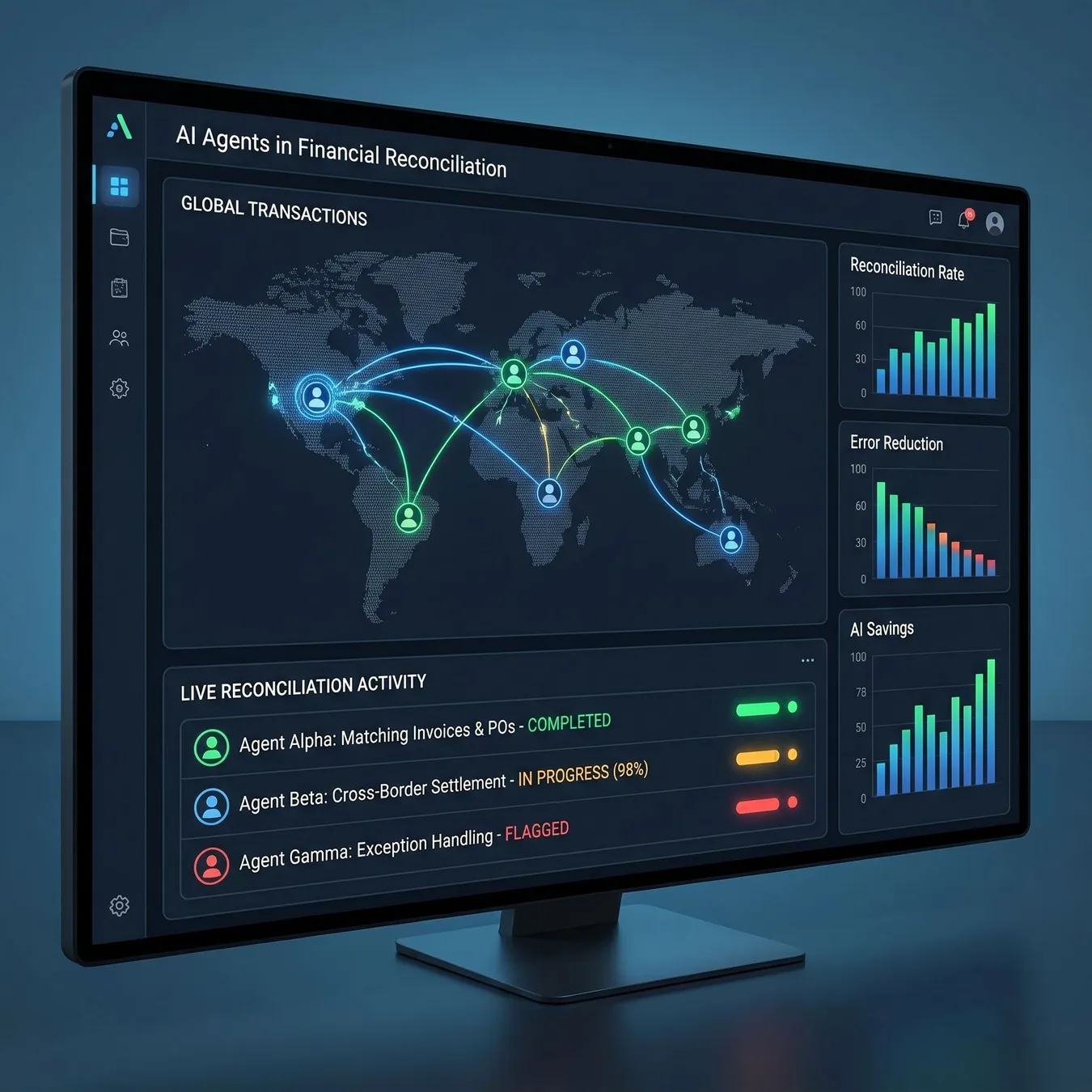
Agentic workflows provide real-time visibility into automated financial tasks.
The Role of Human-in-the-Loop Oversight
High-stakes financial operations cannot be left entirely to autonomous agents. Human-in-the-loop ai in finance automation ensures that while the AI handles the bulk of the processing, a human expert reviews and approves significant transactions or edge cases.
Info.
// Safety First
By utilizing human-in-the-loop services for ai agents, firms can maintain 100% accuracy while scaling their operational volume significantly.
Core Benefits of Finance Workflow Automation
85%
Reduction in Manual Entry
4x
Faster Month-End Close
99%
Error Rate Reduction
Beyond speed, finance workflow automation provides a digital paper trail for every action taken, which is essential for modern audit requirements.
Automating Accounting Workflows: Key Use Cases
Automated Reconciliation
AI agents can match thousands of transactions across multiple bank accounts and ERP systems in seconds, flagging only the discrepancies for human review.
Accounts Payable and Receivable
Implementing accounts payable workflow automation allows for touchless invoice processing, from data extraction to payment scheduling.
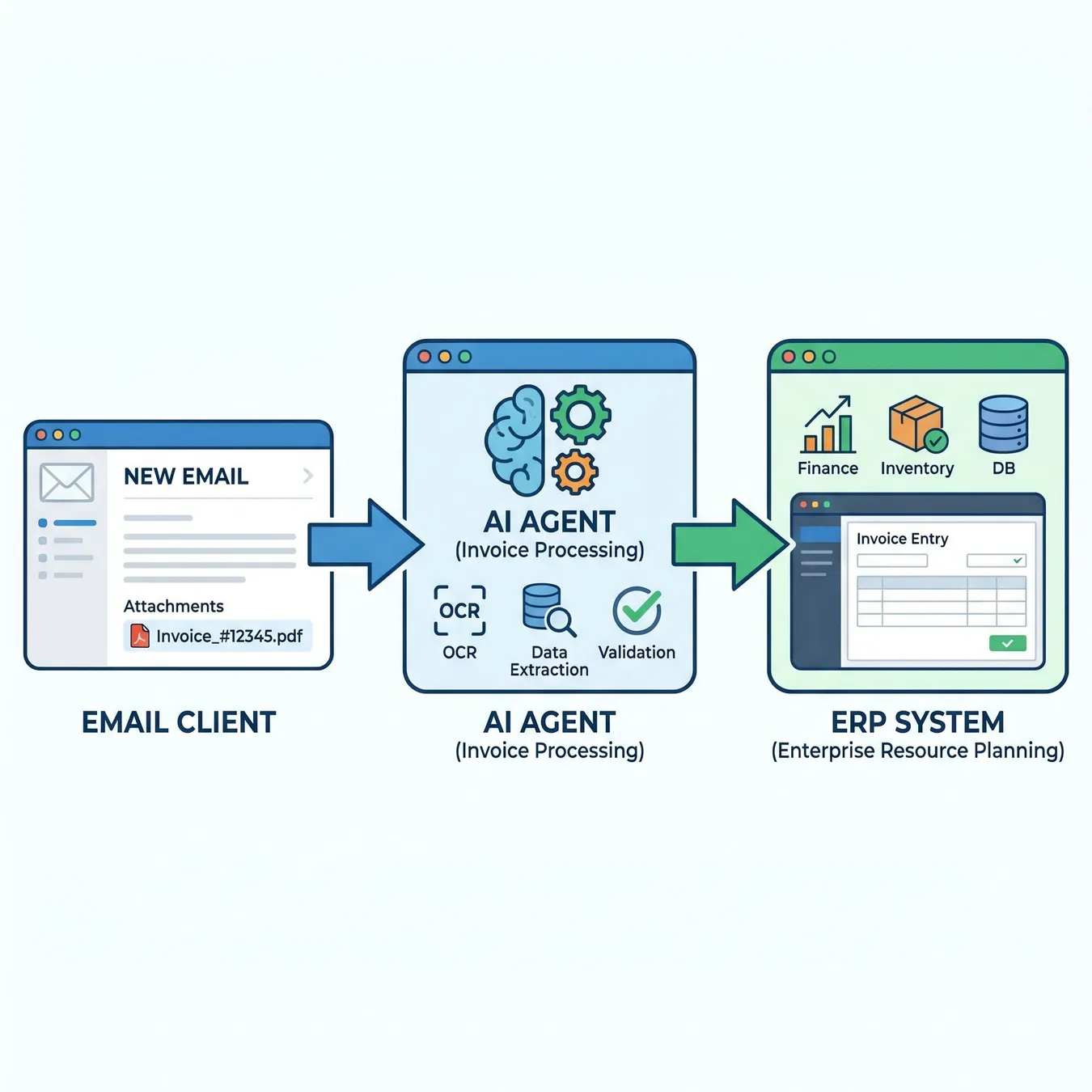
AP Automation Flow
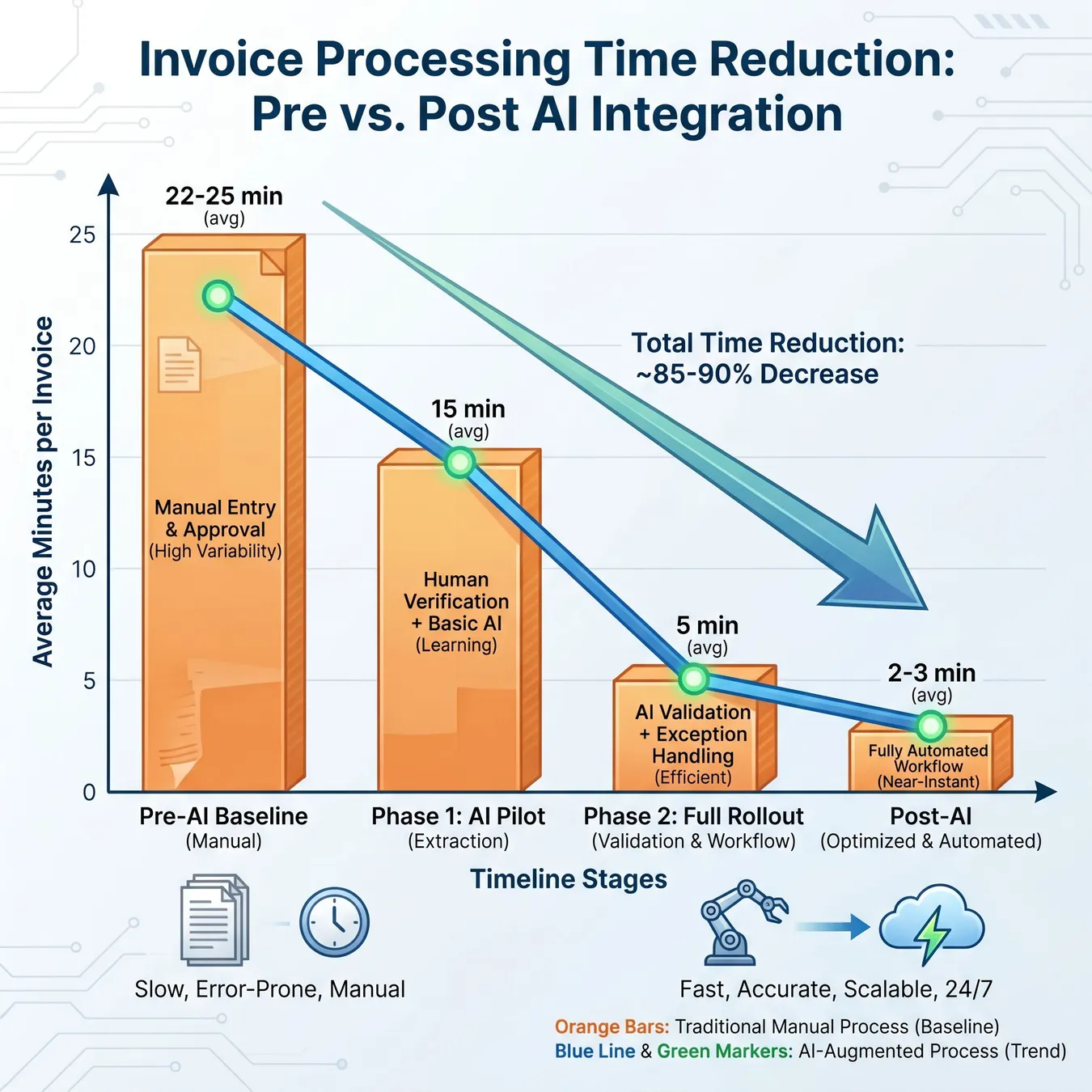
Efficiency Gains
How to Start Automating Accounting Workflows
Transitioning to an agentic model requires a structured approach. You cannot automate a broken process; you must first map and optimize the manual steps.
01 / 04
phase 01 / 04
Process Audit
phase 02 / 04
Tool Selection
phase 03 / 04
Pilot Program
phase 04 / 04
Full Scale
Comparison: Traditional vs. Agentic Automation
Trade-off
3 pros · 3 cons
Pros
Context-aware reasoning
Adapts to new data structures
Self-correcting workflows
Cons
Rigid if-then logic
Breaks with format changes
Requires manual exception handling
Ensuring Compliance and Security
Security is paramount when automating accounting workflows. Systems must use encrypted data pipelines and role-based access controls to protect sensitive financial data.
Encrypt all financial data at rest and in transit
Maintain clear logs of all AI-driven decisions
Require human approval for large transfers
Use public LLMs for sensitive financial analysis
Grant AI agents unrestricted access to bank APIs
Ignore the need for regular system audits
The Future of Financial Operations
By 2026, the standard for finance teams will be lean, agent-augmented departments where humans focus on strategy and AI handles the operational heavy lifting.
Agentic AI hasn't just saved us time; it has completely eliminated the month-end stress that used to burn out our best accountants.
Alex Rivera · CFO at ScaleOps
Common Questions About Finance AI
Bridging to Production-Grade Systems
While the potential for AI in finance is vast, many off-the-shelf tools fail to meet the rigorous security and reliability standards required for professional use.
If you are ready to move beyond demos, you need a partner who understands both finance and accounting automation and the engineering required to build durable systems.
How Studio 402 Can Help
At Studio 402, we specialize in building custom AI integrations that solve real operational bottlenecks. We don't just build chatbots; we build agentic systems that work.
Custom AI agent architecture for finance
Secure ERP and bank API integrations
Human-in-the-loop approval interfaces
Full audit trail and compliance logging
Ready to Automate Your Finance Ops?
Stop fighting manual spreadsheets and fragile scripts. Let's build a production-ready system that scales with your business.
Build Your Agentic Finance Workflow
Contact Studio 402 today to discuss your financial automation needs and build a system that lasts.
Explore More Resources
Keep reading
More in AI Integration & Workflow Automation
Operational Excellence Metrics
| Metric | Manual Process | Agentic AI System |
|---|---|---|
| Processing Time | 48 Hours | 15 Minutes |
| Accuracy | 92% | 99.9% |
| Audit Readiness | Manual Prep | Instant Export |
These metrics represent the shift from reactive accounting to proactive financial management facilitated by intelligent systems.
Scaling Without Headcount
One of the primary drivers for agentic AI is the ability to handle a 10x increase in transaction volume without hiring 10x more staff.
Trusted by growth-stage fintechs to manage over $500M in monthly volume.
Verified operational data 2026
Custom vs. Off-the-Shelf
While generic tools offer basic features, custom software allows for the deep integration with proprietary data that truly drives competitive advantage.
Final Thoughts on Finance AI
The transition to agentic AI is not just a technical upgrade; it is a strategic move toward operational excellence in a data-driven world.