
Modernizing Manual Processes with Intelligent Systems
Manual operational drag is the silent killer of growth-stage companies. When your team relies on spreadsheets and manual coordination, scaling becomes a matter of adding headcount rather than increasing leverage.
To automate manual business processes effectively, you must first identify the high-friction tasks that consume the most time and are prone to human error. This guide explores how to refactor these into automated digital workflows.
40%
Time spent on manual data entry
25%
Reduction in operational costs
10x
Faster processing speed
Identifying Manual Processes That Can Be Automated
Not every task is a candidate for automation. The best manual processes that can be automated are those that are repetitive, rule-based, and high-volume.
- Data entry and synchronization between disconnected tools
- Approval workflows for invoices or internal requests
- Customer onboarding and document verification
- Report generation and distribution
- Lead qualification and initial outreach
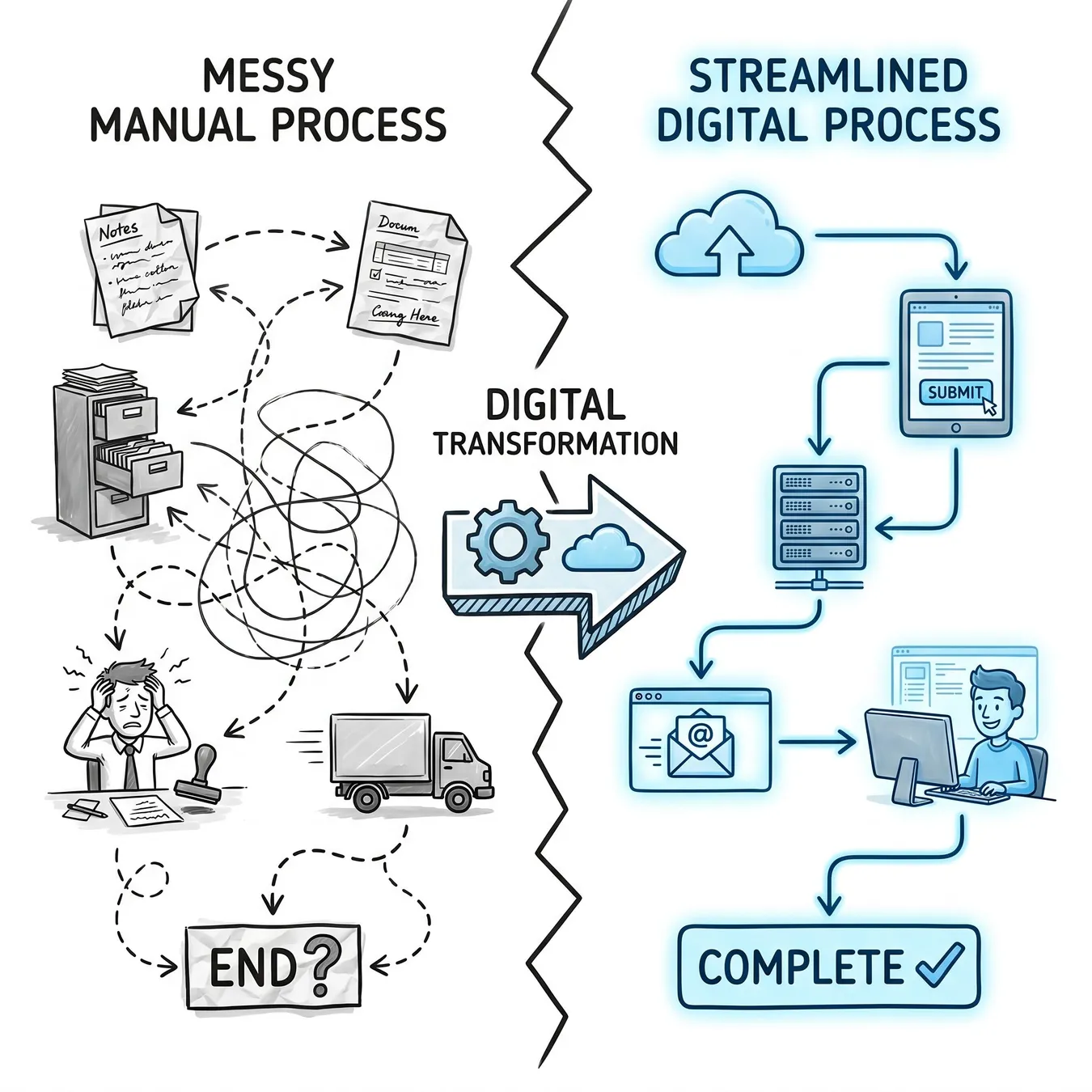
Visualizing the transition from manual drag to digital efficiency.
The Methodology of Process Optimization and Automation
Before applying technology, you must engage in process flow optimization. Automating a broken process only creates faster mistakes.
- 01
Audit current manual touchpoints and bottlenecks.
- 02
Simplify the logic by removing redundant steps.
- 03
Design the digital architecture for the new system.
- 04
Implement automation with human-in-the-loop safeguards.
- 05
Monitor and iterate based on real-world performance.
The Automation of Manual Tasks Using AI
Modern systems allow you to automate tasks ai-style by using LLMs and agents to handle unstructured data that traditional software couldn't touch.
Info.
// AI vs. Traditional Automation
Automating Work Processes with Intelligent Agents
When you automate work processes today, you aren't just writing scripts. You are building intelligent agents that can interact with your existing software stack.
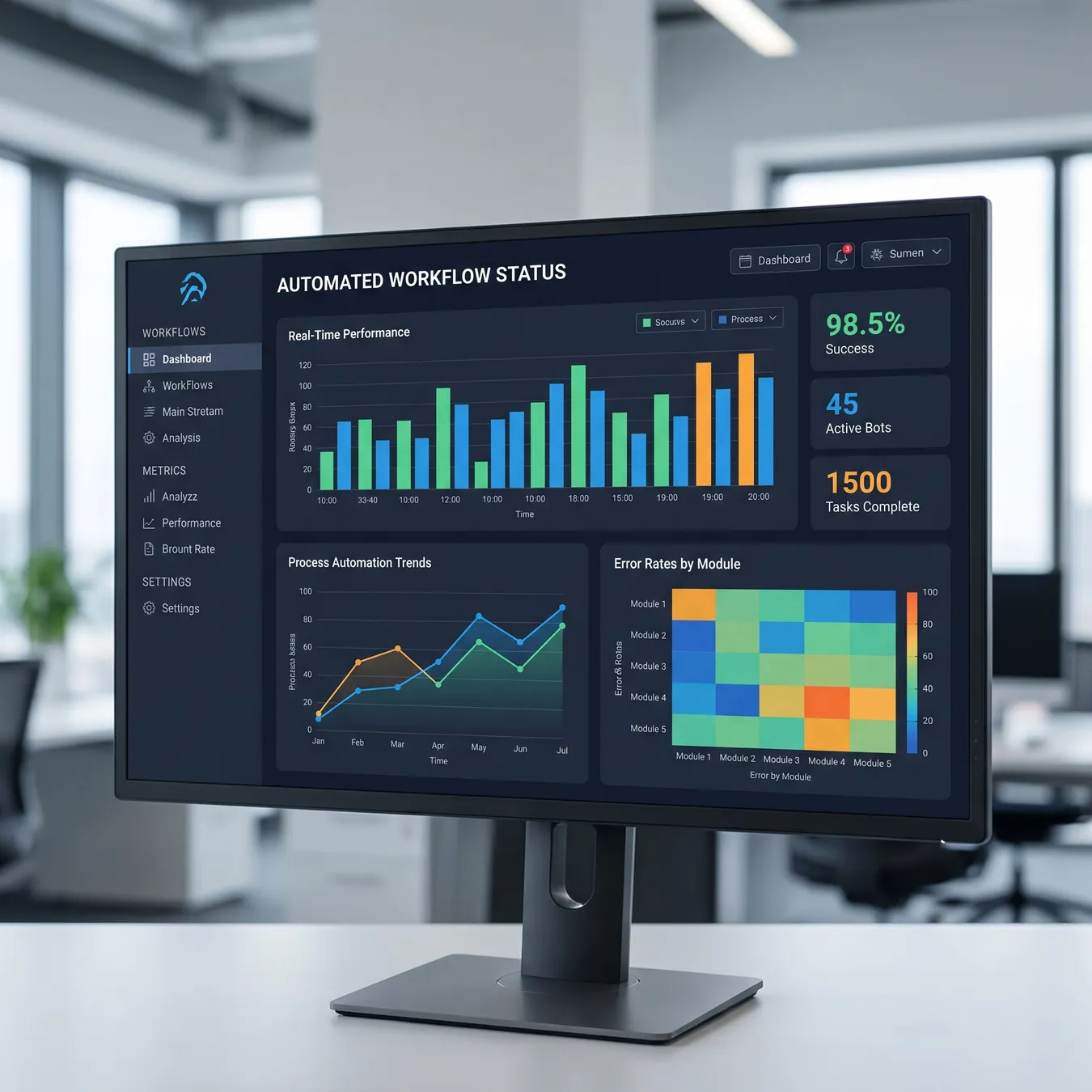
Real-time monitoring of automated systems.
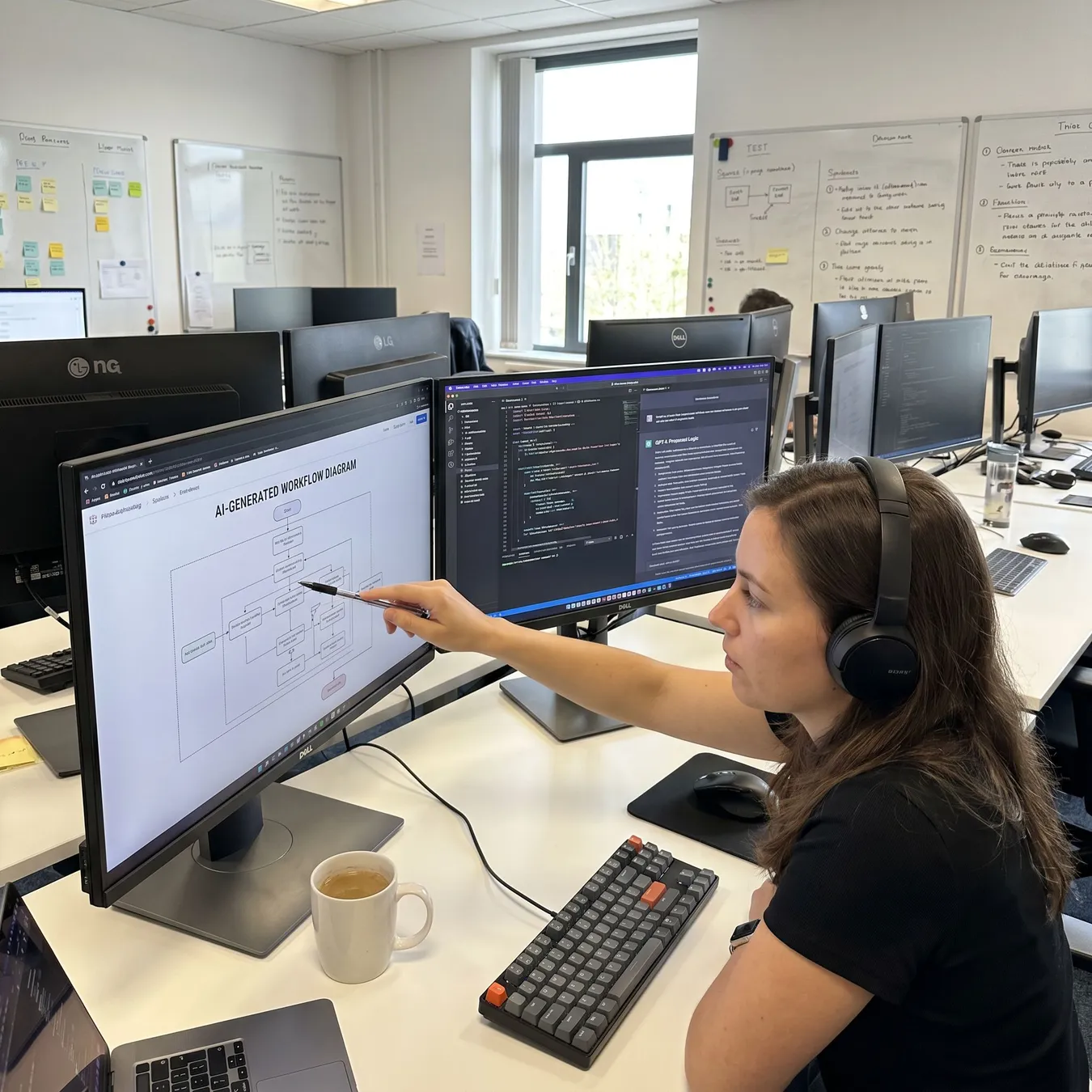
Human oversight in intelligent automation.
Benefits of Automated Digital Workflows
Transitioning to automated digital workflows provides more than just speed; it provides the auditability and consistency required for enterprise scale.
| Feature | Manual Process | Automated System |
|---|---|---|
| Error Rate | High (Human Error) | Near Zero |
| Scalability | Linear (Needs People) | Exponential |
| Audit Trail | Incomplete/Manual | Automatic/Digital |
Common Pitfalls in Process Modernization
Start with the most painful bottleneck.
Ensure data clean-up before migration.
Include end-users in the design phase.
Build in human-in-the-loop approvals.
Automate a process you don't understand.
Ignore edge cases and exceptions.
Use fragile no-code tools for core logic.
Forget to document the new digital system.
Case Study: Modernizing Financial Operations
A growth-stage fintech company was managing partner reconciliations via complex spreadsheets. By implementing custom workflow automation software, they reduced processing time from days to minutes.
The transition from manual spreadsheets to a custom digital system was the single biggest driver of our operational leverage this year.
Sarah Chen · COO of ScaleFin
How to Refactor Manual Workflows
Refactoring is not just about replacing a person with a bot. It is about rethinking how data moves through your organization to create automated workflow solutions.
01 / 04
phase 01 / 04
Discovery
phase 02 / 04
Architecture
phase 03 / 04
Build
phase 04 / 04
Deployment
Frequently Asked Questions
Bridging the Gap with Studio 402
At Studio 402, we specialize in helping companies move past the limitations of spreadsheets and fragile no-code setups. We build the production-ready systems that turn manual drag into operational leverage.
Whether you are looking to integrate AI agents or refactor a legacy manual process, we provide the engineering depth to ensure your new workflows are secure, scalable, and maintainable.
Trusted by venture-backed startups and mid-market operators to build durable systems.
Studio 402: Engineering for real-world scale.
Our Approach to Intelligent Systems
We don't just ship code; we design systems. Our approach combines product engineering with AI-native design to solve your specific operational bottlenecks.
Custom architecture review
AI and LLM integration
Scalable cloud infrastructure
Human-in-the-loop safety rails
Ready to Modernize Your Operations?
If your team is drowning in manual tasks, it is time to build a foundation that grows with your business. Let's discuss how we can refactor your workflows into intelligent digital systems.
Start a Conversation with Studio 402
Stop managing spreadsheets and start scaling your business with custom-built intelligent systems.
Explore More Resources
Keep reading
More in AI Integration & Workflow Automation
Technical Considerations for 2026
As we move further into 2026, the standard for 'automated' has shifted. It no longer means simple scripts; it means resilient, observable systems that can handle the complexity of modern business data.
Security and compliance are now at the forefront of automation projects. Any system modernizing manual processes must include robust auth, permissions, and audit trails by default.

The infrastructure behind modern automated systems.
The Future of Manual Task Refactoring
The goal of refactoring is to move from reactive manual work to proactive system management. This shift allows your best people to focus on high-value strategy rather than data entry.
Studio 402 is here to be your partner in that transition. We provide the senior technical leadership and execution power to make modernization a reality.
- AI Integration
- Workflow Automation
- Custom Software
- Scalability
Contact us today at studio@402.studio to begin your journey toward a more efficient, automated future.
Final thoughts on modernization: The cost of inaction is often higher than the cost of implementation. Manual drag compounds over time, slowing down every part of your organization.