
Designing Agentic AI Workflows for Process Automation
Agentic AI workflows represent a fundamental shift in how businesses approach automation. Unlike traditional scripts that follow rigid, linear paths, agentic systems use Large Language Models (LLMs) to make autonomous decisions, handle exceptions, and navigate complex business logic in real-time.
- Autonomous Agents
- LLM Orchestration
- Process Automation
- Enterprise AI
What is AI Agent Workflow Automation?
At its core, what is ai agent workflow automation? It is the engineering of systems where an AI agent is given a goal, a set of tools, and the authority to determine the best sequence of actions to achieve that goal. This moves beyond simple triggers to dynamic problem-solving.
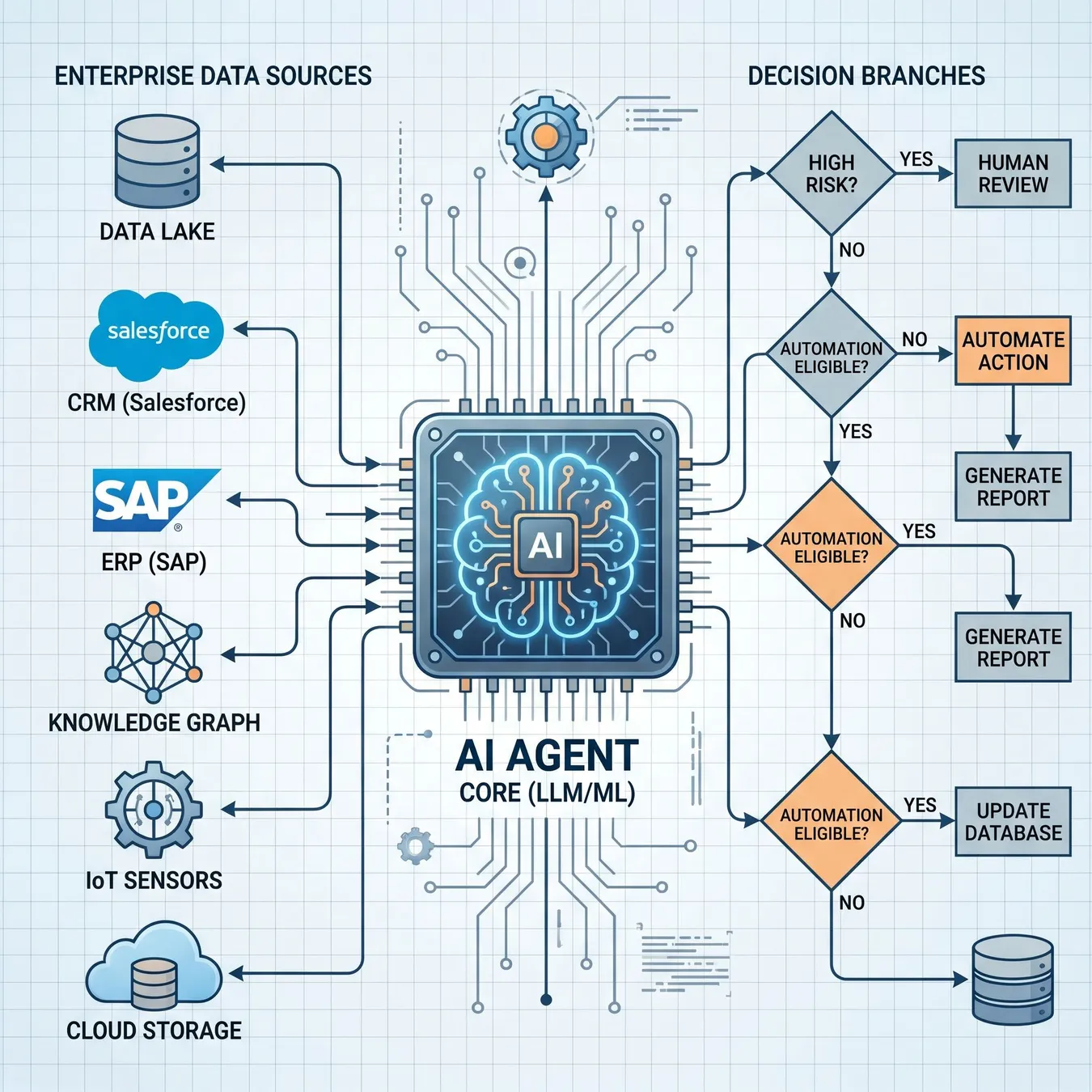
The architecture of an agentic workflow: moving from linear triggers to iterative decision loops.
Key Components of Agentic AI Workflows
- Perception: The ability to ingest and understand unstructured data from emails, docs, or APIs.
- Reasoning: Using LLMs to evaluate the current state against the desired outcome.
- Tool Use: Executing actions via external APIs, databases, or software interfaces.
- Memory: Maintaining context across multi-step interactions to ensure consistency.
- Feedback Loops: Self-correcting when an action doesn't produce the expected result.
Agentic AI Business Use Cases
Identifying high-impact agentic ai business use cases is the first step toward implementation. These systems excel in environments where data is messy and rules have many exceptions, such as complex workflow automation in supply chain or customer operations.
| Industry | Traditional Automation | Agentic AI Automation |
|---|---|---|
| Finance | Fixed rule-based invoice matching | Autonomous reconciliation of disputed claims |
| Customer Support | Keyword-based chatbots | Agents that resolve issues by accessing CRM and billing |
| Sales | Scheduled email sequences | Personalized lead research and qualification agents |
The Shift to Agentic AI Process Automation
Transitioning to agentic ai process automation requires a change in mindset from 'coding the path' to 'coding the objective.' Developers must build an ai agent builder that integrates llm decisions into enterprise workflows by defining clear boundaries and success metrics.

Monitoring agentic decision-making.
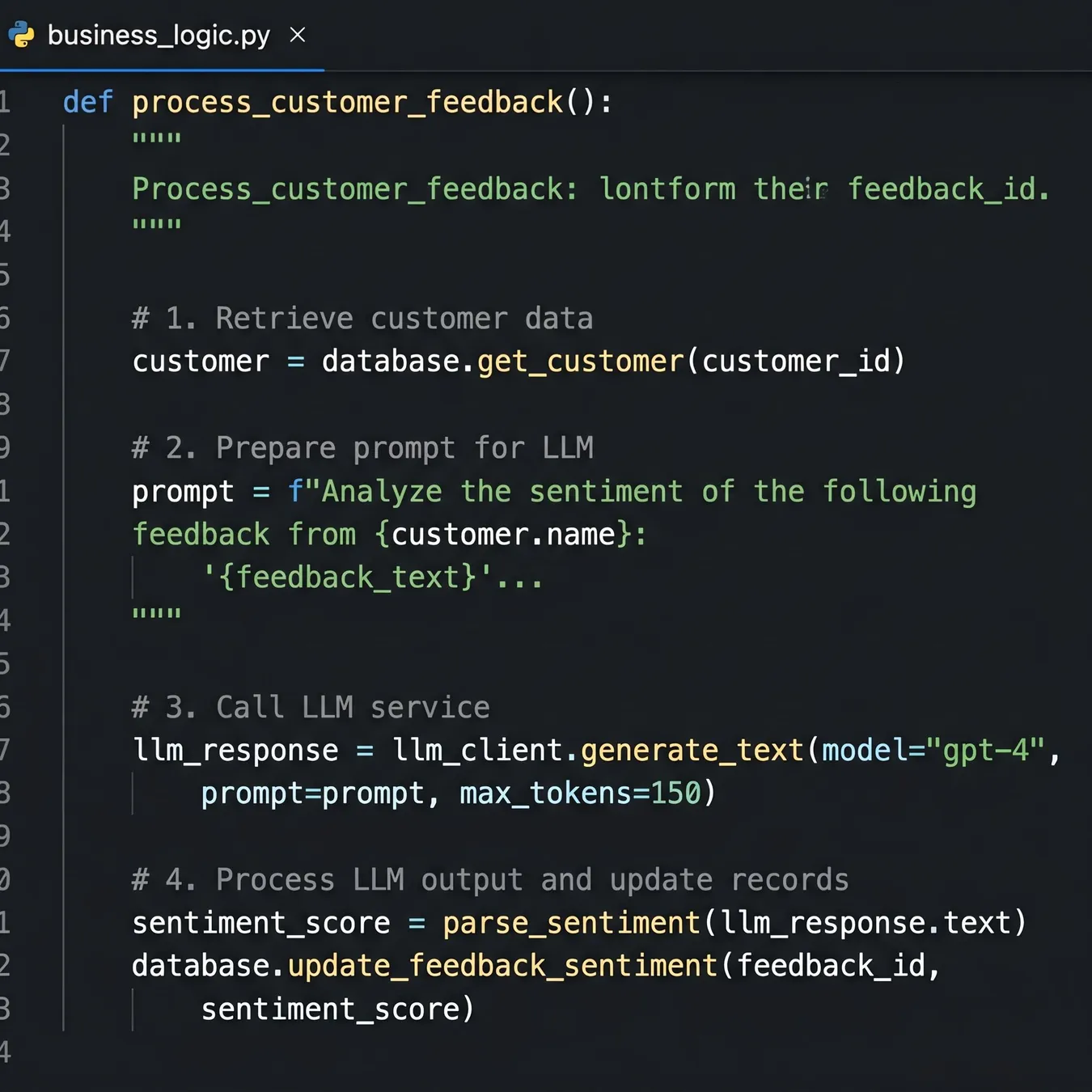
Integrating LLM reasoning into code.
Designing for Reliability and Safety
Warning.
// Safety First
Define narrow scopes for each agent
Implement human-in-the-loop for high-stakes decisions
Use structured output (JSON) for agent responses
Log every decision and tool call for auditability
Give agents unrestricted access to write-heavy APIs
Assume the LLM will always follow instructions perfectly
Deploy without a comprehensive evaluation framework
Ignore the latency costs of multi-step reasoning
Step-by-Step: Building an Agentic Workflow
01 / 05
phase 01 / 05
Define the Objective
phase 02 / 05
Tool Selection
phase 03 / 05
Prompt Engineering
phase 04 / 05
Integration
phase 05 / 05
Evaluation
Agentic AI for Businesses: Scaling Operations
For many organizations, agentic ai for businesses is the key to unlocking the next level of operational leverage. By automating the 'thinking' parts of a process, teams can focus on strategy while the AI handles the coordination and execution of routine tasks.
65%
Reduction in manual coordination
4x
Faster process completion
99%
Accuracy in data extraction
Overcoming Implementation Challenges
Bridging the Gap to Production
Moving from a prototype to a production-ready agentic system requires more than just a clever prompt. It requires professional workflow automation consulting to ensure the system is scalable, maintainable, and deeply integrated with your core business functions.
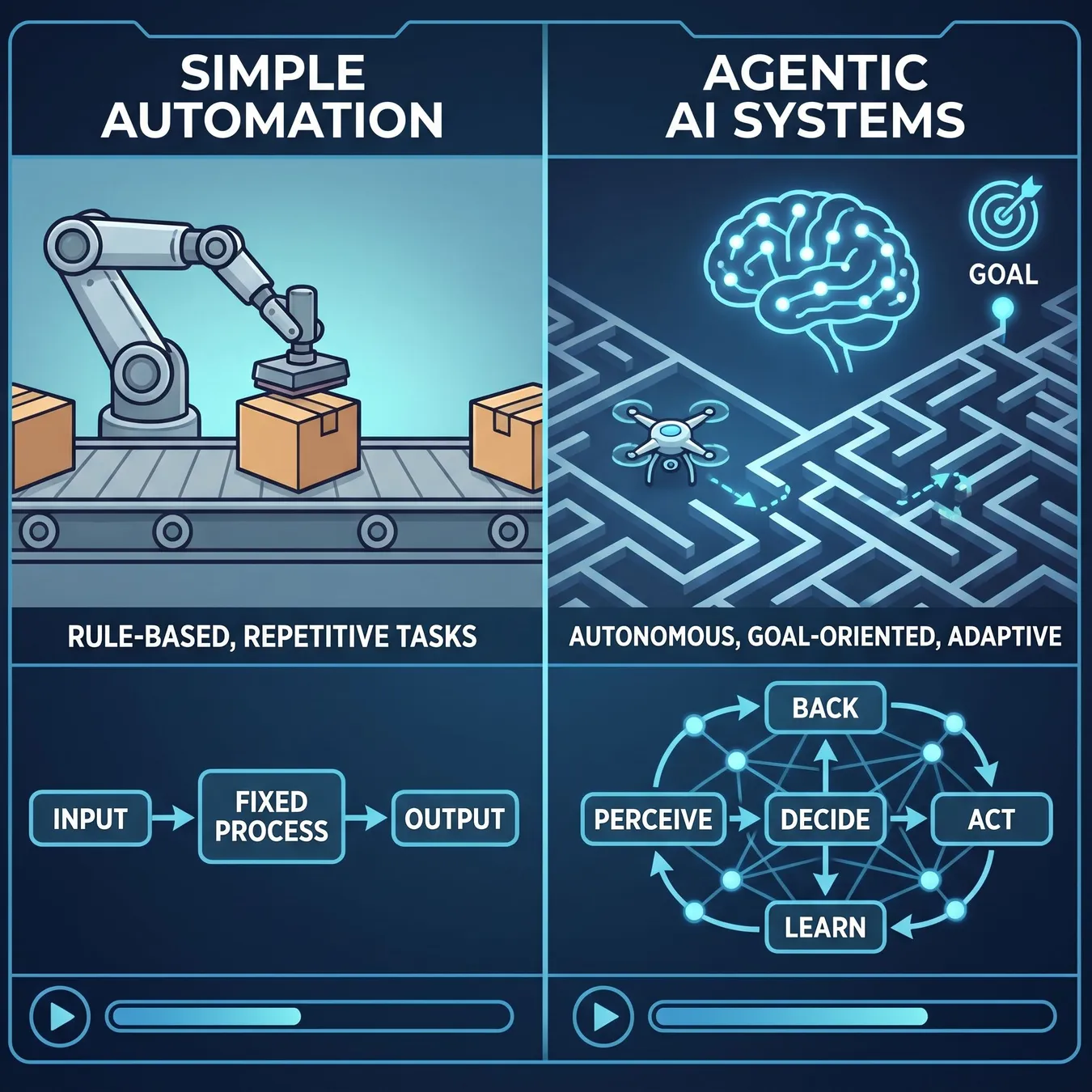
Understanding the power of autonomous business agents.
How Studio 402 Can Help
At Studio 402, we specialize in building the operational scaffolding that makes AI useful. We don't just build demos; we engineer durable software that integrates LLM decisions into the heart of your enterprise workflows, ensuring your AI agents are reliable and secure.
Trade-off
4 pros · 4 cons
Pros
Production-hardened agentic systems
Deep enterprise data integration
Autonomous error recovery
Full audit trails and oversight
Cons
Fragile 'vibe-coded' prototypes
Disconnected AI chat widgets
Manual exception handling
Security and compliance gaps
Studio 402 took our manual approval process and turned it into an autonomous agentic workflow. We've cut our processing time by 70% without losing any oversight.
Build Your Agentic Future
Ready to move beyond basic scripts? Let's discuss how agentic AI can transform your business processes.
Explore Advanced AI Systems
Keep reading