
Professional Retool Development and Low-Code Hardening
Retool is a powerful platform for building internal tools quickly, but many teams hit a ceiling where their prototypes become fragile. Professional retool low code development bridges the gap between a quick dashboard and a production-grade internal ops platform.
- Enterprise Ready
- Custom Engineering
- Security Hardened
- Scalable Ops
Why Standard Low-Code Prototypes Often Fail at Scale
Most internal tools start as simple drag-and-drop interfaces. However, as data complexity grows, these tools often suffer from slow performance, lack of proper version control, and security vulnerabilities that expose sensitive business data.
- Performance degradation with large datasets
- Brittle API integrations without error handling
- Lack of granular role-based access control (RBAC)
- Difficulties in maintaining complex JavaScript logic
- No clear path for staging and production environments
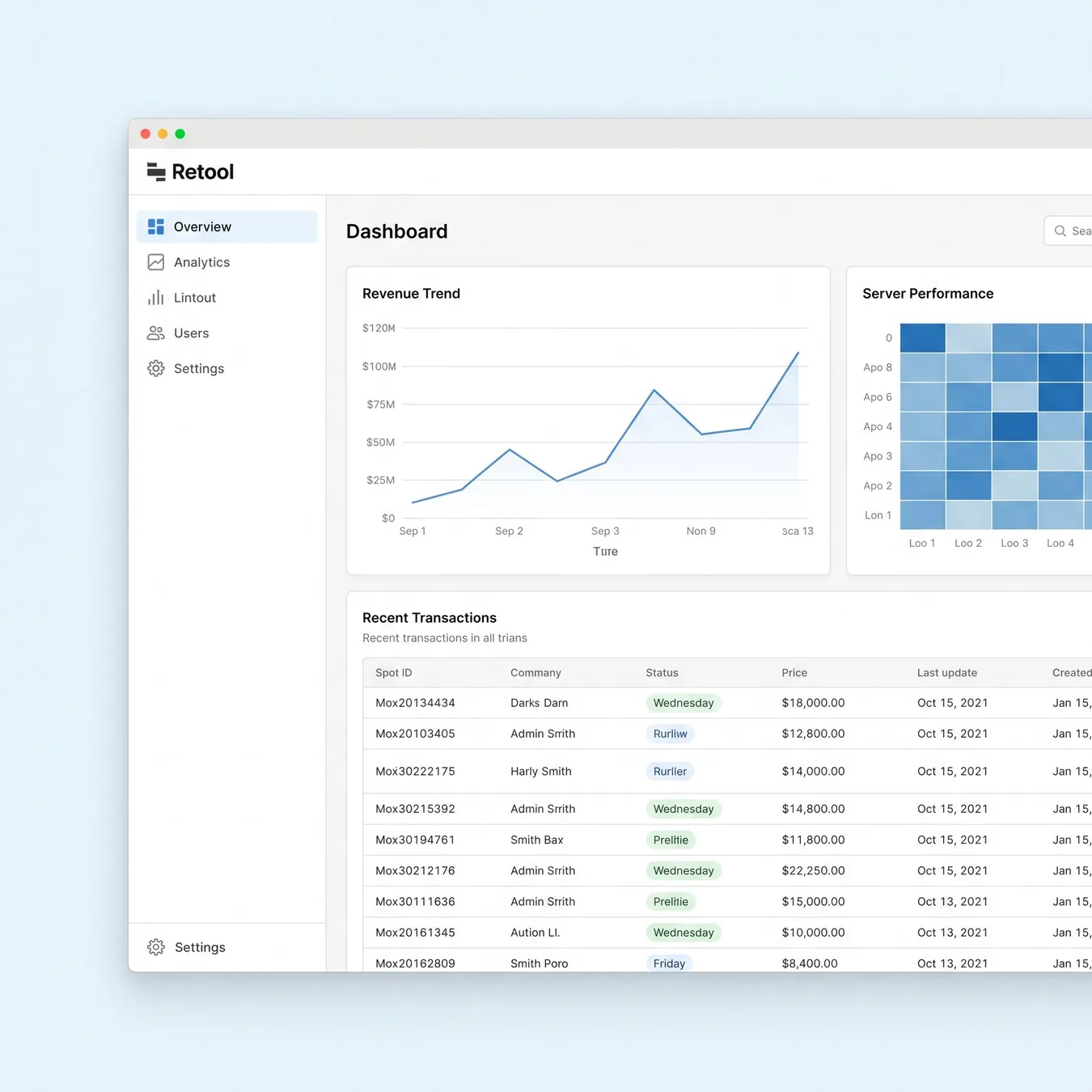
A well-architected Retool dashboard designed for high-performance data management.
Hardening Retool for Production-Grade Operations
Hardening a low-code application involves applying traditional engineering rigor to the Retool environment. This ensures that your enterprise workflow tools remain stable and secure as your team expands.
Trade-off
4 pros · 4 cons
Pros
Custom CSS and JS for unique logic
Secure backend API proxies
Git-based version control
Optimized SQL query structures
Cons
Fragile 'vibe-coded' logic
Direct database exposure
Manual deployment risks
Unoptimized frontend state
Core Retool Engineering Capabilities
Our approach focuses on building durable systems that leverage the speed of low-code without inheriting its typical weaknesses. We treat every Retool app as a serious piece of software infrastructure.
10x
Faster Deployment
100%
Audit Trail Coverage
Zero
Direct DB Exposure
Custom Component Development
When native components aren't enough, we build custom React components to handle specialized data entry, complex charting, or unique UI patterns that your operations require.
Secure API & Database Integration
We move business logic out of the frontend and into secure, reusable API layers. This prevents 'logic leak' and ensures that your data remains protected behind authenticated gateways.
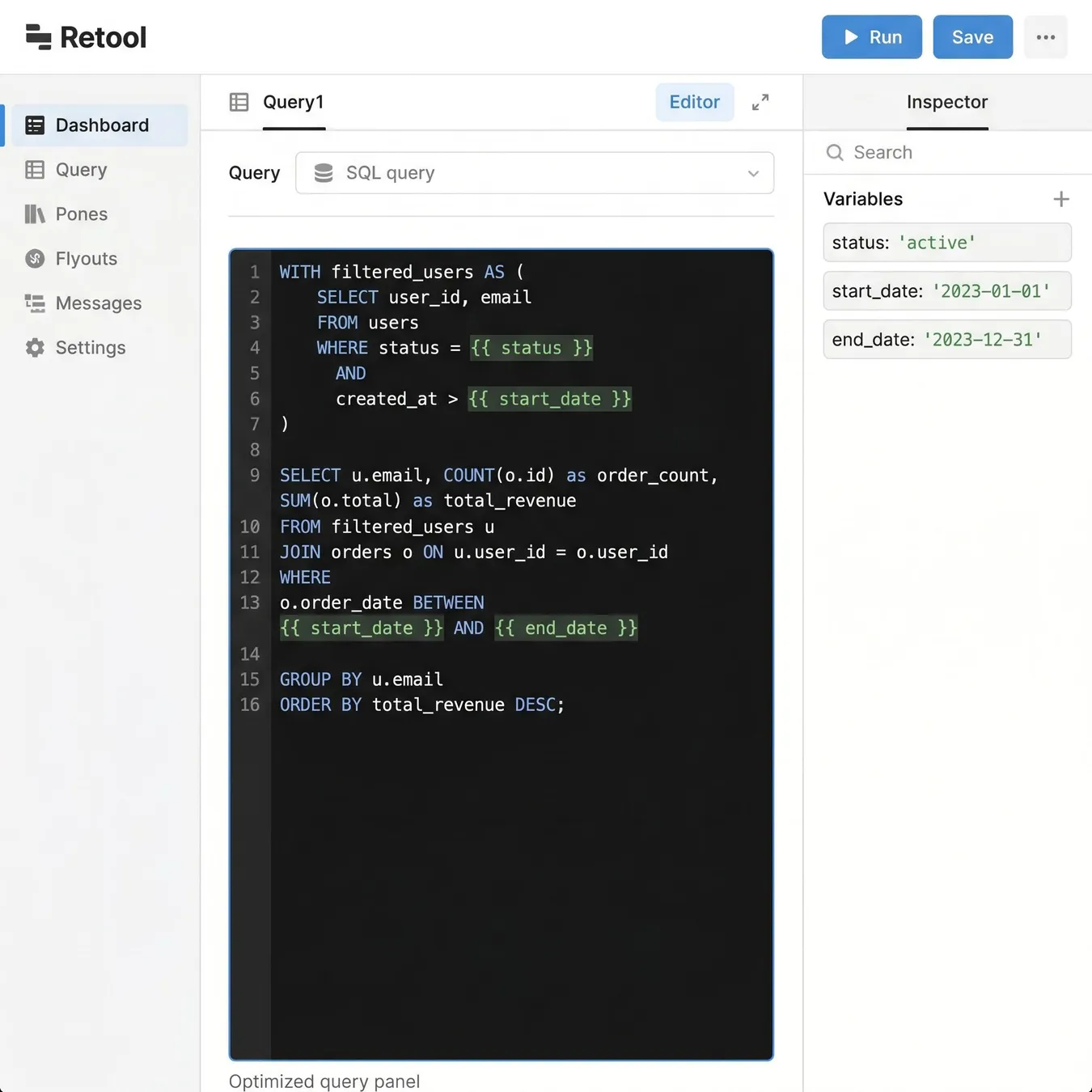
Optimized query management for speed.
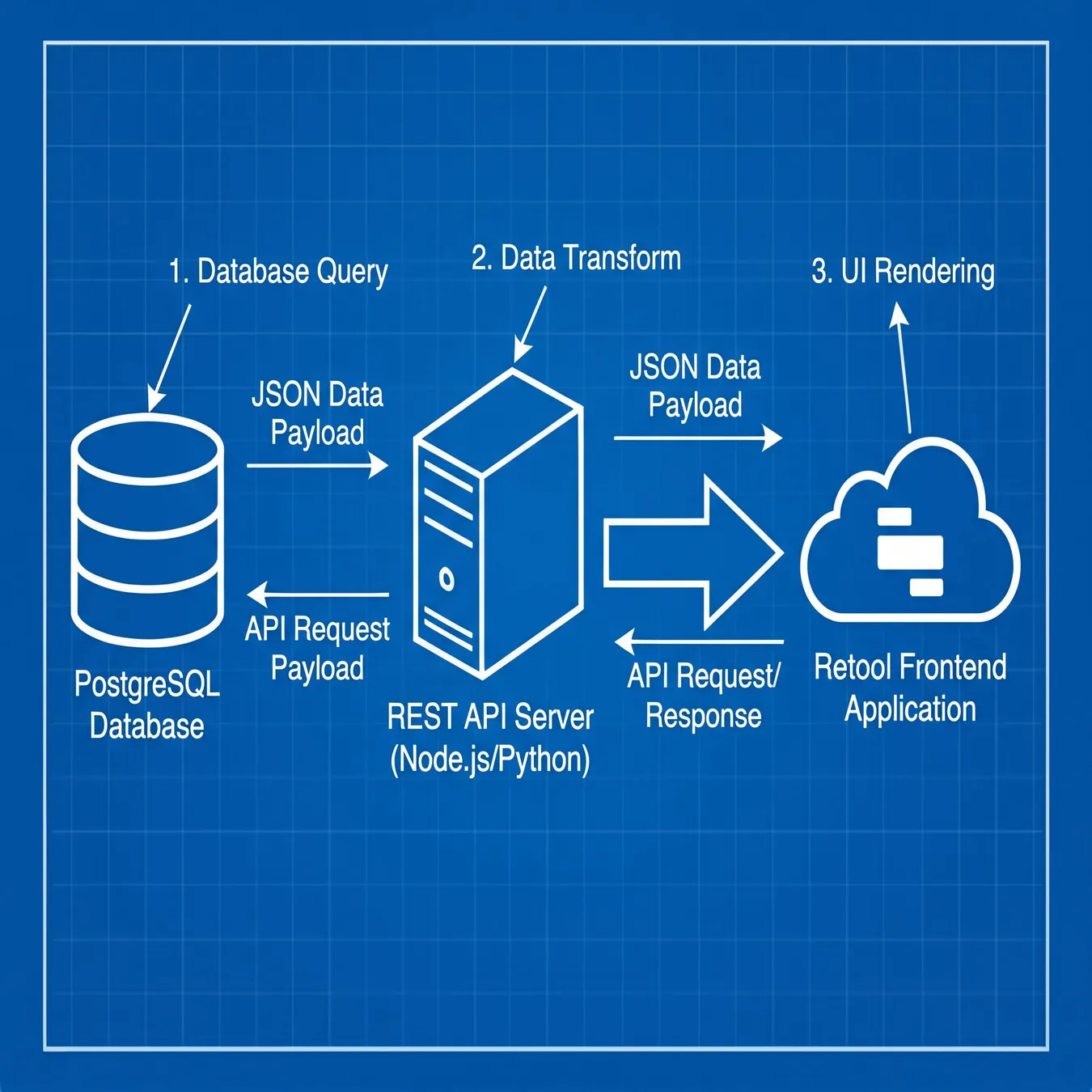
Secure data architecture.
The Retool Development Lifecycle
01 / 04
phase 01 / 04
Discovery & Audit
phase 02 / 04
Architecture Design
phase 03 / 04
Hardened Build
phase 04 / 04
Deployment & Scale
Best Practices for Retool Implementation
Use Query Library for reusable logic
Implement environment-specific variables
Use Transformers for data formatting
Enforce strict RBAC for all users
Hardcode API keys in the frontend
Write massive JS blocks in components
Allow direct write access to prod DBs
Ignore mobile responsiveness for field ops
Common Questions About Professional Retool Builds
Bridging the Gap with Studio 402
At Studio 402, we don't just build dashboards; we engineer operational systems. Whether you are starting from scratch or need to rescue a prototype that has hit its limits, we provide the senior engineering depth required to make Retool a cornerstone of your business.
Info.
// Engineering Note
Our Retool Success Stories
Studio 402 took our messy internal admin panel and turned it into a high-performance tool that our entire ops team relies on daily. The security hardening was a game changer.
Trusted by growth-stage teams to secure and scale their internal software.
Over 50+ internal systems hardened and deployed.
Explore More Resources
Build Your Production-Grade Internal Tools
Ready to turn your Retool prototype into a production-ready system? Let's discuss your architecture and scaling needs.
Keep reading