
Escalating from No-Code AI to Custom AI-Native Systems
Many founders start their journey with no-code ai tools to validate a concept quickly. While these platforms are excellent for initial prototyping, they often hit a ceiling when it comes to complex workflow automation and production-grade reliability.
- AI Strategy
- Custom Engineering
- Scalability
- Enterprise Ready
The No-Code AI Ceiling: Why Prototypes Break
No-code tools offer speed but often lack the granular control required for deep integration. As your user base grows, the fragility of these 'vibe-coded' systems becomes a liability rather than an asset.
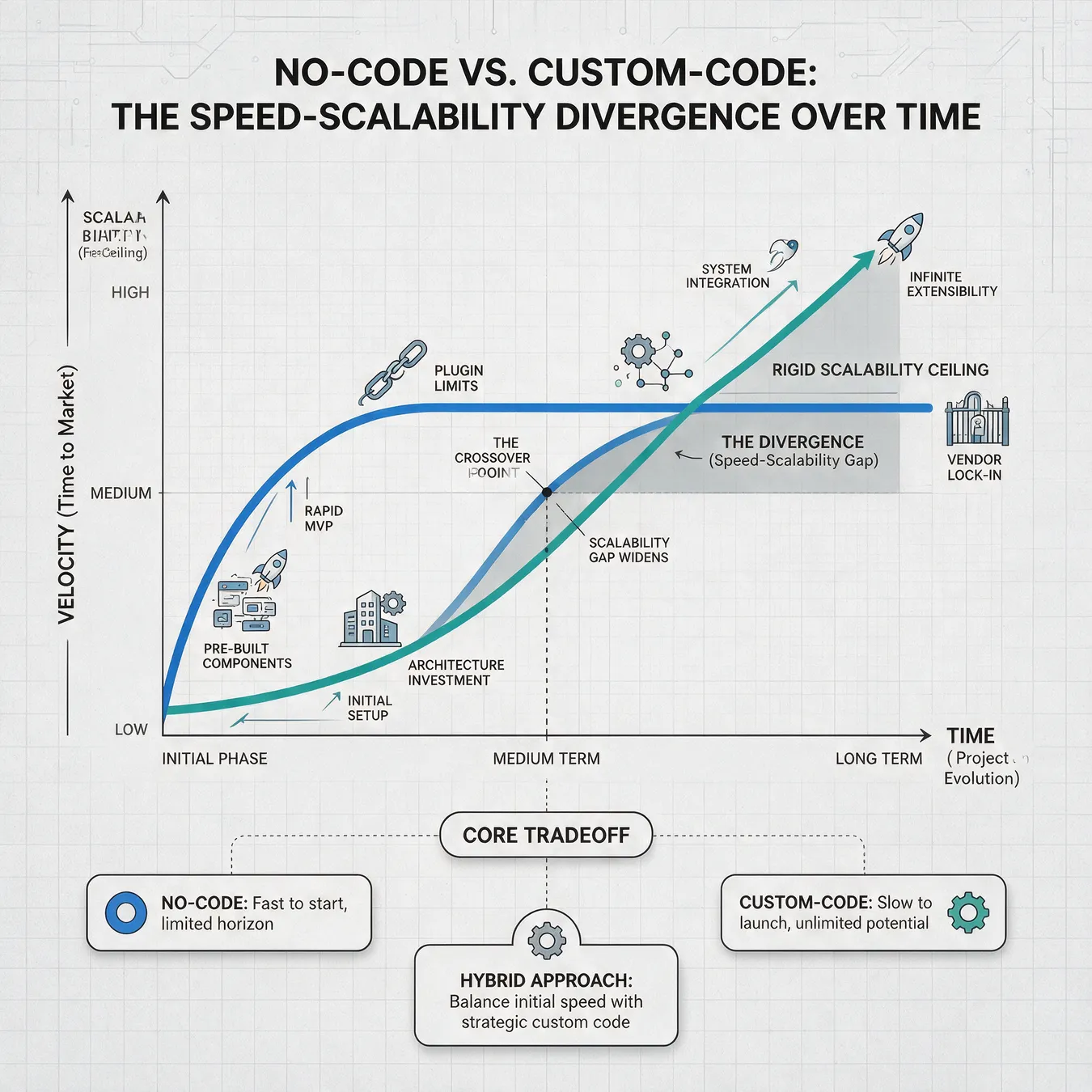
The scalability gap: where no-code speed meets technical limitations.
- Limited control over LLM parameters and prompt engineering
- Inflexible data models that don't support complex relationships
- Security and compliance gaps in multi-tenant environments
- High latency and unpredictable API costs at scale
- Lack of version control and automated testing pipelines
Signs You Have Outgrown Your No-Code Setup
Identifying the right time to migrate is critical for process flow optimization. If your team is spending more time fixing broken triggers than building new features, you've hit the limit.
Workflows require multi-step conditional branching no-code can't handle
Data privacy requirements demand on-premise or private cloud hosting
Integration with legacy internal databases is impossible via Zapier
The cost of no-code platform seats exceeds custom hosting costs
The Path to Custom AI-Native Architectures
Moving to a custom system doesn't mean starting from scratch. It means hardening the logic you've already validated into a durable, engineered foundation.
01 / 04
phase 01 / 04
Audit & Mapping
phase 02 / 04
Architecture Design
phase 03 / 04
Incremental Migration
phase 04 / 04
Hardening & Scale
Comparing No-Code vs. Custom AI Systems
| Feature | No-Code AI | Custom AI-Native |
|---|---|---|
| Speed to MVP | Days | Weeks |
| Logic Complexity | Simple/Linear | Advanced/Agentic |
| Data Security | Shared/Third-party | Private/Isolated |
| Long-term Cost | High (per-task) | Optimized (infra-based) |
Handling Advanced Logic and Agentic Workflows
When your application needs to make autonomous decisions, you need complex workflow automation that goes beyond simple 'if-this-then-that' statements.
Tip.
// Pro Tip: Leverage RAG
Bridging the Gap with Agile Low-Code
For teams not ready for a full custom build, agile low code development offers a middle ground, providing the speed of visual tools with the extensibility of custom scripts.
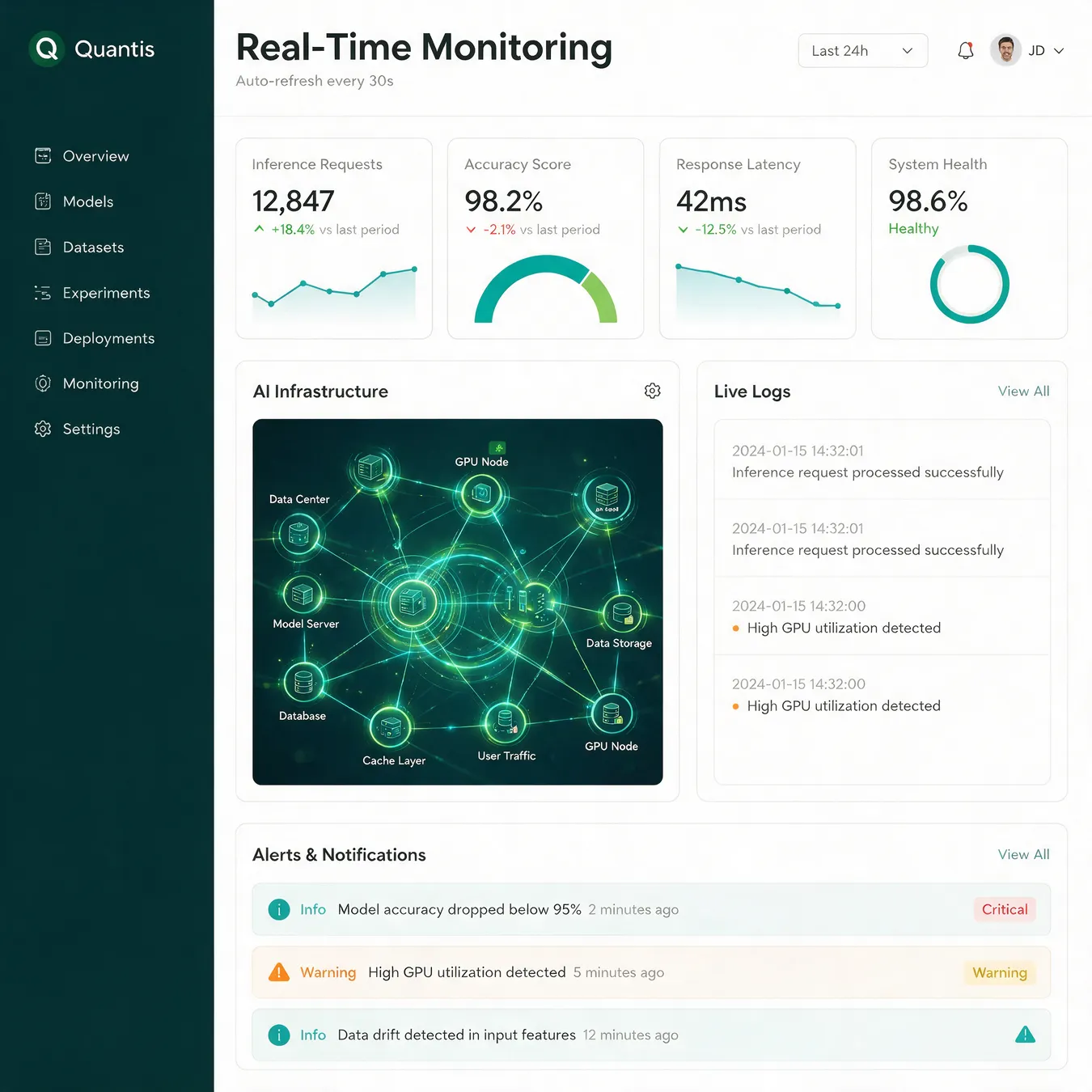
Custom dashboards provide visibility no-code tools lack.
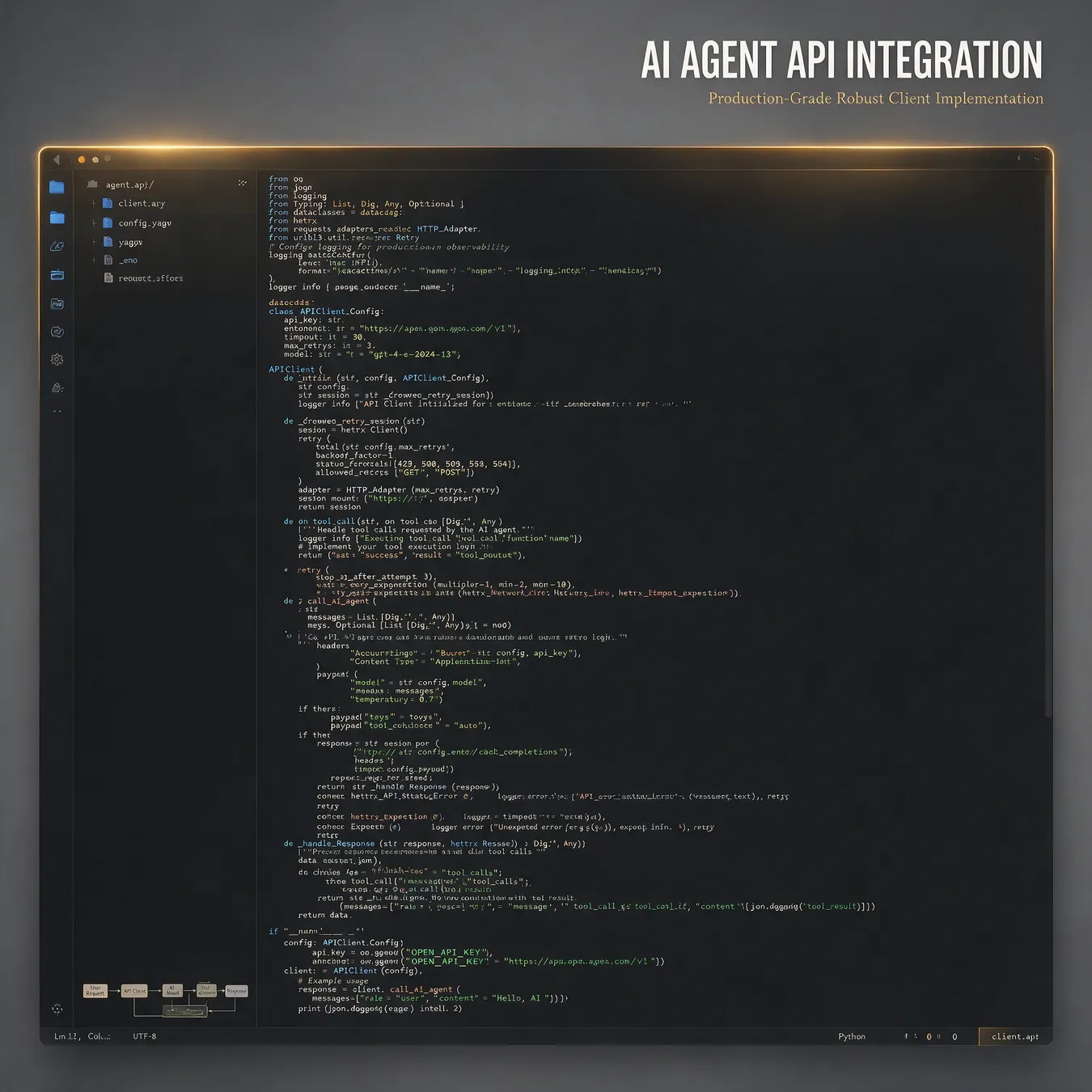
Direct API control ensures reliable agentic behavior.
Security and Compliance in AI Systems
Custom engineering allows you to implement role-based access control (RBAC) and data masking, ensuring that sensitive information never reaches the LLM provider in an unencrypted state.
40%
Latency Reduction
65%
Cost Savings at Scale
99.9%
Uptime Improvement
Managing the Human Element
As systems automate more, people workflow automation becomes essential to ensure that human experts can audit and approve AI decisions before they impact customers.
Common Pitfalls in Migration
Start with a comprehensive audit of current logic
Prioritize security and data privacy from day one
Build modularly to allow for future LLM swaps
Try to rebuild everything at once in a 'big bang' launch
Ignore the operational costs of maintaining custom code
Hard-code prompts that need frequent iteration
Infrastructure for AI-Native Apps
A custom system requires a robust cloud foundation. This includes vector databases like Pinecone or Weaviate and orchestration layers like LangChain or custom-built Python backends.
Future-Proofing Your AI Strategy
The AI landscape moves fast. Custom systems give you the 'build-vs-buy' flexibility to swap out models as newer, cheaper, or more powerful versions are released.
Moving from no-code to a custom AI architecture was the single biggest factor in our ability to handle enterprise-level security audits.
Sarah Chen · CTO of GrowthScale
Operationalizing Custom AI
Beyond the code, custom systems require operational discipline. This means setting up monitoring for 'hallucinations' and cost-tracking dashboards to manage token usage effectively.
When to Stick with No-Code
Not every process needs a custom build. If your workflow is internal-only, low-volume, and doesn't handle sensitive data, staying on no-code might be the most efficient choice.
Trade-off
3 pros · 3 cons
Pros
Unlimited scalability and performance
Full ownership of IP and data
Deep integration with core systems
Cons
Higher initial development cost
Requires ongoing engineering maintenance
Longer time to first deployment
The Studio 402 Approach to AI Escalation
At Studio 402, we specialize in rescuing fragile prototypes and turning them into durable software. We bridge the gap between 'it works in the demo' and 'it works for 10,000 users'.
Our Audit and Rescue Process
We start with a deep dive into your current stack to identify bottlenecks, security risks, and technical debt that will prevent you from scaling.
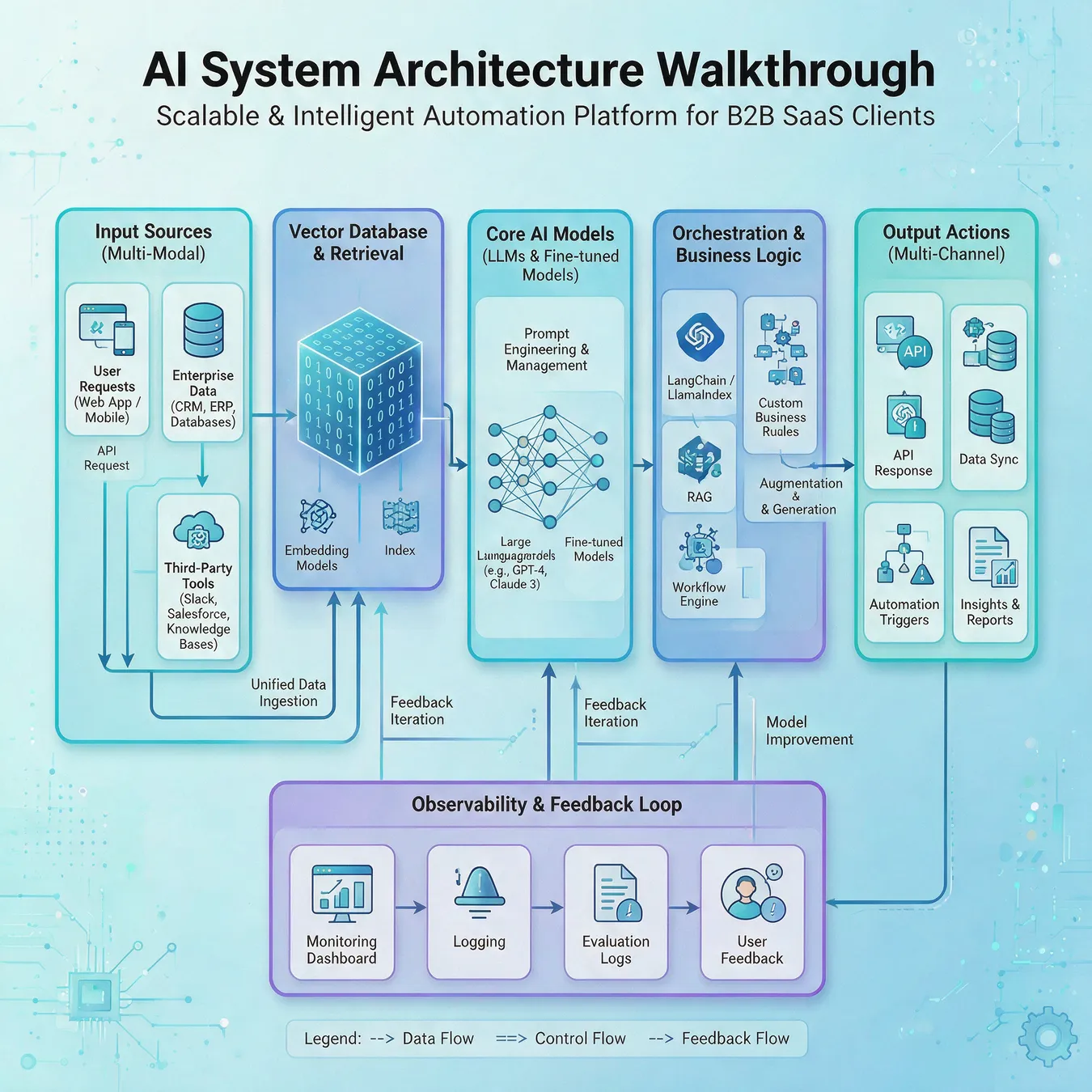
Behind the scenes: Building a custom AI-native backend.
Frequently Asked Questions
Ready to Build a Durable AI System?
If you've hit the ceiling with no-code ai tools and need a partner to build a secure, scalable, and custom-engineered system, we're here to help.
Trusted by 50+ growth-stage startups to scale their AI infrastructure.
Updated for July 2026
Escalate Your AI to Production Grade
Stop fighting your tools and start building your product. Let's discuss your migration roadmap.
Deep Dives & Strategic Frameworks
Keep reading
More in Workflow Automation & Systems
Building for the long term requires more than just a functional prototype. It requires an engineering partner who understands the nuances of AI-native systems and operational scale.
Whether you are just starting to feel the friction of no-code or you are in the middle of a production crisis, our team is equipped to audit, refactor, and rebuild your AI systems for the future.
Studio 402 combines product engineering, platform depth, and AI-native systems design to ship faster and fix what doesn’t scale.
Contact us today at studio@402.studio to begin your transition from fragile prototypes to durable custom software.