
Agile Low-Code Development for Production-Ready Apps
Agile low-code development is a methodology that combines the speed of visual development platforms with the rigorous engineering practices of agile software development. This approach allows teams to ship software faster while maintaining the security and scalability required for production environments.
- Agile Methodology
- Rapid Delivery
- Production-Ready
- Low-Code
What is Low Code Rapid Application Development?
Low code rapid application development (RAD) focuses on minimizing manual hand-coding to accelerate the delivery of business applications. By using modular components and visual interfaces, developers can focus on unique business logic rather than repetitive infrastructure setup.
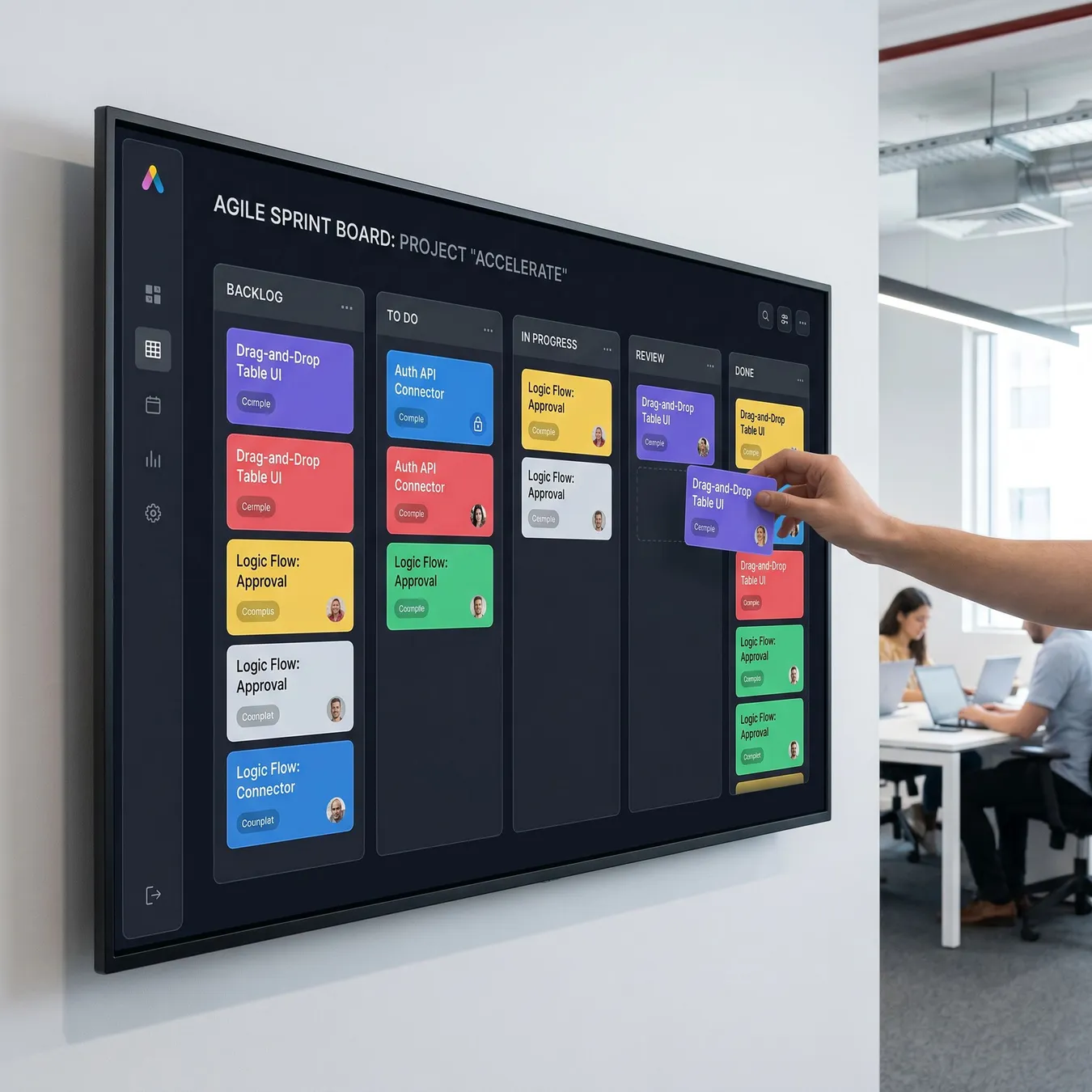
Visualizing the intersection of agile sprints and low-code speed.
The Core Principles of Agile Low-Code Engineering
To move beyond simple prototypes, agile low-code development must adhere to strict engineering standards. This includes version control, automated testing, and continuous integration—practices often neglected in basic no-code setups.
- Iterative delivery cycles for constant feedback
- Modular architecture for long-term maintainability
- Automated QA to ensure production stability
- Collaborative design between business and IT
- Security-first component selection
Bridging the Gap Between Speed and Stability
The primary challenge of rapid delivery is maintaining stability. By leveraging ai in software engineering, teams can now automate the more tedious parts of the development lifecycle, ensuring that speed does not come at the cost of code quality.
40-60%
Reduction in development time
99.9%
Uptime for engineered low-code apps
2x
Faster iteration cycles
When to Choose Low-Code Over Traditional Development
Not every project is a fit for low-code. Understanding the trade-offs is essential for long-term success. For many SaaS products, agile saas development provides the right balance of custom flexibility and rapid time-to-market.
Trade-off
4 pros · 4 cons
Pros
Significantly faster deployment
Lower initial development costs
Easier for non-technical updates
Built-in standard integrations
Cons
Platform-specific constraints
Potential for vendor lock-in
Higher complexity for custom UI
Scaling limits on basic tiers
Essential Agile Software Development Tools
Success in this space requires a modern stack. Utilizing the right agile software development tools ensures that your low-code environment integrates seamlessly with your broader engineering ecosystem.
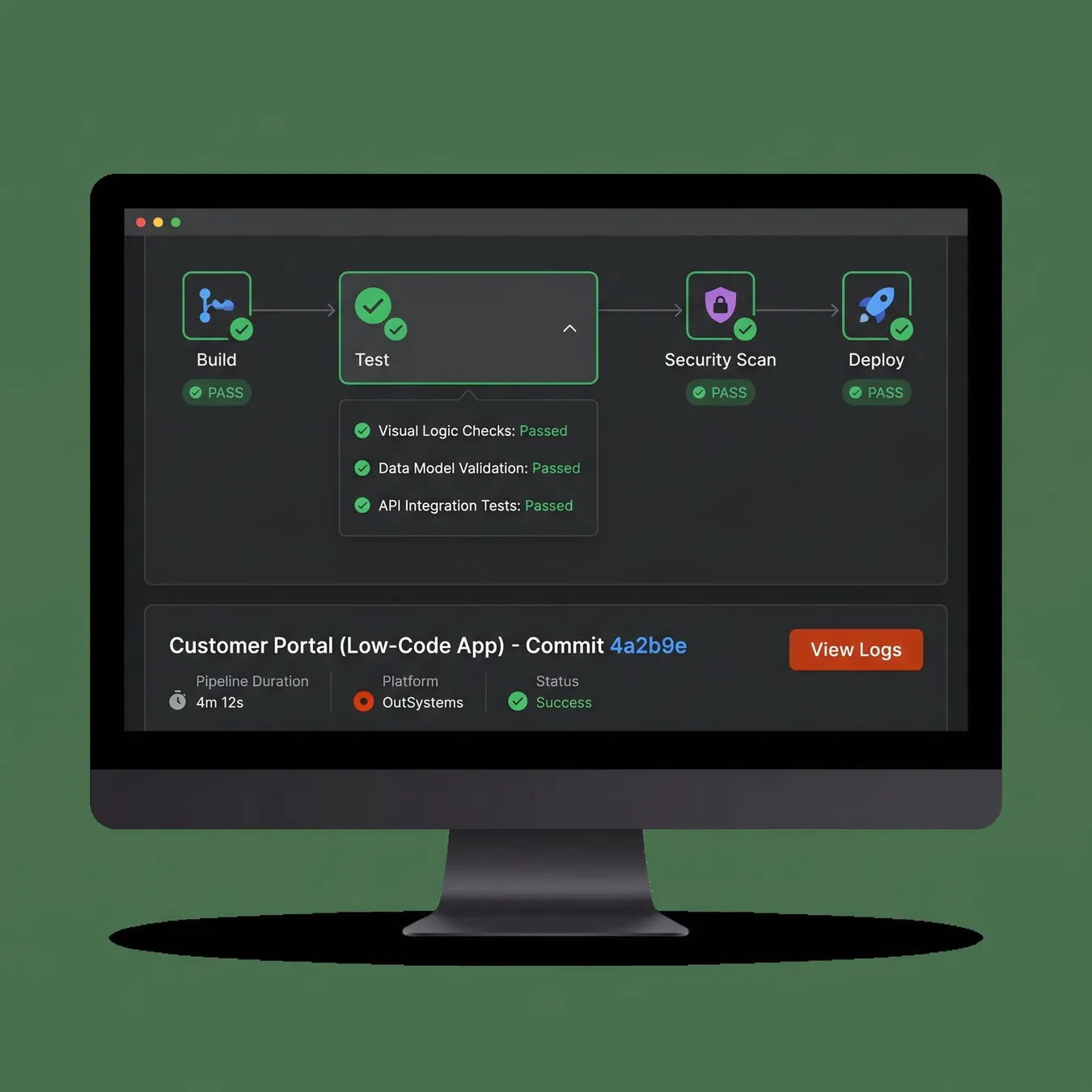
Automated deployment pipelines.
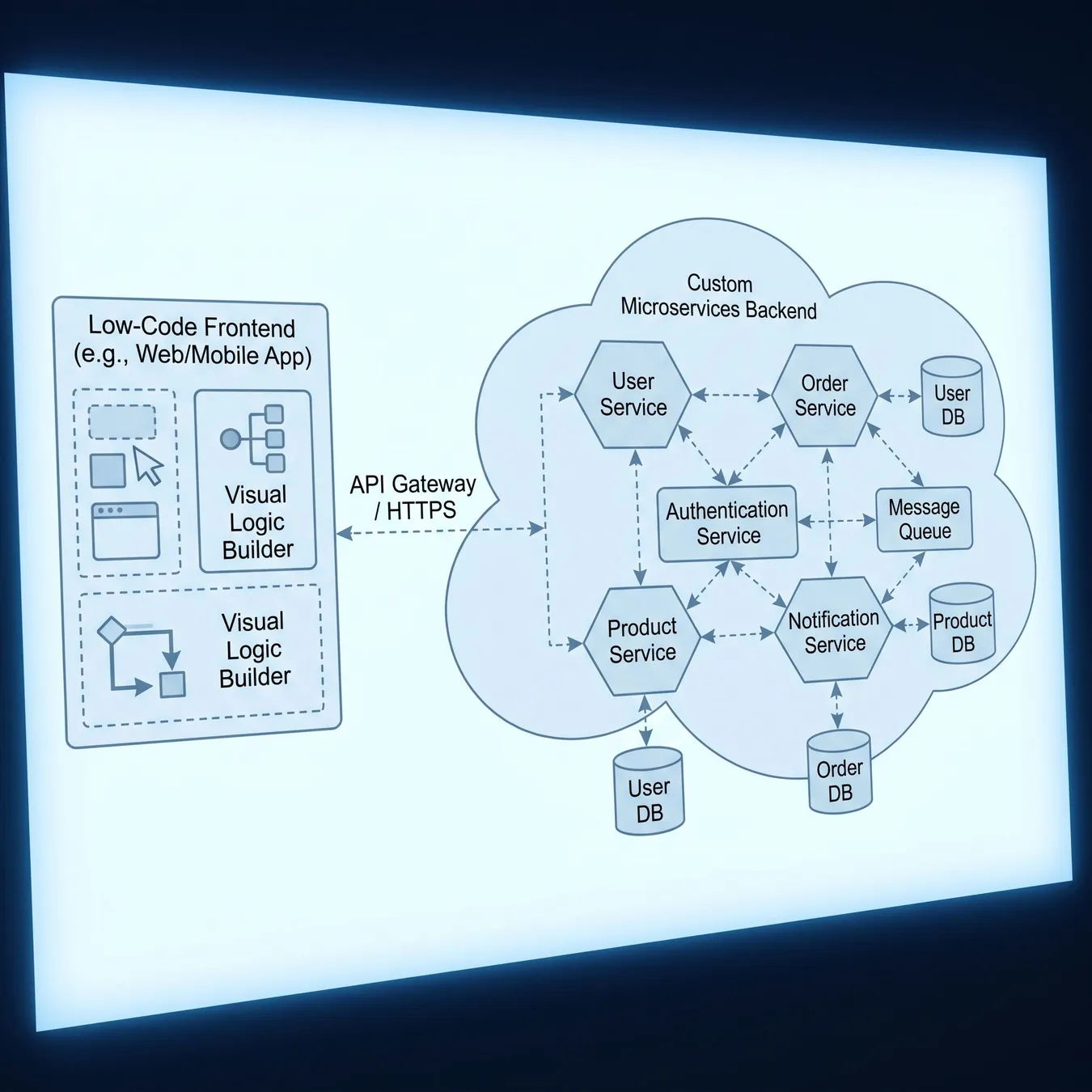
Hybrid architecture for scale.
The Role of Cloud Platform Engineering
Low-code does not mean 'no-infrastructure'. Professional-grade applications require cloud platform engineering to manage data residency, security protocols, and auto-scaling capabilities that off-the-shelf tools often lack.
Step-by-Step: Delivering a Low-Code Production App
01 / 05
phase 01 / 05
Discovery & Logic Mapping
phase 02 / 05
Platform Selection
phase 03 / 05
Iterative Prototyping
phase 04 / 05
Engineering Hardening
phase 05 / 05
Production Launch
Best Practices for Agile Low-Code Teams
Maintain a clear product backlog
Enforce code reviews for custom extensions
Prioritize data security and encryption
Document all visual logic flows
Ignore platform limitations until launch
Skip automated testing for 'simple' apps
Allow 'shadow IT' builds without oversight
Hardcode credentials in visual blocks
Common Pitfalls in Rapid Application Development
The most common failure point is treating low-code as a shortcut for thinking. Without a robust architecture, rapid delivery quickly turns into technical debt that prevents future scaling.
Warning.
// The Prototype Trap
Security and Compliance in Low-Code Environments
Enterprise-grade low-code requires sophisticated access controls. Role-based access (RBAC), audit logs, and data encryption are non-negotiable for production-ready software.
| Feature | Standard Low-Code | Agile Engineered |
|---|---|---|
| Auth | Basic Login | SSO / MFA / RBAC |
| Data | Shared DB | Isolated / Encrypted |
| Logs | Minimal | Full Audit Trails |
Scaling Your Low-Code Application
As your user base grows, you may need to offload heavy processing to custom microservices. A production-ready low-code app is designed to be extensible, not a closed box.
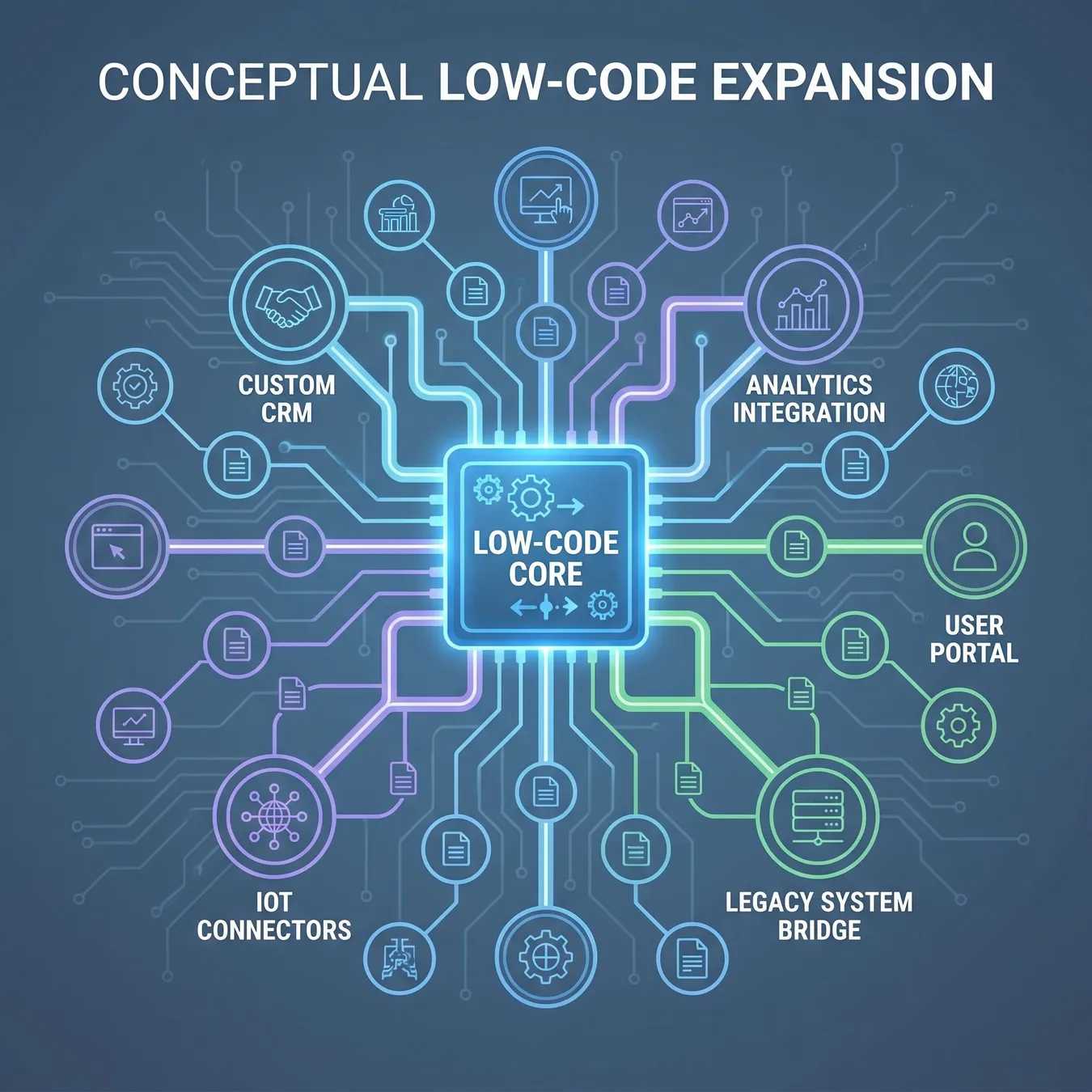
Designing for modularity allows your app to grow without rebuilding.
Agile Low-Code FAQ
The Studio 402 Approach to Rapid Delivery
At Studio 402, we don't just use low-code tools; we apply production-grade engineering to them. We help teams move from fragile prototypes to durable systems that scale.
Speed is a liability if your foundation is brittle. We build low-code systems with the same rigor as custom monoliths.
Studio 402 Engineering Lead
Hardening Your Low-Code Strategy
Whether you are building a new MVP or rescuing a prototype that has hit its limits, our team provides the senior technical leadership needed to ensure your software is ready for the real world.
Audit existing low-code logic for security gaps
Implement automated staging and production environments
Connect visual workflows to durable database architectures
Establish a long-term maintenance and scaling roadmap
Success Stories: From Idea to Production
We have helped founders launch fundable MVPs in weeks and assisted mid-market operators in replacing fragile spreadsheets with secure, automated workflow systems.
Trusted by growth-stage teams to ship production-ready software.
Over 50+ successful launches in the last two years.
Ready to Build Your Production-Ready App?
Don't let the limitations of standard no-code tools hold your business back. Let's discuss how agile low-code development can accelerate your roadmap without compromising on quality.
Start Your Agile Build Today
Get a senior engineering partner to design, build, and scale your next application.
Explore Related Resources
Keep reading
More in Workflow Automation & Systems
Studio 402 is a premium product engineering studio. We combine the speed of modern low-code platforms with the discipline of traditional software engineering to deliver outcomes that last.
Our team specializes in MVP development, SaaS platforms, and operational systems that bridge the gap between business needs and technical excellence.
Contact us at studio@402.studio to learn more about our consultative approach to custom software and AI-native systems.
Final Thoughts on Rapid Delivery
The future of software is not just about writing code—it is about orchestrating systems. Agile low-code is the bridge to that future, enabling faster innovation for teams that refuse to settle for 'good enough'.