
Low-Code vs. No-Code vs. Custom Development Framework
Choosing the right development path is a critical decision for founders and operators. Whether you are evaluating no-code alternatives to custom development for enterprise business software or deciding between low code vs no code, the choice impacts your long-term scalability and security.
- Strategic Guide
- Build vs Buy
- Enterprise Scale
- 2026 Trends
Understanding the Three Pillars of Modern Software
The spectrum of software creation ranges from visual drag-and-drop builders to fully bespoke engineering. Understanding the nuances of pro code vs low code helps teams allocate resources effectively without hitting technical ceilings.
| Feature | No-Code | Low-Code | Custom (Pro-Code) |
|---|---|---|---|
| Primary User | Business Operator | Technical Analyst | Software Engineer |
| Speed to MVP | Days | Weeks | Months |
| Customization | Limited | Moderate | Unlimited |
| Scalability | Low | Medium | High |
The Case for No-Code Alternatives in Enterprise
Many organizations start with no-code alternatives to custom enterprise software development to validate ideas quickly. These tools are excellent for internal trackers and simple data entry forms.
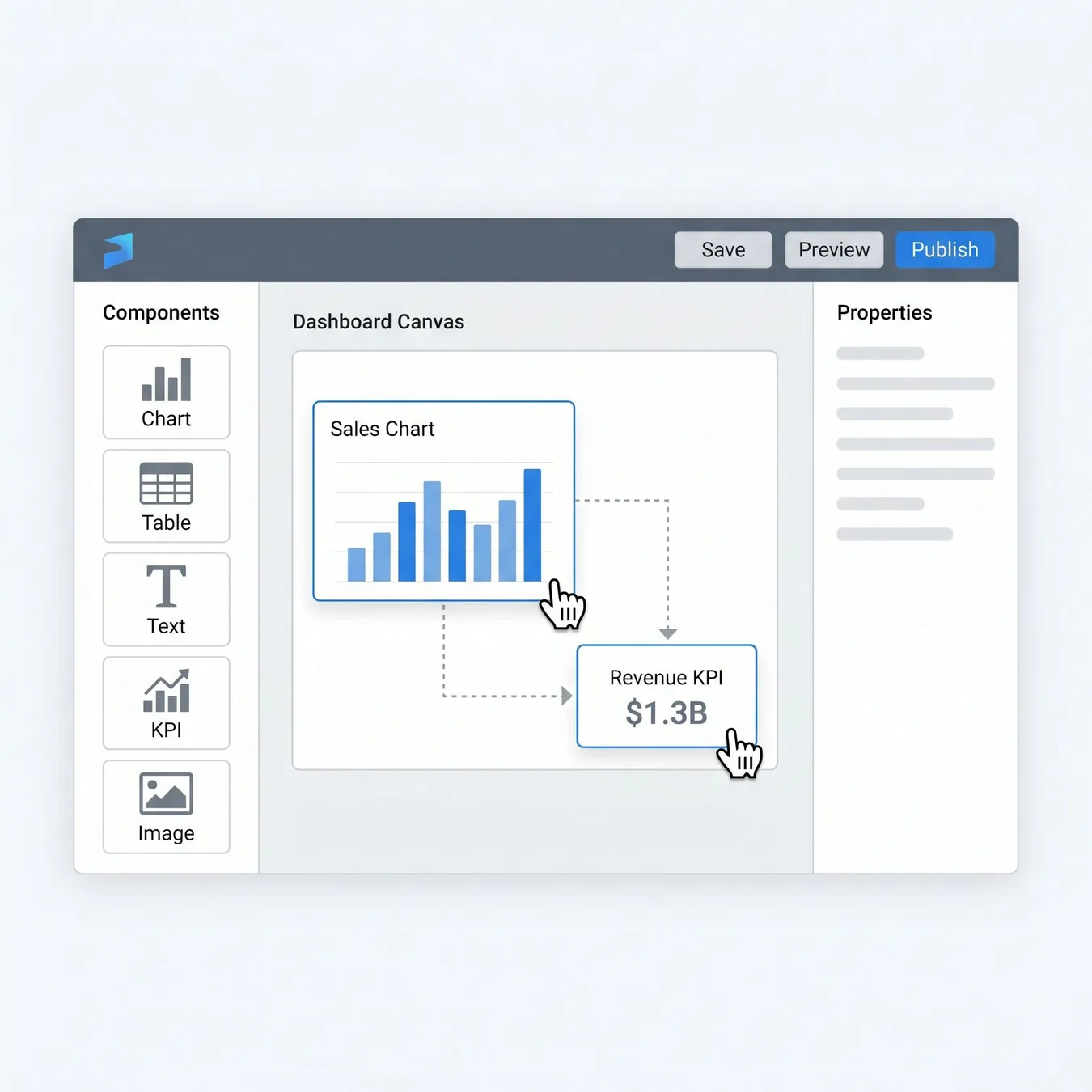
No-code platforms excel at rapid prototyping and simple internal tools.
When Low-Code Bridges the Gap
Low-code platforms provide a middle ground, allowing for more complex logic while maintaining high delivery speed. This is often where teams explore agile low code development to maintain professional standards.
- Faster iteration for standard business logic
- Built-in connectors for common SaaS tools
- Reduced need for specialized DevOps resources
- Visual modeling of business processes
The Limitations of No-Code AI Tools
While impressive, no-code ai tools often struggle with data privacy, complex RAG architectures, and fine-tuned model control. As your AI needs mature, the 'no-code ceiling' becomes a significant blocker.
Warning.
// Scalability Warning
Custom Development: The Path to Durable Systems
Custom development is the gold standard for proprietary logic and high-scale applications. It offers complete ownership of the tech stack and eliminates vendor lock-in risks associated with low no code platforms.
Trade-off
3 pros · 3 cons
Pros
Infinite flexibility and customization
Optimized performance and security
Full ownership of intellectual property
Cons
Higher initial capital expenditure
Longer time to first release
Requires specialized engineering talent
Strategic Build-vs-Buy Decision Matrix
- 01
Identify if the feature is a core competitive advantage.
- 02
Assess the complexity of required third-party integrations.
- 03
Evaluate long-term maintenance and scaling costs.
- 04
Determine the sensitivity of the data being processed.
- 05
Analyze the existing technical expertise within the team.
Integrating Custom Code with Low-Code Tools
You don't always have to choose one. Many successful teams use make low code for orchestration while keeping their core logic in custom microservices.
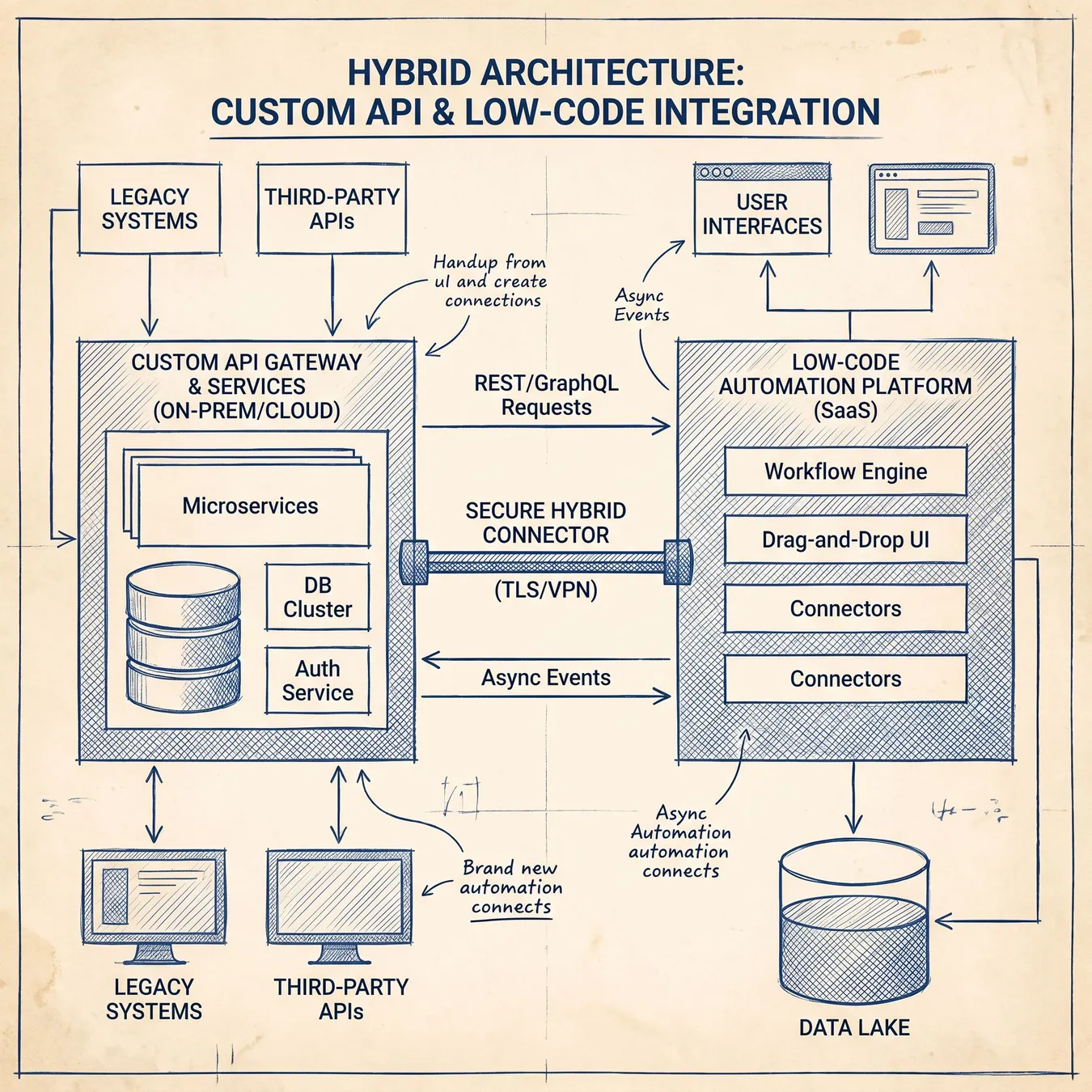
Hybrid architectures combine speed with power.
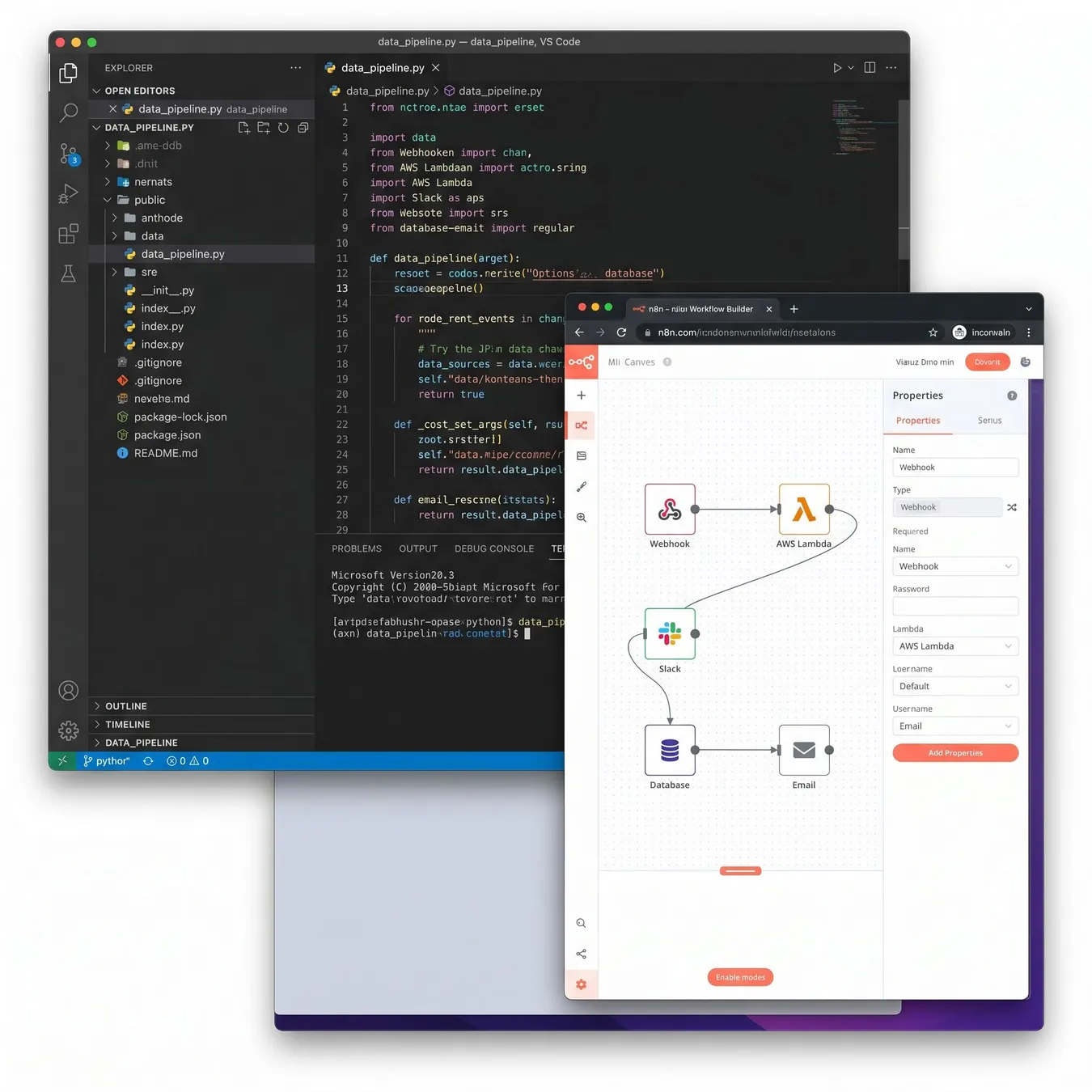
Bridging the gap between pro-code and low-code environments.
Handling Complex Workflow Automation
When business logic involves multi-step branching and deep data validation, complex workflow automation requires a more robust engineering approach than standard no-code triggers can provide.
Common Pitfalls in the Build-vs-Buy Journey
Start with no-code for rapid validation
Plan for a migration path to custom code
Prioritize security and data sovereignty
Build custom for generic office utilities
Ignore the hidden costs of platform seats
Hard-code logic into fragile visual builders
Cost Analysis Over the Product Lifecycle
70%
Avg. Speed Increase (No-Code)
40%
Long-term Savings (Custom)
85%
Enterprise Adoption Rate
Security and Compliance Considerations
For enterprise business software, compliance is non-negotiable. Custom development allows for granular control over encryption, audit logs, and data residency that many no-code platforms cannot guarantee.
The Evolution from Prototype to Production
01 / 03
phase 01 / 03
Phase 1: Validation
phase 02 / 03
Phase 2: Operationalize
phase 03 / 03
Phase 3: Scale
Frequently Asked Questions
The Studio 402 Approach to Durable Systems
At Studio 402, we specialize in bridging the gap between fragile prototypes and production-grade software. Whether you need to rescue a vibe-coded app or build a custom enterprise platform from scratch, we focus on engineering that scales.
Moving our core engine from a low-code setup to a custom build with Studio 402 reduced our operational latency by 60% and unlocked our ability to handle enterprise clients.
Alex Rivera · CTO at ScaleOps
Evaluating Your Current Technical Debt
Are you hitting platform limits on API calls or data storage?
Is your current setup passing security audits?
Can your team iterate on features without breaking existing workflows?
Are licensing costs scaling faster than your revenue?
Future-Proofing Your Software Strategy
The goal of any build-vs-buy framework is to ensure your technology supports your business goals rather than hindering them. Custom development provides the foundation for AI-native systems that evolve with your market.
Next Steps for Founders and Operators
If you are struggling with a prototype that won't scale or need an expert partner to architect your next major release, it's time to move beyond generic tools toward engineered solutions.
Build Your Foundation for Scale
Ready to turn your prototype into a production-grade system? Let's discuss your architecture and scaling needs.
Explore More Resources
Keep reading
More in Workflow Automation & Systems
Trusted by 50+ growth-stage startups and enterprise teams.
Updated July 2026
Studio 402 provides the technical leadership and execution power needed to navigate the complexities of modern software development, ensuring your build-vs-buy decisions lead to durable success.
Final Takeaway
Don't let the ease of no-code trap you in a system that can't grow. Use the right tool for the right stage, and always keep an eye on the path to custom engineering.
For more insights on workflow engineering and AI integration, visit our category hub or contact our team directly.