
Software Product Lifecycle Management Best Practices
Effective software product lifecycle management is the difference between a system that scales and one that collapses under its own technical debt. For founders and engineering leaders, mastering these best practices ensures that custom software remains an asset rather than a liability.
- Engineering Strategy
- Scale-Ready
- Technical Debt Management
- Product Ops
Defining Software Product Life Cycle Management
The software product life cycle management encompasses every stage of a product's existence, from initial discovery and design to deployment, maintenance, and eventual retirement. Unlike a simple project, a product lifecycle is continuous and iterative.
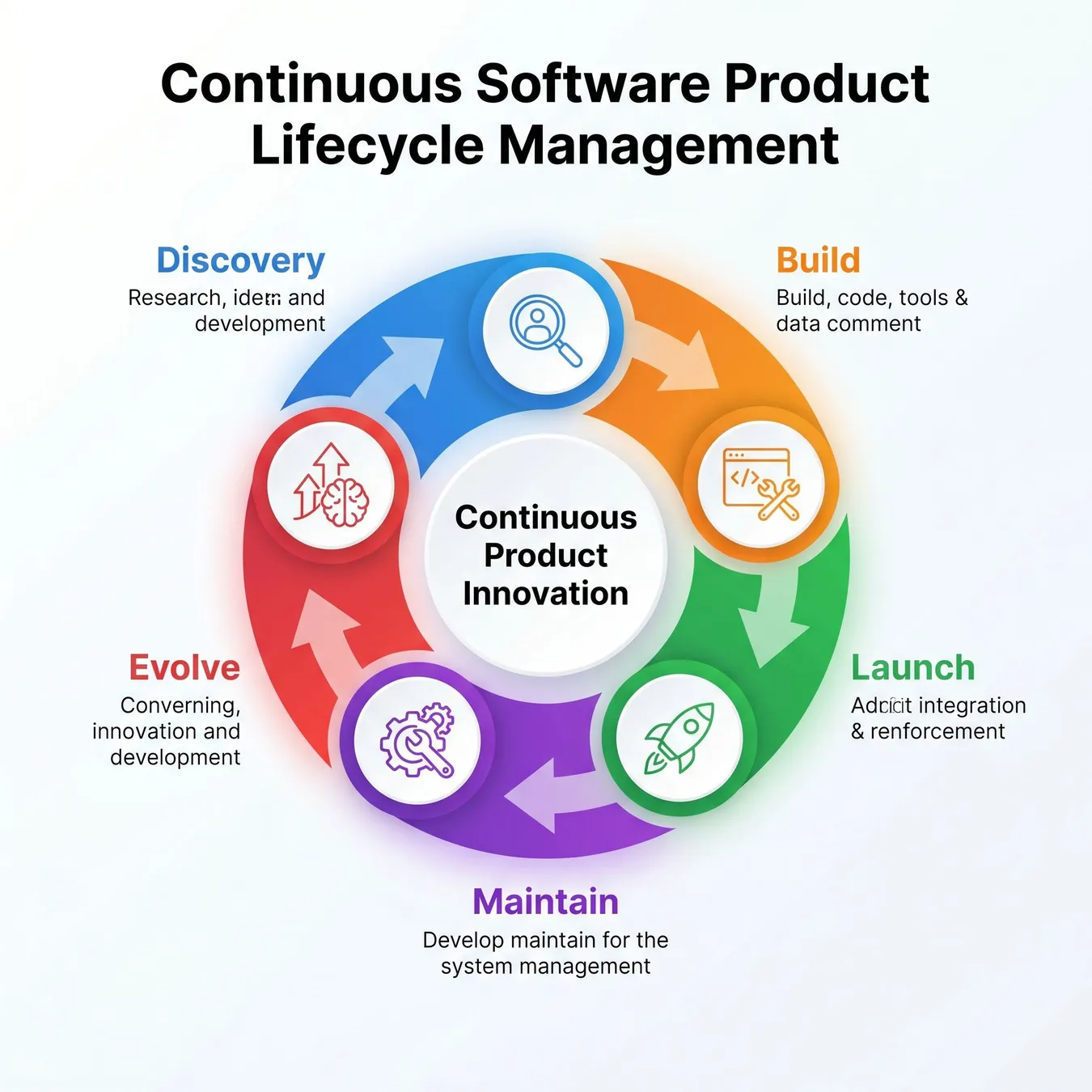
The continuous nature of modern software lifecycle management.
The Core Pillars of Custom Software Integrity
Managing product lifecycle management for custom software requires a focus on three core pillars: architectural durability, operational visibility, and iterative delivery. Without these, even the best features will fail to support business growth.
40%
Reduction in maintenance costs with proactive PLM
2.5x
Faster feature release velocity for managed systems
60%
Lower risk of critical production failures
Phase 1: Strategic Discovery and Requirements
Before a single line of code is written, an agile product management lifecycle begins with deep discovery. This phase aligns technical possibilities with business objectives to prevent scope creep and wasted effort.
- Define success metrics for each lifecycle stage
- Map user journeys to technical requirements
- Identify potential technical debt early in the design
- Establish a clear build-vs-buy framework
Phase 2: Production-Ready Engineering
Building for production means moving beyond 'vibe-coding' or prototypes. It requires a disciplined approach to architecture that accounts for security, multi-tenancy, and future scalability from day one.
Implement automated testing early
Use version control for infrastructure (IaC)
Document architectural decisions (ADRs)
Prioritize security and data privacy
Hardcode environment variables
Skip code reviews for speed
Ignore error logging in early builds
Build monolithic structures for SaaS
Phase 3: Deployment and Release Management
A robust software product lifecycle management process ensures that deployments are non-events. This involves CI/CD pipelines that automate the path from staging to production with high confidence.
- 01
Automate build and test pipelines
- 02
Implement blue-green or canary deployments
- 03
Establish automated rollback triggers
- 04
Monitor performance metrics post-release
Phase 4: Maintenance and Debt Management
Technical debt is inevitable, but it must be managed. A healthy lifecycle includes dedicated time for refactoring and upgrading dependencies to prevent the system from becoming brittle.
Warning.
// The Debt Warning
Selecting Software Product Lifecycle Management Tools
The right software product lifecycle management tools provide the visibility needed to track progress and quality across the entire stack. These tools should integrate seamlessly with your existing engineering workflows.
| Tool Category | Primary Purpose | Key Benefit |
|---|---|---|
| Issue Tracking | Backlog & Bug Management | Visibility into work |
| CI/CD Platforms | Automated Deployment | Reduced human error |
| Observability | Real-time Monitoring | Faster incident response |
The Role of Leadership in the Lifecycle
The success of a product depends on the product manager in software development acting as the bridge between business needs and technical execution. They ensure the roadmap respects the lifecycle's constraints.

Alignment between product and engineering is vital.

Data-driven lifecycle management.
Bridging Strategy and Engineering Execution
Effective product management and strategy require a deep understanding of how engineering decisions impact long-term maintenance. Strategic leaders prioritize durability over short-term hacks.
Common Lifecycle Management Pitfalls
Trade-off
4 pros · 4 cons
Pros
Scheduled maintenance sprints
Full CI/CD automation
Comprehensive test coverage
Cross-functional collaborative culture
Cons
Ignoring technical debt for new features
Manual deployment processes
Lack of automated testing
Siloed communication between teams
Scaling the Lifecycle for Enterprise Growth
As a product grows, the complexity of its lifecycle increases exponentially. Enterprise-grade systems require formal governance and more sophisticated operational scaffolding to maintain velocity.
Establish a formal change management process
Implement multi-tenant isolation protocols
Audit security and compliance quarterly
Automate infrastructure scaling rules
Frequently Asked Questions
The Studio 402 Approach to Durable Systems
At Studio 402, we don't just build software; we engineer durable systems. We understand that your product needs to survive real-world scale, which is why we embed lifecycle management into every engagement.
We build with the end in mind. Our goal is to ensure that the software we ship today is still performant, secure, and maintainable five years from now.
Studio 402 Engineering Team · Product Engineering Lead
How We Help You Scale
Whether you are launching a new MVP or rescuing a prototype that has hit its limits, our team provides the senior technical leadership and execution power needed to stabilize and grow your product.
01 / 03
phase 01 / 03
Audit & Discovery
phase 02 / 03
Hardening & Build
phase 03 / 03
Scale & Evolve
Ready to Build a Durable Product?
Don't let technical debt or fragile systems block your growth. Partner with a studio that prioritizes engineering excellence and long-term product health.
Trusted by growth-stage startups to build and scale production-ready software.
From MVP to Series B and beyond.
Build Your Foundation for Scale
Let's discuss how we can build or rescue your custom software with production-first engineering.
Explore More Lifecycle Insights
Keep reading
More in Operational & Lifecycle Management
Index
Related categories
Understanding the need for product lifecycle management is the first step toward building a resilient business. Our guides help you navigate the complexities of modern software delivery.

Visualizing the journey to production-ready software.
Continuous Improvement in PLM
The best lifecycle is one that evolves. Regularly reviewing your tools and processes ensures that your engineering team remains efficient as the product matures.
Tip.
// Pro Tip
Final Thoughts on Software Integrity
Mastering software product lifecycle management best practices is not a one-time task but a commitment to quality. By following these guidelines, you build a foundation that supports innovation and scale.
Studio 402 is here to partner with you through every stage of this journey, ensuring your technical execution matches your strategic ambition.