
Why Your Business Needs a Formal PLM System
The need for product lifecycle management arises when a company outgrows its manual workflows. As complexity increases, fragmented data and disconnected teams create operational drag that slows down innovation and market delivery.
25%
Reduction in time-to-market
40%
Decrease in technical debt
100%
Data visibility
Defining Product Lifecycle Management - PLM
At its core, product lifecyclemanagement is the strategic process of managing the entire journey of a product from initial ideation through design, engineering, and manufacturing to service and disposal.
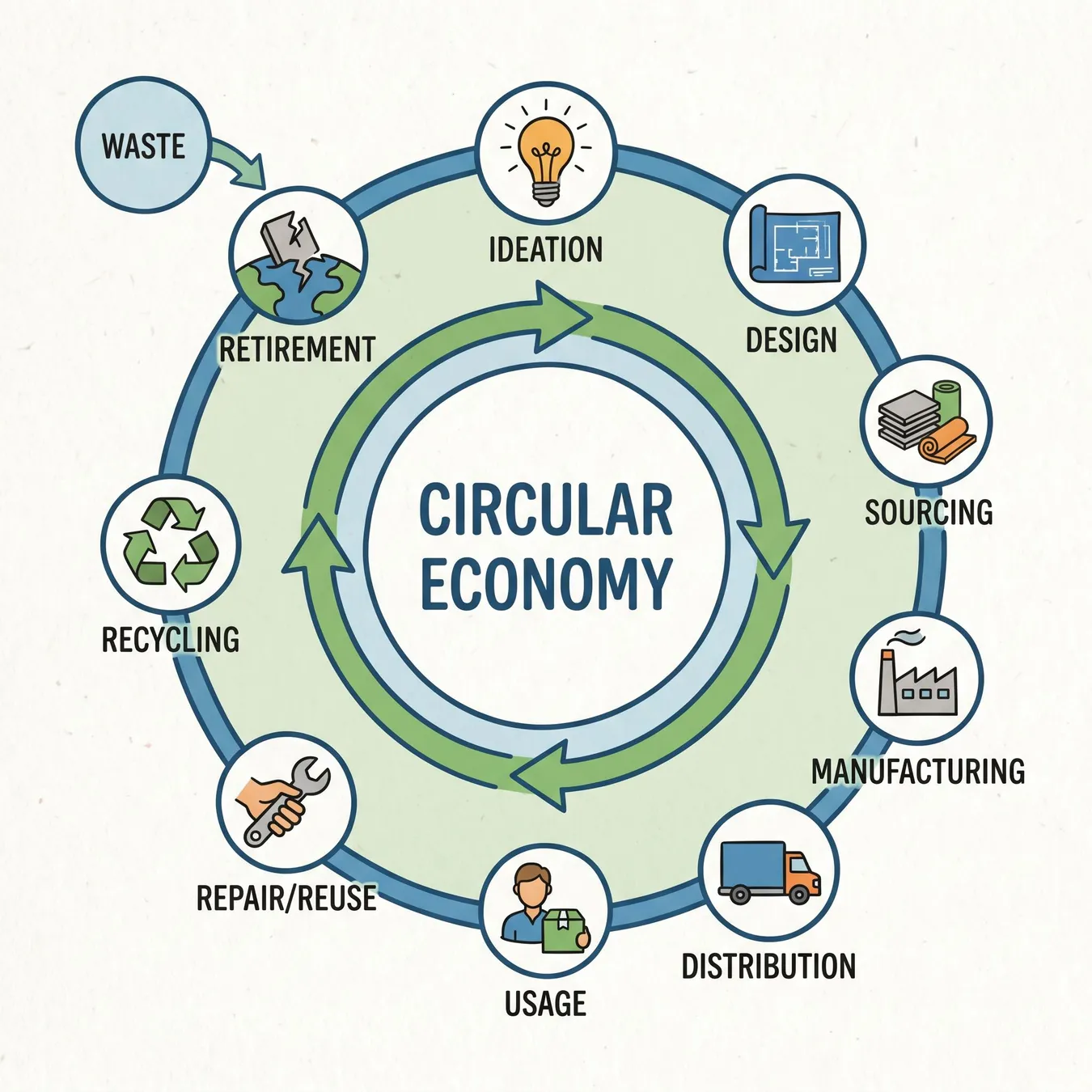
The continuous loop of a formal product lifecycle.
Signs Your Business Lacks a Formal System
Without a formal system, teams often rely on 'vibe-coding' or tribal knowledge. This leads to inconsistent results and makes it nearly impossible to audit past decisions or scale production efficiently.
- Version control conflicts across design and engineering
- Manual data entry leading to high error rates
- Lack of a single source of truth for product requirements
- Difficulty tracking compliance and regulatory standards
- Slow response times to market changes or customer feedback
Eliminating Operational Bottlenecks
A formal PLM system acts as the durable scaffolding for your business. It automates the handoffs between departments, ensuring that engineering always works from the latest product requirements.
Info.
// The Cost of Inaction
Reducing Technical Debt and Risk
Managing software product life cycle management effectively prevents the accumulation of technical debt. By formalizing how features are proposed and implemented, you ensure long-term maintainability.
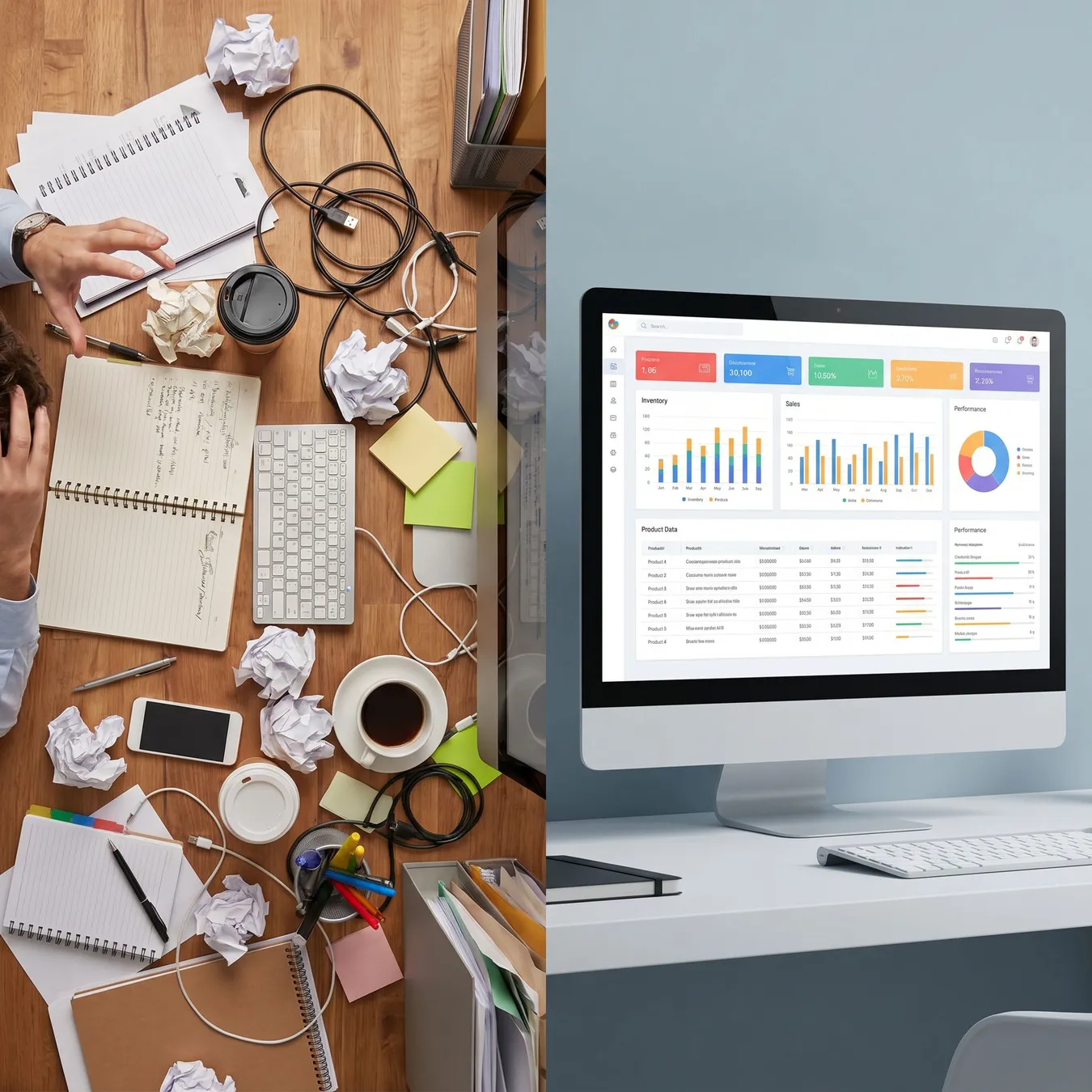
Transitioning from manual chaos to digital order.
The Strategic Benefits of PLM Integration
Integrating your PLM with other business systems creates a unified data environment. This visibility allows leadership to make informed build-vs-buy decisions based on real-world production data.
| Feature | Manual Process | Formal PLM System |
|---|---|---|
| Data Integrity | High risk of error | Single source of truth |
| Collaboration | Siloed emails | Real-time shared access |
| Traceability | Difficult/Manual | Automated audit trails |
Optimizing Your Internal Workflows
To achieve true efficiency, you must focus on the product lifecycle management process itself. Automation is only as good as the underlying logic of your production stages.
Stage 1: Ideation and Requirements
Capturing the 'why' behind a product feature is just as important as the 'how'. A PLM system ensures that market needs are directly linked to engineering tasks.
Stage 2: Design and Engineering
This is where the product takes shape. Modern systems allow for agile product lifecycle management plm, bridging the gap between hardware design and software deployment.
Selecting the Right Infrastructure
Not all businesses need a massive enterprise suite. Often, the best approach is exploring custom product lifecycle management tools that fit your specific operational nuances.
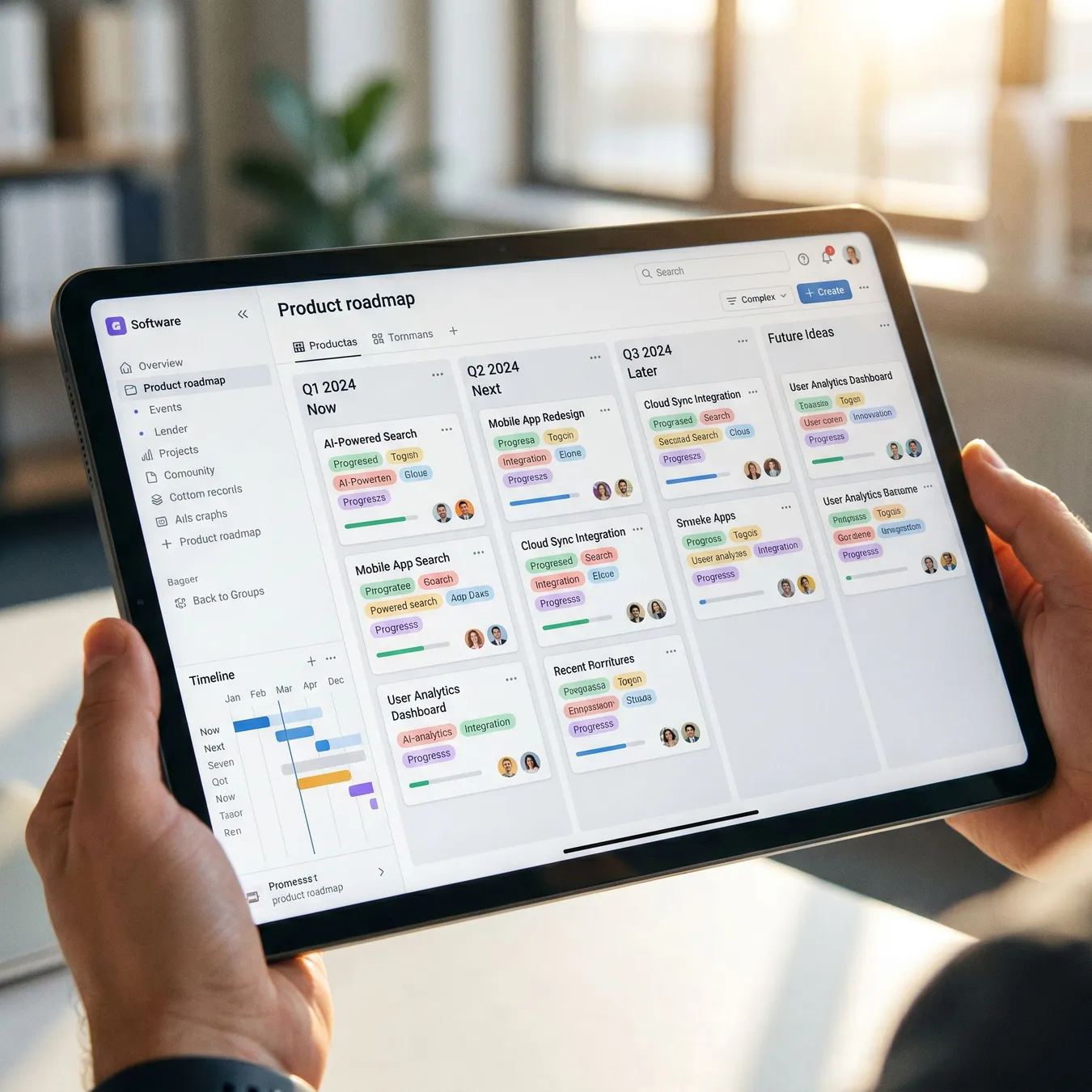
Visualizing the product roadmap.

Cross-functional collaboration.
Common Implementation Pitfalls
Start with a clear audit of current bottlenecks
Ensure executive buy-in for system adoption
Choose a system that scales with your data needs
Automate a broken or inefficient process
Ignore the training needs of your end-users
Choose a tool based on hype rather than utility
The Role of AI in Modern PLM
AI-native systems can now predict delays in the lifecycle by analyzing historical data. This allows for proactive adjustments rather than reactive firefighting.
A formal system is not a constraint on creativity; it is the floor that allows your team to reach higher without falling into technical debt.
Engineering Lead · Studio 402 Partner
Scaling Complex Software Products
For startups moving from MVP to production, the lack of a lifecycle system is the primary cause of 'vibe-code' failure. You need a foundation that survives real users.
How to Begin Your PLM Journey
01 / 04
phase 01 / 04
Audit
phase 02 / 04
Design
phase 03 / 04
Build
phase 04 / 04
Iterate
Building Durable Operational Scaffolding
Studio 402 specializes in turning these operational requirements into custom software. We don't just provide a tool; we build the infrastructure that grows with your business.
Frequently Asked Questions
Bridging the Gap to Production
If your current product development feels like a series of disconnected sprints, it is time to formalize your lifecycle. Studio 402 can help you design and deploy the systems you need to scale.
Trusted by growth-stage teams to build durable software systems.
Studio 402 Engineering Excellence
Ready to Scale Your Operations?
We build custom operational software that unifies your product lifecycle. From MVP hardening to full-scale enterprise infrastructure, we ship software that survives real-world use.
Build Your Durable Scaffolding
Let's discuss how a custom PLM or operational system can eliminate your business bottlenecks.
Explore More Resources
Keep reading
More in Operational & Lifecycle Management
Index
Related categories
Final Checklist for PLM Readiness
Documented current product workflow
Identified key stakeholders across departments
Defined success metrics for the new system
Budget allocated for custom build or license
The journey to operational excellence begins with a single decision to stop managing your product via spreadsheets. Start building for the future today.
- Operational Excellence
- PLM Systems
- Product Engineering
- Scalable Infrastructure