
Optimizing the Product Lifecycle Management Process
A formal product lifecycle management process is the backbone of any scaling engineering team. It ensures that every stage, from initial discovery to final production, is governed by clear standards that prevent bottlenecks and technical debt.
35%
Faster Speed-to-Market
50%
Reduction in Rework
24/7
Operational Visibility
Defining the Product Lifecycle Management Process Flow
Mapping your product lifecycle management process flow allows you to visualize the handoffs between design, engineering, and quality assurance. Without this map, teams often suffer from disconnected data and misaligned priorities.
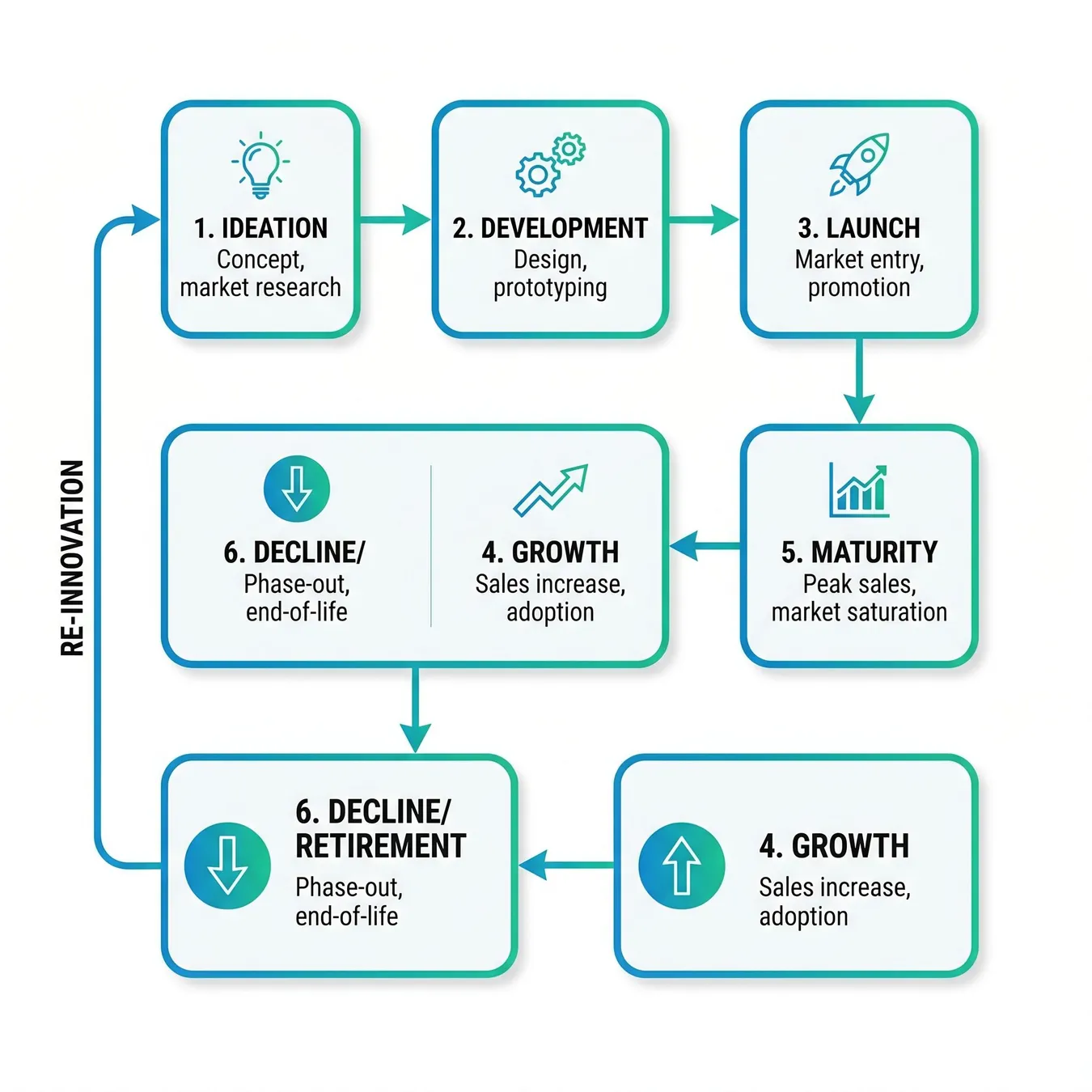
Visualizing the end-to-end PLM process flow.
The Core Stages of Modern PLM
- Concept and Ideation: Defining market fit and technical feasibility.
- Design and Engineering: Prototyping and architectural planning.
- Production and Launch: Moving from staging to live environments.
- Maintenance and Support: Monitoring performance and security.
- Retirement: Managing end-of-life for legacy features.
Strategic Product Lifecycle Management Business Process
Integrating a product lifecycle management business process into your enterprise ensures that technical decisions align with commercial goals. This alignment is critical for maintaining a competitive edge in fast-moving markets.
Info.
// Business Alignment
Optimizing for Software Product Life Cycle Management
When managing digital assets, you must tailor your approach to software product life cycle management to account for rapid iteration cycles and continuous deployment pipelines.
Eliminating Operational Bottlenecks
Bottlenecks typically occur at the handoff points. By automating these transitions, you can significantly reduce the lead time between a feature request and its production release.

Identifying and removing friction in the development pipeline.
Effective Product Lifecycle Management Process Management
Successful product lifecycle management process management requires a combination of the right culture and the right tooling. It is not just about the software; it is about how people interact with the data.
| Process Area | Manual Approach | Optimized Approach |
|---|---|---|
| Requirements | Spreadsheets | Centralized PLM Tool |
| Change Orders | Email Threads | Automated Workflows |
| Compliance | Manual Audits | Real-time Tracking |
Implementing Agile Product Lifecycle Management
For teams managing complex systems, implementing agile product lifecycle management allows for flexibility without sacrificing the rigor required for production-grade reliability.
Agile vs. Waterfall PLM
Trade-off
3 pros · 3 cons
Pros
Faster feedback loops
Higher adaptability
Continuous delivery
Cons
Scope creep risks
Requires high coordination
Documentation lag
Techniques for Process Flow Optimization
Achieving scale requires constant process flow optimization to ensure that as your team grows, your efficiency does not decrease due to coordination overhead.
Automation and AI Integration
Modern PLM systems leverage AI to predict delays and automate routine documentation tasks, allowing engineers to focus on high-value development.
Improving Product Quality Through PLM
The ultimate goal of product lifecycle management improving product outcomes is to deliver higher value to the end-user with fewer defects and lower operational costs.
Standardize data entry across all departments
Automate quality gate approvals
Integrate PLM with CRM and ERP systems
Establish a clear version control policy
Advanced Process Optimization Techniques
Applying specific process optimization techniques can help you identify hidden inefficiencies in your current lifecycle management strategy.
Documentation and the PLM Process PDF
Many organizations still rely on a static product lifecycle management process pdf for training. While useful for onboarding, these should be treated as living documents that evolve with your systems.
Common Pitfalls in PLM Implementation
Centralize all product data
Automate repetitive handoffs
Train teams on the full lifecycle
Use siloed spreadsheets
Ignore feedback from production
Over-complicate early stages
Scaling Your PLM Infrastructure
As your product portfolio grows, you need infrastructure that supports multi-tenant environments and complex global supply chains.
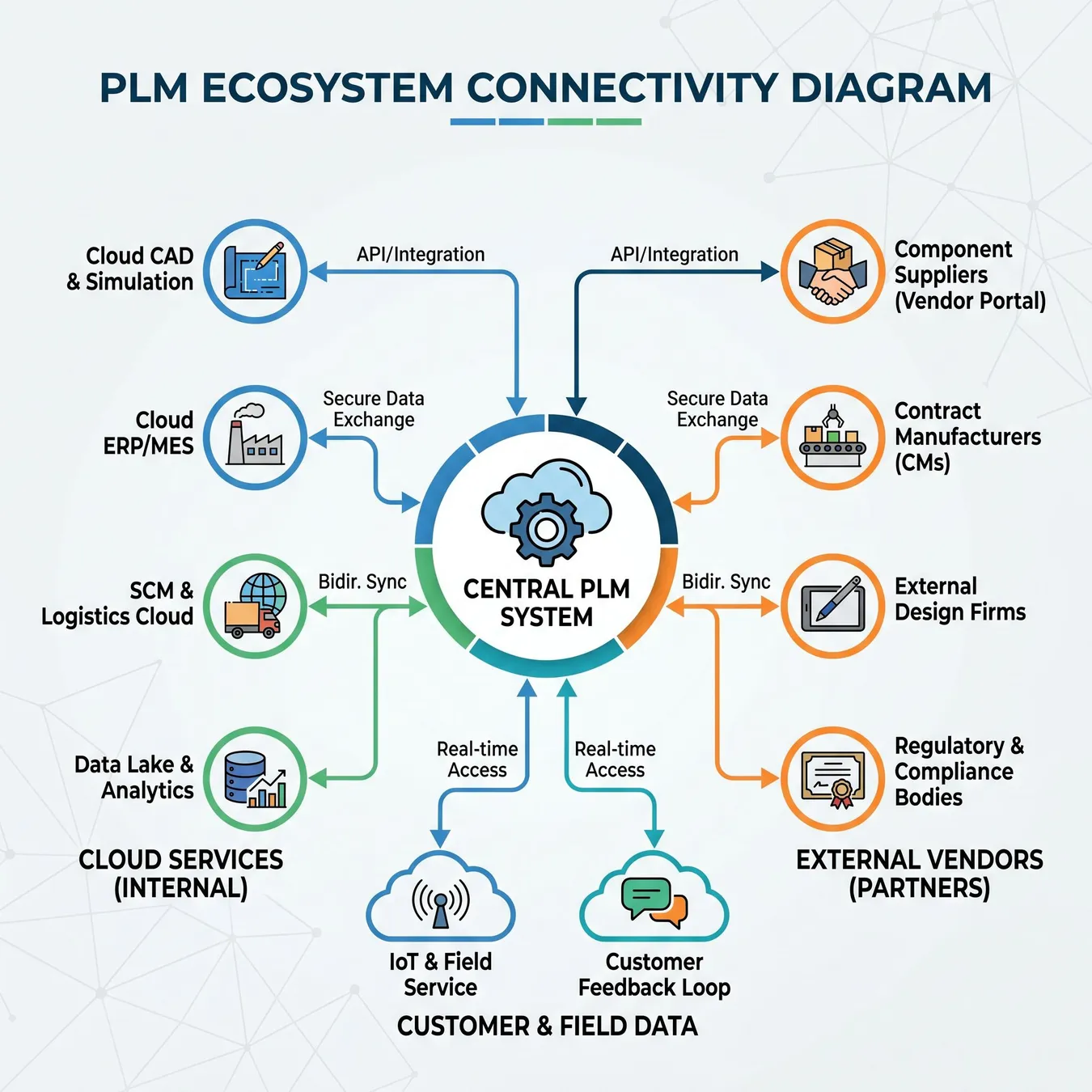
Scalable cloud architecture for modern PLM.
The Role of Cloud-Native Systems
Cloud-native PLM solutions offer the elasticity required to handle spikes in development activity without compromising performance or security.
Measuring PLM Success
You cannot optimize what you do not measure. Key performance indicators (KPIs) should be baked into your lifecycle management tools from day one.
99.9%
Data Accuracy
15%
Cost Reduction
Frequently Asked Questions
Bridging Process to Production with Studio 402
At Studio 402, we understand that a process is only as good as the software that supports it. We specialize in building custom operational systems that turn theoretical lifecycle models into high-velocity production realities.
Whether you are rescuing a fragmented prototype or building a new SaaS platform from the ground up, we provide the engineering depth to ensure your product lifecycle is a competitive advantage, not a bottleneck.

Expert engineering partnership.

Built for real-world scale.
The Studio 402 Implementation Roadmap
01 / 04
phase 01 / 04
Audit & Discovery
phase 02 / 04
System Design
phase 03 / 04
Engineering & Build
phase 04 / 04
Deployment & Scale
Studio 402 transformed our manual product tracking into a seamless, automated system that allowed us to double our release velocity in six months.
Explore More Resources
Ready to Scale Your Product Lifecycle?
Stop fighting manual bottlenecks. Let Studio 402 build the operational systems your business needs to grow.
Keep reading
More in Operational & Lifecycle Management
Index