
Software for End-to-End Product Lifecycle Management
Modern product development requires more than just a task list; it demands a unified software product life cycle management strategy that connects every phase from initial discovery to final production. Without a centralized system, teams often face fragmented data and operational drag.
40%
Reduction in time-to-market
100%
Data traceability
24/7
Operational visibility
What are Product Lifecycle Management Solutions?
Product lifecycle management solutions are comprehensive systems designed to manage the entire journey of a product. This includes everything from the initial design and engineering phases to manufacturing, quality control, and eventual retirement or iteration.
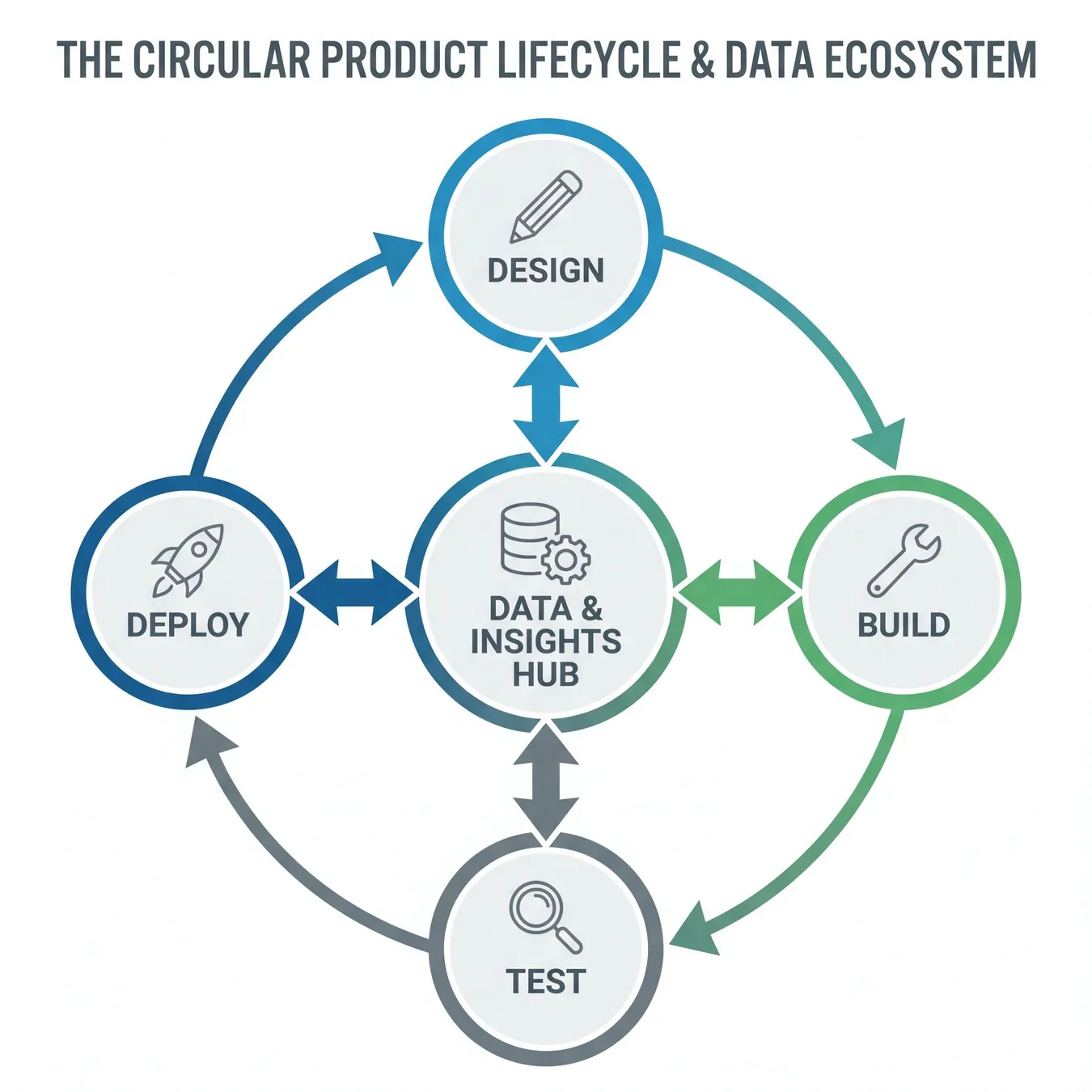
A unified PLM system centralizes data across all development stages.
Core Components of a Product Lifecycle Management Platform
A robust product lifecycle management platform serves as the single source of truth for your organization. It ensures that engineers, product managers, and quality assurance teams are all working from the same set of requirements and real-time data.
- Centralized requirements and documentation management
- Version control for design and engineering assets
- Integrated quality control and compliance tracking
- Automated workflow orchestration between departments
- Real-time analytics and production monitoring
The Shift to Product Lifecycle Management SaaS
Many organizations are moving toward product lifecycle management saas models to improve accessibility and scalability. Cloud-native platforms allow distributed teams to collaborate seamlessly without the overhead of maintaining legacy on-premise infrastructure.
Info.
// Why SaaS Matters
Benefits of End-to-End Lifecycle Integration
Integrating the entire lifecycle into one system eliminates the 'silos' that typically slow down growth-stage companies. When data flows automatically from design to production, the risk of human error decreases significantly.
Trade-off
4 pros · 4 cons
Pros
Unified data across all teams
Faster response to quality issues
Clear audit trails for compliance
Scalable operational scaffolding
Cons
Fragmented communication
Manual data entry errors
Lack of visibility into bottlenecks
Difficult to scale operations
Implementing a Product Lifecycle Management Service
Choosing a product lifecycle management service involves more than just buying software; it requires a partner who understands your specific operational bottlenecks. Custom builds often outperform off-the-shelf tools for complex workflows.
- 01
Audit current manual workflows and spreadsheets
- 02
Define core requirements and compliance needs
- 03
Architect a scalable data model
- 04
Build and integrate the custom PLM platform
- 05
Deploy and iterate based on real-world usage
Common Challenges in Lifecycle Management
Many teams struggle with 'vibe-coded' prototypes that work in a demo but fail when subjected to the rigors of a full production lifecycle. These fragile systems often lack the security and maintainability needed for long-term success.
Centralize all product documentation
Automate quality checks at every stage
Build for scale from day one
Ensure data is accessible to all stakeholders
Rely on disconnected spreadsheets
Ignore technical debt in the early stages
Use generic tools for complex engineering
Wait until launch to think about quality
Custom PLM for High-Growth Teams
For companies in rapid expansion, trusted product lifecycle software for fast growth is essential. As your team grows, the complexity of coordinating design and production increases exponentially, making a custom solution a strategic necessity.

Custom software provides the visibility needed to manage growth.
How Studio 402 Engineers Durable PLM Systems
At Studio 402, we specialize in custom software development that turns operational bottlenecks into durable business infrastructure. We don't just build apps; we build the systems that run your business.
01 / 04
phase 01 / 04
Discovery
phase 02 / 04
Architecture
phase 03 / 04
Build
phase 04 / 04
Scale
Solving the 'Vibe-Code' Crisis
If your current lifecycle tools are held together by scripts and manual workarounds, you are likely facing a scale wall. We help teams rescue and refactor fragile prototypes into production-ready software.
Warning.
// The Cost of Delay
Frequently Asked Questions
Our Commitment to Production Quality
We believe that software should survive real users and real-world scale. Our approach to PLM engineering emphasizes security, maintainability, and operational safety.
Studio 402 transformed our fragmented production process into a single, automated platform. We finally have the visibility we need to scale.
Explore Related Lifecycle Solutions
Ready to Build Your Custom PLM Platform?
Stop fighting fragmented tools and start building a durable operational foundation. Let's discuss your product lifecycle needs.
Keep reading
More in Operational & Lifecycle Management
Index