
Integrating Quality Control into Production Management
Modern production management software with quality control features is no longer a luxury for high-growth teams; it is the baseline for operational survival. By embedding real-time monitoring directly into the production flow, companies can catch defects before they escalate into costly recalls.
- Operational Excellence
- Quality Assurance
- Real-Time Monitoring
- Production Scale
Defining Integrated Quality Production Management Software
Integrated quality production management software unifies the planning, execution, and verification stages of a product's lifecycle. Instead of treating quality as a post-production check, these systems treat it as a continuous data stream that informs every operational decision.
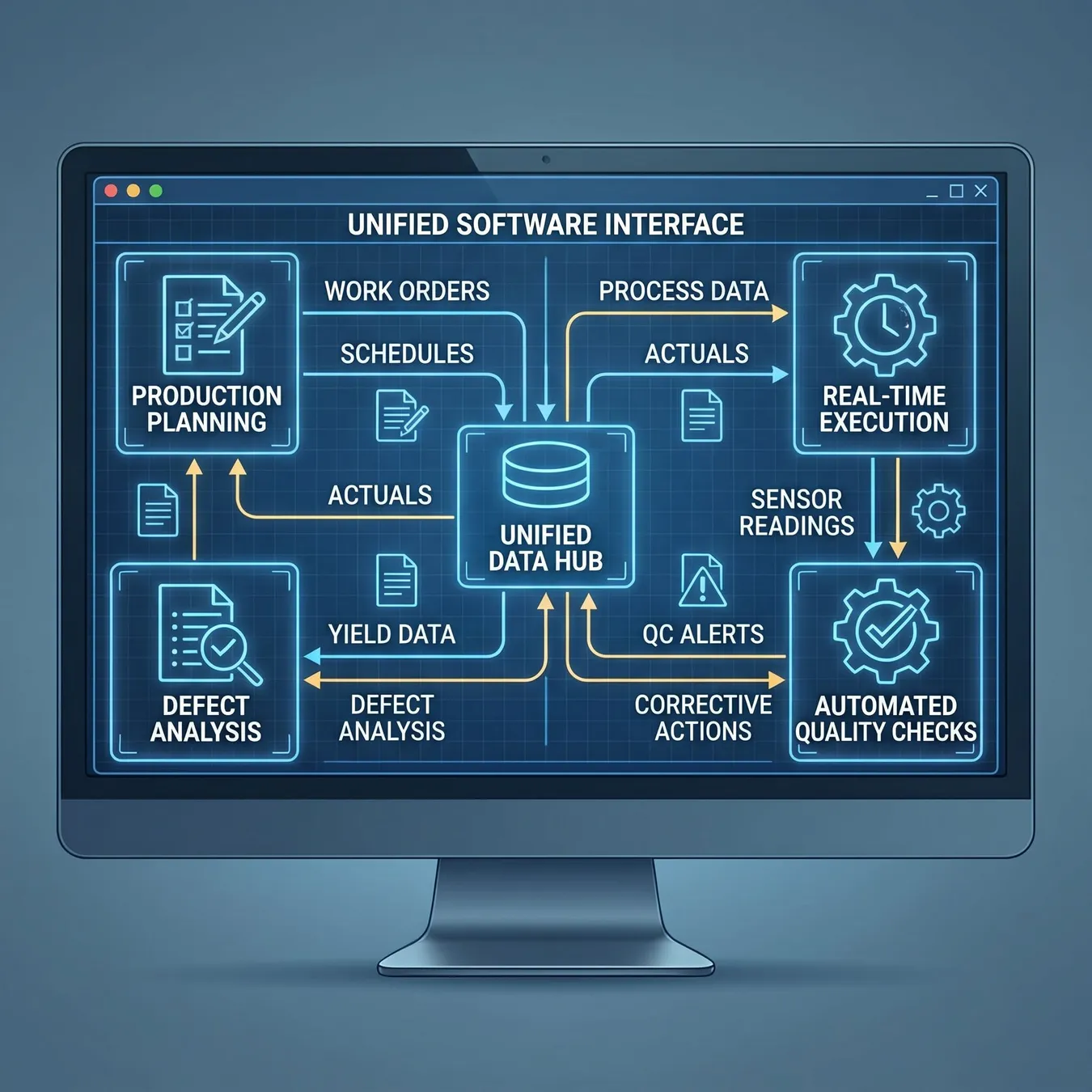
The architecture of integrated quality and production management.
Core Components of Quality Management Production Software
- Real-time sensor and IoT data ingestion
- Automated non-conformance reporting (NCR)
- Statistical Process Control (SPC) dashboards
- Role-based access for inspectors and operators
- Audit trails for regulatory compliance
The Benefits of Real-Time Quality Control Software
Implementing robust quality control software allows for immediate intervention. When a production line drifts outside of acceptable tolerances, the system can automatically trigger alerts or even pause operations to prevent the creation of scrap material.
40%
Reduction in scrap waste
25%
Increase in throughput
100%
Audit traceability
Steps to Integrate Quality into Your Production Workflow
01 / 04
phase 01 / 04
Data Mapping
phase 02 / 04
Sensor Integration
phase 03 / 04
Threshold Definition
phase 04 / 04
Feedback Loops
Leveraging Software Quality Assurance Automation
To achieve true scale, manual checks must be replaced by software quality assurance automation. This ensures that every unit is tested against the same rigorous standards without human fatigue or bias affecting the results.
Comparison: Custom vs. Off-the-Shelf Quality Systems
Trade-off
3 pros · 3 cons
Pros
Perfect alignment with unique workflows
Seamless integration with existing legacy tools
Ownership of all proprietary quality data
Cons
Higher initial development investment
Requires internal or partner engineering support
Longer initial setup time compared to SaaS
Best Practices for Quality Management Software in Production
Automate data collection at the source
Provide mobile access for floor supervisors
Integrate quality checks into the main production UI
Treat quality as a separate siloed database
Ignore minor deviations that signal future failure
Overcomplicate the UI for line operators
Optimizing the Lifecycle with Quality Data
Effective product lifecycle optimization requires a closed-loop system where quality failures in production inform design changes in the next iteration. This prevents the same mistakes from being repeated across product generations.
Data-Driven Decision Making
| Metric | Manual Impact | Automated Impact |
|---|---|---|
| Defect Detection | Reactive | Predictive |
| Reporting Speed | Days/Weeks | Milliseconds |
| Compliance Cost | High (Labor) | Low (Systemic) |
Common Challenges in Quality System Integration
Building Custom Production Management Software
For many organizations, off-the-shelf tools for managing product lifecycle are too rigid. Building custom production management software allows you to map the digital system to your physical reality, ensuring that quality control is a natural part of the work, not a hurdle.
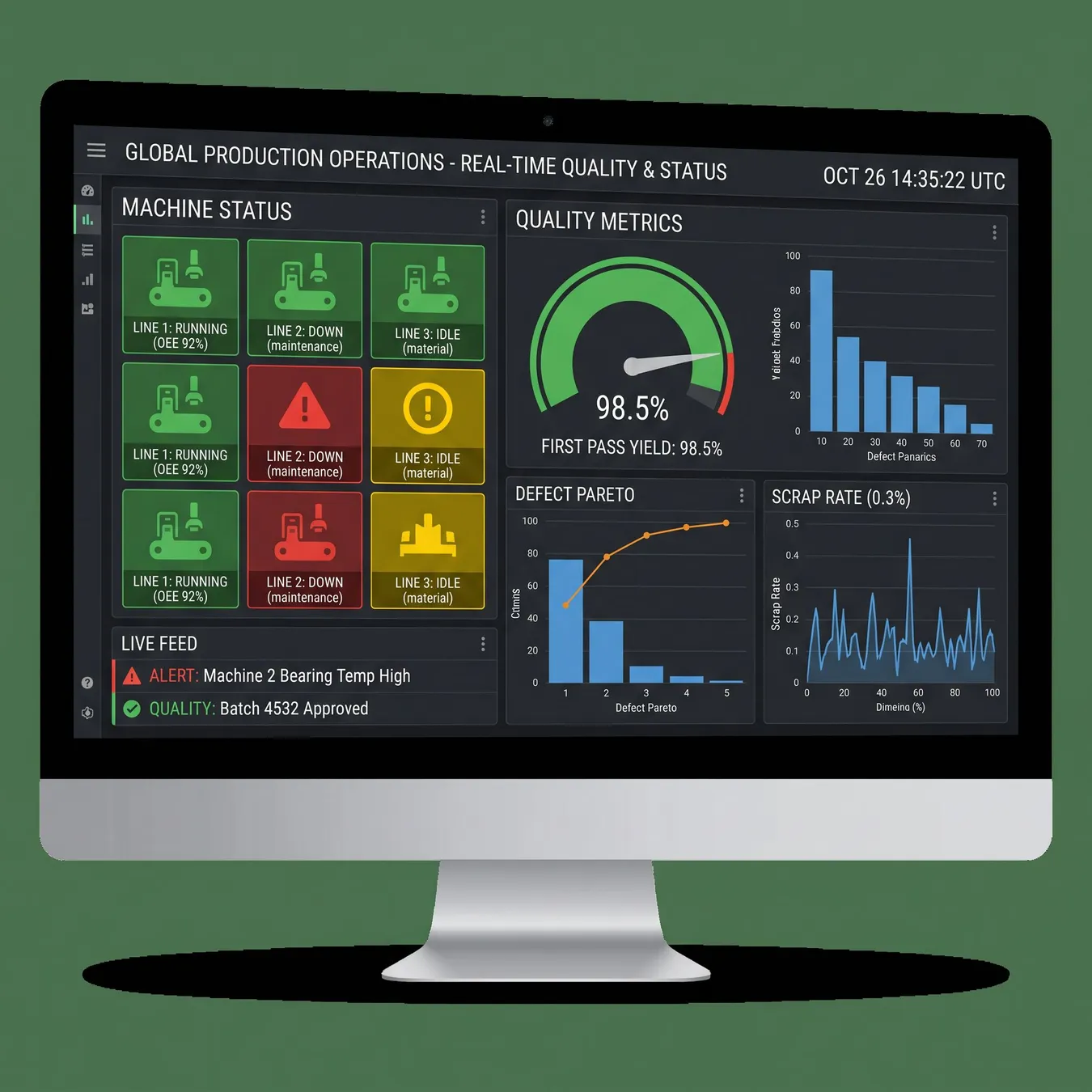
Custom dashboard for real-time production visibility.
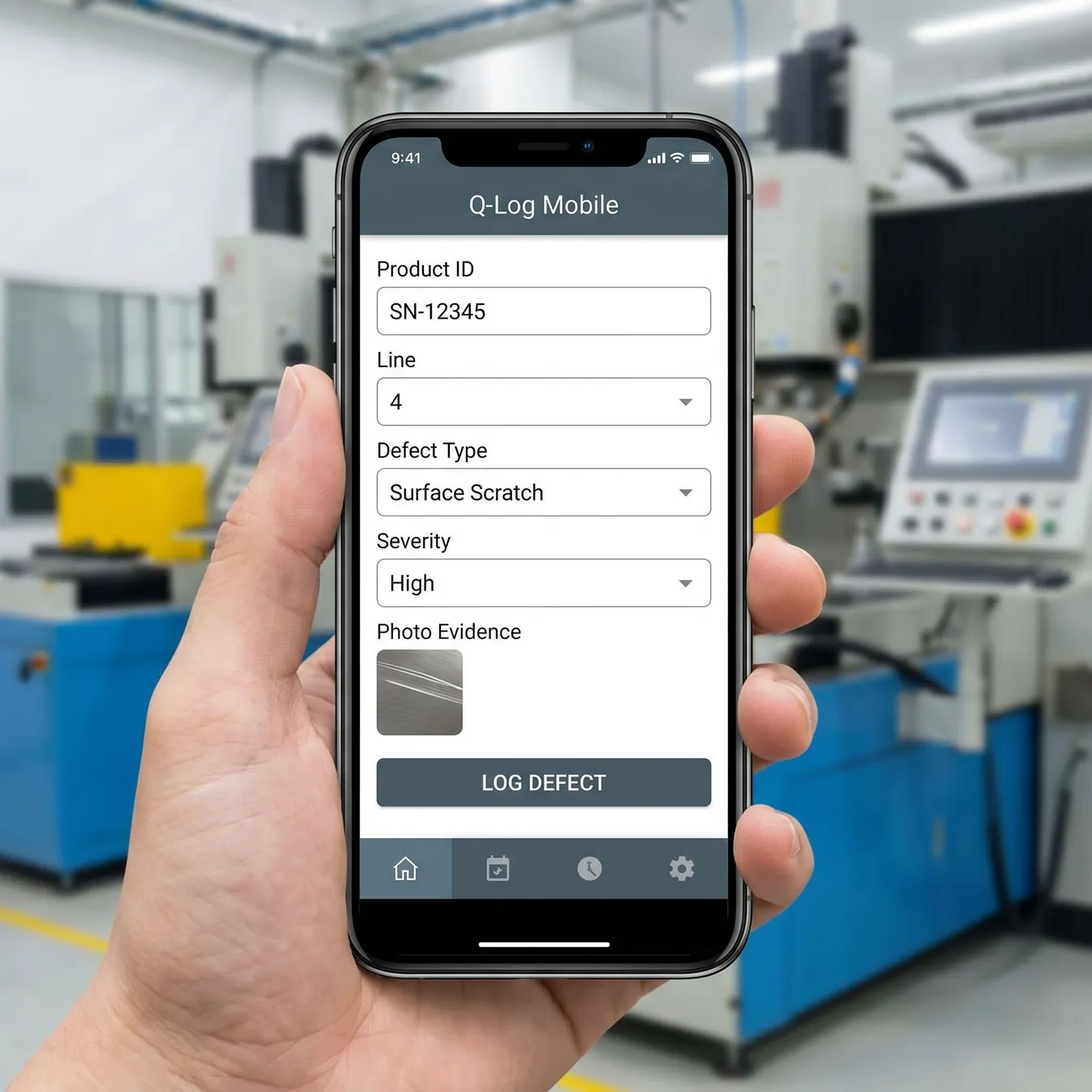
Mobile-first quality logging for field and floor use.
The Studio 402 Approach to Operational Systems
At Studio 402, we don't just build apps; we build durable operational scaffolding. We understand that quality management software in production must be resilient, secure, and capable of handling high-velocity data without lag.
Info.
// Production-Ready Engineering
Why Custom Systems Win at Scale
When your production volume increases, generic tools often break. Our custom-built solutions are architected for growth, ensuring that your quality management production software evolves alongside your business needs.
Hardening Your Quality Infrastructure
Implement end-to-end encryption for quality data
Establish automated daily backups of production logs
Configure multi-factor authentication for admin access
Set up real-time alerting for critical system failures
Bridging the Gap Between Design and Production
If you are struggling with fragmented tools or manual spreadsheets that obscure your quality data, it is time to build a unified system. Studio 402 helps you bridge the gap between engineering design and production reality.
Our Engineering Philosophy
Software should be the invisible hand that guides production toward perfection, not a bottleneck that slows it down.
Studio 402 Engineering Team · Lead Systems Architect
Ready to Build Your Production Quality System?
Whether you are starting from zero or need to rescue a prototype that isn't scaling, we provide the technical leadership and engineering depth to ship production-ready outcomes.
Trusted by high-growth operators to build durable business infrastructure.
From MVPs to enterprise-grade operational platforms.
Start a Conversation About Your System
Let's discuss how to integrate automated quality control into your production management software.
Keep reading
More in Operational & Lifecycle Management
Index
Related categories
Frequently Asked Questions
Technical Specifications for Quality Systems
A robust system requires a modern tech stack. We typically utilize high-performance backends like Node.js or Go, coupled with real-time data streaming via Kafka or RabbitMQ to ensure that quality alerts are delivered in sub-second timeframes.
Security and Compliance
For industries like medical devices or aerospace, compliance is non-negotiable. Our systems are built with 21 CFR Part 11 and ISO 9001 standards in mind, providing the necessary electronic signatures and audit trails.
Conclusion: The Path to Zero Defects
Integrating quality control into your production management software is the most effective way to reach a zero-defect goal. By treating quality as code, you create a repeatable, scalable, and defensible operational advantage.

Modern production environments powered by integrated software.
Next Steps for Your Team
- Audit your current defect rate and scrap costs
- Identify the top three bottlenecks in your quality reporting
- Reach out to a technical partner to scope a custom solution