
Overview
Choosing Startup Business Models for Scalable Growth
A technical guide to selecting start up business models that align with production-grade engineering and venture studio execution for long-term scalability.

Startup Business Models for Scalable Growth
Selecting the right start up business models is not just a commercial decision; it is a technical one. The model you choose dictates your architecture, your data schema, and your engineering velocity. For founders, understanding how to develop a startup requires aligning these business incentives with production-grade execution.
Core Startup Business Models for 2026
Modern startups typically fall into several high-growth categories. Each carries unique technical requirements and operational overhead. Choosing between them early helps prevent expensive refactors later in the venture lifecycle.
- Software as a Service (SaaS): Recurring revenue through cloud-hosted software.
- Marketplace: Connecting buyers and sellers with transaction-based fees.
- Usage-Based / Consumption: Charging based on API calls, storage, or compute.
- Transactional / Fintech: Monetizing the flow of funds through a platform.
- Ecosystem / Platform: Building a foundation for third-party developers.
SaaS: The Gold Standard for Scalability
SaaS remains the most popular model due to its predictable revenue and high margins. However, it requires a robust multi-tenant architecture to ensure data isolation and security across customers.
85%
Average gross margins for mature SaaS companies
3-5x
Valuation premium over traditional service models
Marketplaces and Two-Sided Networks
Marketplaces thrive on network effects but face the 'chicken and egg' problem. Technically, this necessitates complex matching algorithms, escrow systems, and sophisticated trust and safety tooling.
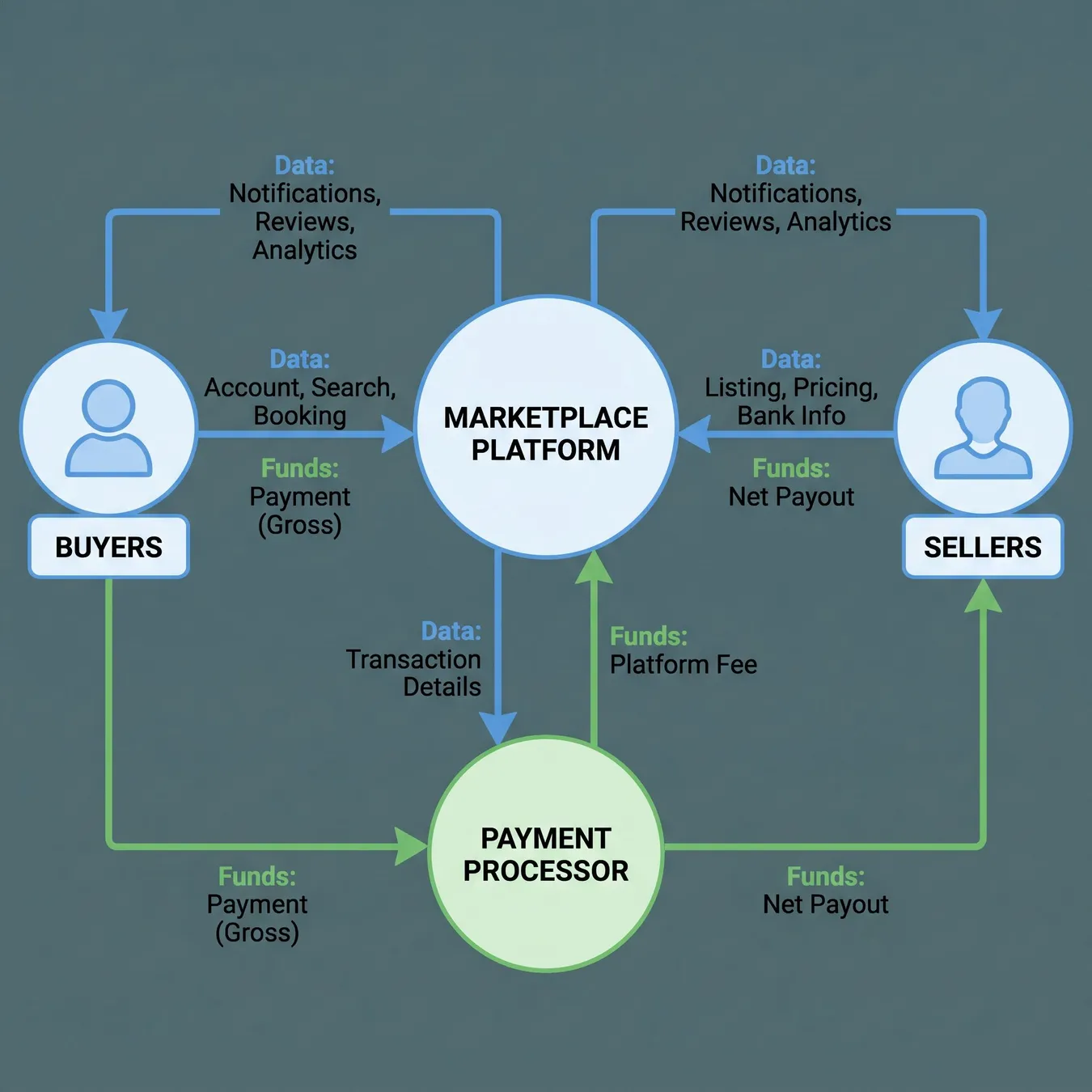
Visualizing the complexity of marketplace transactions.
Usage-Based Models: The Infrastructure Play
Usage-based models align cost with value. This is common in AI and cloud infrastructure. The technical challenge here is real-time metering and billing accuracy, which requires high-throughput data pipelines.
Comparing Unit Economics by Model
| Model Type | Primary Metric | Technical Complexity | Scalability |
|---|---|---|---|
| SaaS | MRR / Churn | Moderate | High |
| Marketplace | GMV / Take Rate | High | Exponential |
| Usage-Based | Consumption Rate | Very High | Linear to High |
Aligning with Investor Incentives
Founders must ensure their chosen path aligns with the venture capital business model to attract funding. Investors look for specific unit economics that prove the model can scale efficiently without a linear increase in headcount.
Technical Feasibility and Build vs. Buy
Deciding when to build custom software is a pivotal moment for any startup. If your business model relies on a unique operational workflow or proprietary AI integration, off-the-shelf tools will eventually become a bottleneck.
Structuring for Execution
Your business model dictates your engineering team structure. A marketplace needs heavy frontend and trust/safety focus, while a usage-based AI startup requires deep backend and infrastructure expertise.
Common Pitfalls in Model Selection
Validate your unit economics early with real user data.
Choose a model that matches your technical core competency.
Plan for multi-tenancy even if you start with a single client.
Don't pick a complex marketplace model if a simple SaaS will suffice.
Avoid usage-based billing if you cannot meter accurately.
Don't ignore the cost of customer acquisition (CAC) in your model.
Scaling Through Automation
Regardless of the model, scalability is achieved through operational systems. Automating manual workflows—from billing to onboarding—is what separates a lifestyle business from a venture-scale startup.
The Venture Studio Advantage
Venture studios use a repeatable framework to test and launch these models. By standardizing the engineering and operational 'factory,' they reduce the time to market and technical risk for each new venture.
Frequently Asked Questions
Selecting Your Technical Partner
Once you have selected a model, you need an engineering partner who understands production-grade software. Studio 402 specializes in building the foundations that allow these models to thrive under real-world load.
Next Steps for Founders
- 01
Identify your primary value proposition.
- 02
Map your business model to a technical architecture.
- 03
Audit your current codebase for scalability gaps.
- 04
Consult with a technical partner to refine your roadmap.
Explore Related Resources
Build Your Scalable Foundation
Studio 402 helps founders and venture builders turn business models into durable software. Whether you are launching a new SaaS or scaling a complex marketplace, we provide the engineering depth you need to succeed.
Ready to Build for Scale?
Let's discuss your business model and the technical infrastructure needed to support your growth.
Technical Strategy for Growth
Growth is not just about sales; it is about the ability of your systems to handle that sales volume. We focus on the intersection of product engineering and business logic.
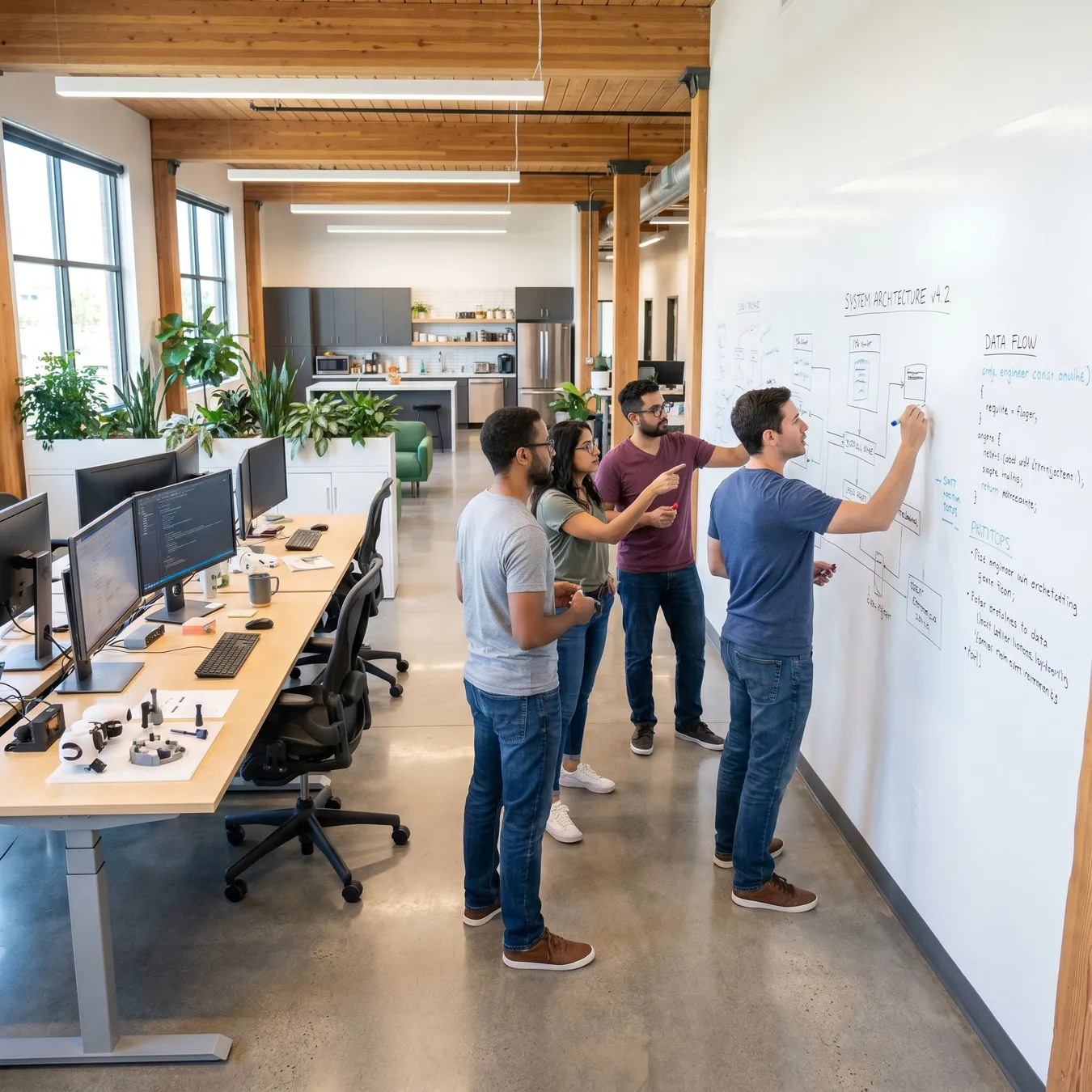
Collaboration at the core of engineering.

Production-ready code for real-world scale.
Operational Excellence
We believe that the best business models are supported by the best operational systems. Our goal is to eliminate manual drag so you can focus on your market.
- SaaS
- Marketplace
- AI-Native
- Scalable
Production Hardening
Many startups fail because their initial prototype cannot handle real-world users. We specialize in hardening those prototypes into production-grade systems.
Future-Proofing Your Stack
Choosing a business model today means planning for the technology of tomorrow. We ensure your stack is flexible enough to adapt to new market demands.
Data-Driven Decisions
We help you implement the analytics and reporting tools necessary to validate your business model's performance in real-time.
Security and Compliance
As you scale, security becomes a business model requirement. We build in auth, permissions, and audit trails from day one.
Cloud Infrastructure
Your business model is only as reliable as your hosting. We design cloud architectures that grow with your traffic and data needs.
API-First Development
An API-first approach allows your business model to integrate with partners and ecosystems, unlocking new revenue streams.
Workflow Automation
We replace manual coordination with durable software systems, ensuring your operational scaffolding matches your GTM motion.
Legacy Modernization
If an outdated model or tech stack is holding you back, we provide the path to modernization and renewed growth.
Keep reading