
How to Start a Venture Builder: The Engineering Roadmap
Overview
Launch Your Venture Engine
A strategic blueprint for investors and leaders to build repeatable, production-grade startups through a structured engineering framework.
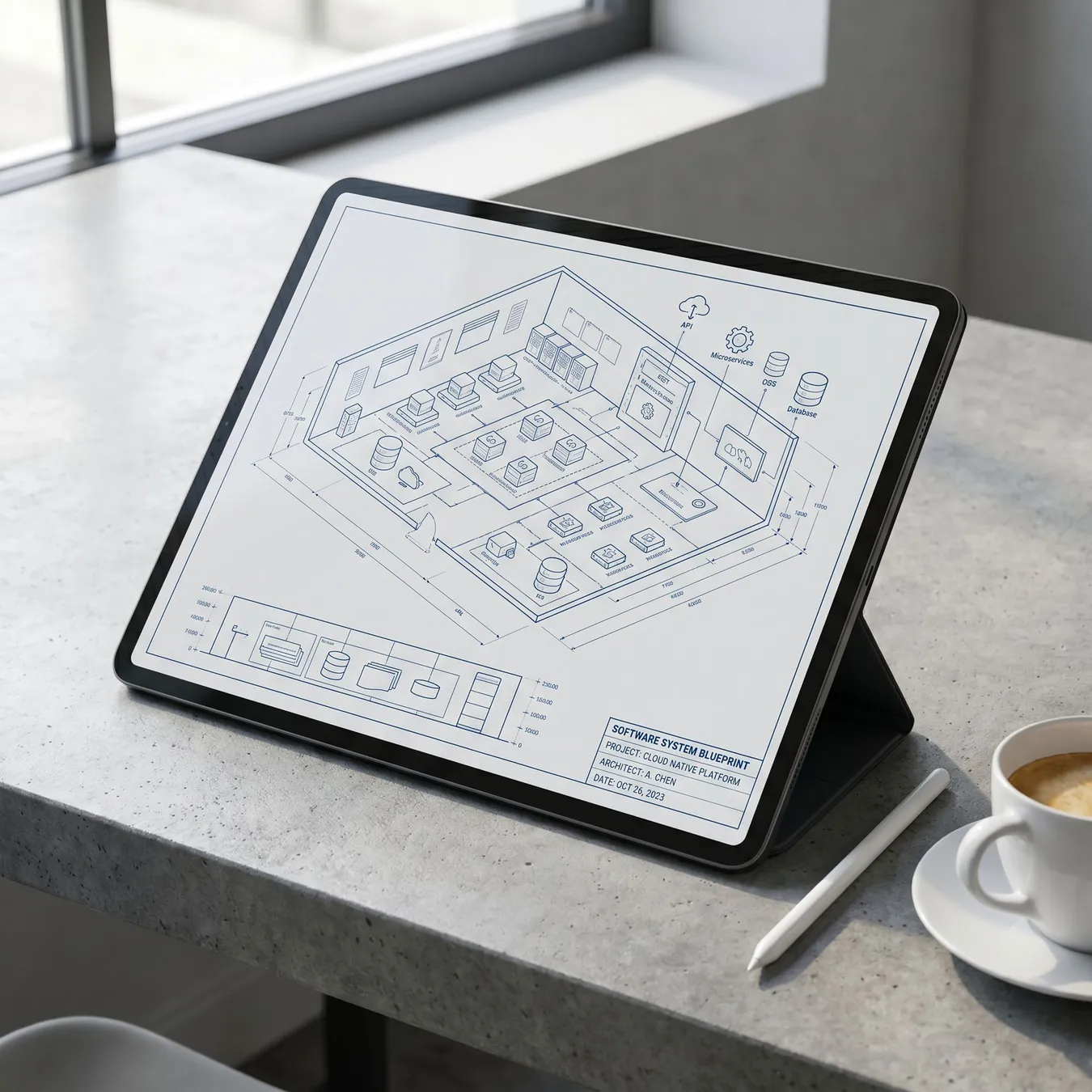
Starting a venture builder requires more than just capital; it demands a repeatable engine for turning ideas into durable software. To succeed in 2026, you must align your investment strategy with a rigorous technical execution model that ensures every portfolio company starts on a production-ready foundation.
Phase 1: Defining Your Venture Builder Model
Before hiring, you must decide on the structural approach. Whether you are building a corporate studio or an independent fund, the core mission is to reduce the friction of the zero-to-one phase.
- Independent Venture Studio: High-risk, high-reward model focused on external market gaps.
- Corporate Venture Builder: Leveraging internal assets to launch spin-outs.
- Venture Lab: Rapid prototyping focused on R&D and IP generation.
- Platform Studio: Providing shared services to an existing portfolio.
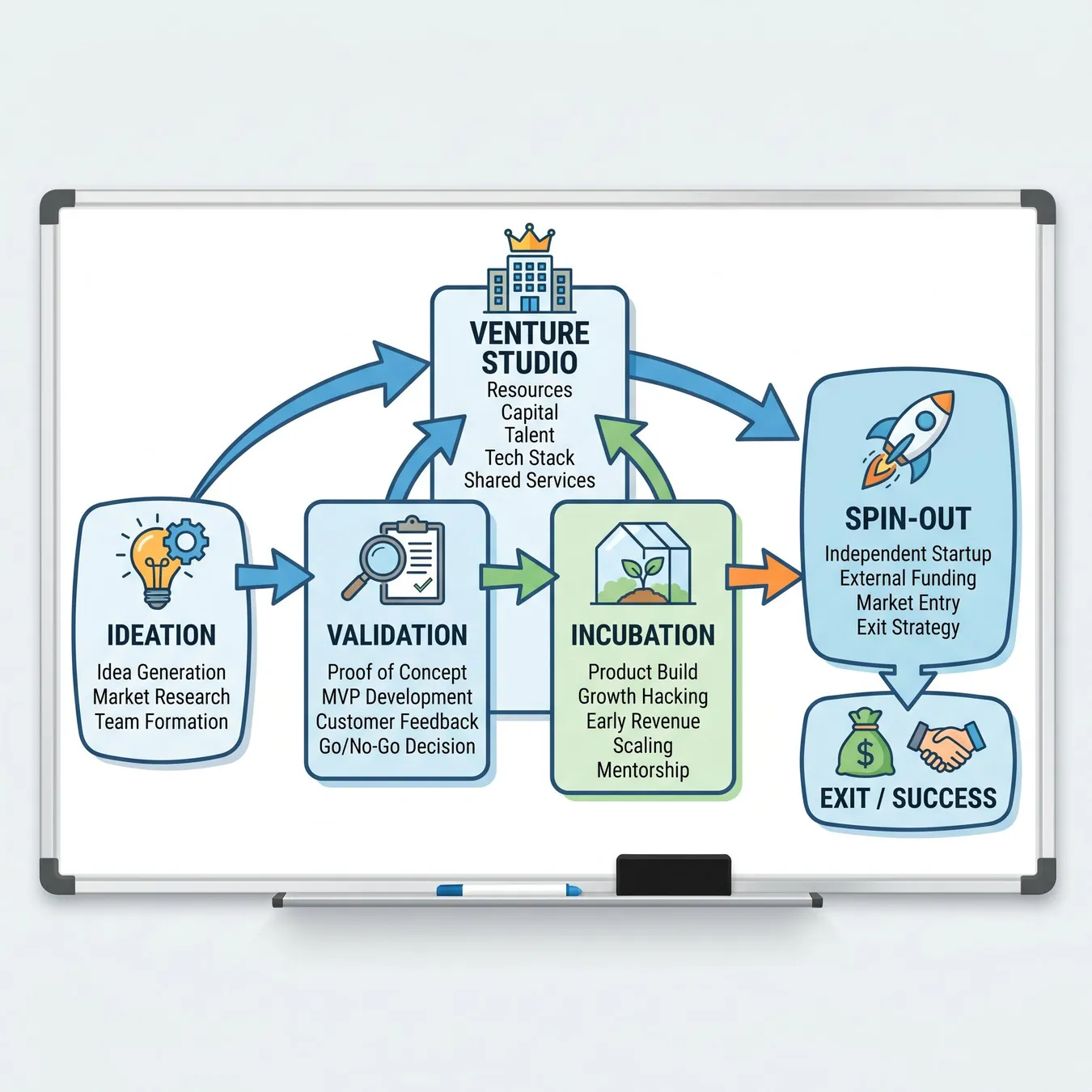
The lifecycle of a venture builder project.
Phase 2: Securing Early Stage Funding and Capital
Capital allocation in a venture builder is unique. You aren't just funding a company; you are funding the infrastructure that builds companies. Understanding the early stage funding landscape is critical for balancing operational costs with equity stakes.
15-30%
Typical equity stake taken by builders
$500k+
Average initial build capital per venture
12-18 Mo
Time to spin-out or series A
Phase 3: Building Your Core Technical Team
The most common failure point is hiring too many generalists. You need a centralized engineering core that can jump between projects without losing velocity. This allows you to build a startup team that is specialized in the zero-to-one phase.
The Shared Services Engineering Model
A successful venture builder utilizes a shared engineering team to maintain high standards across all projects. This team establishes the 'golden path' for development, ensuring security and scalability are baked in from day one.
Tip.
// Centralize Infrastructure
Phase 4: Establishing the Repeatable Product Roadmap
Consistency is the hallmark of a professional studio. Every new venture should follow a standardized product roadmap startup founders can rely on to hit validation milestones.
01 / 04
phase 01 / 04
Ideation & Validation
phase 02 / 04
MVP Engineering
phase 03 / 04
Beta Launch
phase 04 / 04
Spin-out Readiness
Phase 5: Operationalizing Engineering Structure
As your portfolio grows, your internal organization must scale. Implementing a robust engineering team structure ensures that you can support ten startups as effectively as you supported two.

Collaboration is key to venture success.

Production-grade code is the foundation.
Venture Builder vs. Traditional Incubator
It is important to distinguish the venture builder model from traditional accelerators or incubators. Builders are 'co-founders' who provide the actual labor of building, not just advice.
Trade-off
4 pros · 4 cons
Pros
Shared technical overhead reduces costs
Repeatable playbooks increase speed
Higher equity stakes for the builder
Direct control over product quality
Cons
High initial operational burn
Requires deep technical leadership
Harder to scale than a pure fund
Concentrated risk in the build team
The Software Stack for Venture Builders
To maintain velocity, your studio needs a 'Venture OS'—a set of tools and libraries that can be cloned for every new project. This includes authentication, billing, and deployment pipelines.
| Category | Recommended Tooling | Purpose |
|---|---|---|
| Cloud | AWS / GCP | Scalable infrastructure |
| Backend | Node.js / Python | Rapid API development |
| Frontend | Next.js / React | Modern user experiences |
| Database | PostgreSQL | Reliable data modeling |
Common Pitfalls in Launching a Builder
Standardize your tech stack across ventures
Hire senior engineers who enjoy the 0-1 phase
Focus on one or two industry verticals initially
Build internal tools to automate repetitive tasks
Don't let founders choose their own tech debt
Don't ignore the 'boring' ops like HR and legal
Don't over-engineer the first MVP
Don't build without a clear spin-out criteria
Venture Builder Launch Checklist
Secure 24 months of operational runway
Define equity split and founder vesting terms
Hire a Lead Architect for the shared core
Establish a repeatable validation framework
Select a primary cloud and deployment stack
Draft the spin-out and governance documents
Frequently Asked Questions
Bridging Strategy and Execution
The roadmap to a successful venture builder is paved with technical decisions. If you are planning to launch a studio, having a partner who understands the nuances of production-grade engineering is your greatest asset.
At Studio 402, we act as the engineering engine for venture builders and corporate innovation teams. We don't just consult; we build the foundations that allow your ventures to scale without the typical technical debt of early-stage startups.
Trusted by venture-backed teams to ship production-ready software.
From MVP to Series B infrastructure.
Build Your Venture Engine with Studio 402
Ready to launch your venture builder with a world-class engineering partner? Let's discuss your roadmap and technical needs.
Explore Venture Building Models
Technical Foundations for Studios
For more specialized needs, explore our deep dives into platform engineering and AI-native systems designed for the studio model.
- Venture Strategy
- MVP Engineering
- Cloud Ops
- AI Integration
Case Study: Scaling a Builder
The difference between a successful builder and a failed one is the quality of the initial engineering. Studio 402 provided the rigor we needed to spin out three companies in 18 months.
Marcus Chen · Managing Partner, Venture Engine
Final Thoughts on the Builder Roadmap
The venture builder model is the most efficient way to deploy capital into software today, provided you treat engineering as a core competency rather than an outsourced commodity.

Visualizing the growth of a venture portfolio.
Next Steps for Investors
Review your current technical capabilities and identify where a shared engineering core can provide the most leverage for your upcoming launches.
- Audit existing prototypes for production readiness
- Standardize deployment pipelines
- Centralize security and auth protocols
- Establish a clear technical vetting process for founders
The 2026 Outlook
As AI lowers the barrier to entry for simple apps, the value of a venture builder shifts toward complex systems, deep integrations, and operational excellence.
Keep reading
More in Startup Studios & Venture Platforms
For teams looking to refine their approach to venture platforms, we recommend exploring our sibling resources on platform venture studio models.
Summary of the Strategic Roadmap
- 01
Define your builder model and industry focus.
- 02
Secure capital for both operations and venture seed.
- 03
Hire a core engineering team focused on the 0-1 phase.
- 04
Develop a repeatable product roadmap for all ventures.
- 05
Implement a shared 'Venture OS' software stack.
- 06
Establish clear spin-out and scaling criteria.
Building a venture builder is a marathon of engineering and operational discipline. By following this roadmap, you ensure that your studio is built to last.