
Salesforce Product Lifecycle Management (PLM) Engineering
Managing complex product data requires more than just a spreadsheet; it requires a unified source of truth. Salesforce product lifecycle management (PLM) bridges the gap between engineering production and go-to-market execution, ensuring that every asset is ready for sale the moment it leaves the production line.
- GTM Systems
- PLM Engineering
- Salesforce Integration
- Production Ops
Understanding Product Lifecycle Management in Salesforce
In a modern enterprise, product lifecycle management salesforce integration allows teams to track a product from initial concept through design, manufacturing, and eventually marketing. This visibility prevents the common bottleneck where sales teams are waiting on technical specs that are trapped in engineering silos.
- Centralized product data for global teams
- Real-time synchronization between production and sales
- Automated marketing asset distribution
- Version control for technical specifications
- Lifecycle stage tracking for complex SKUs
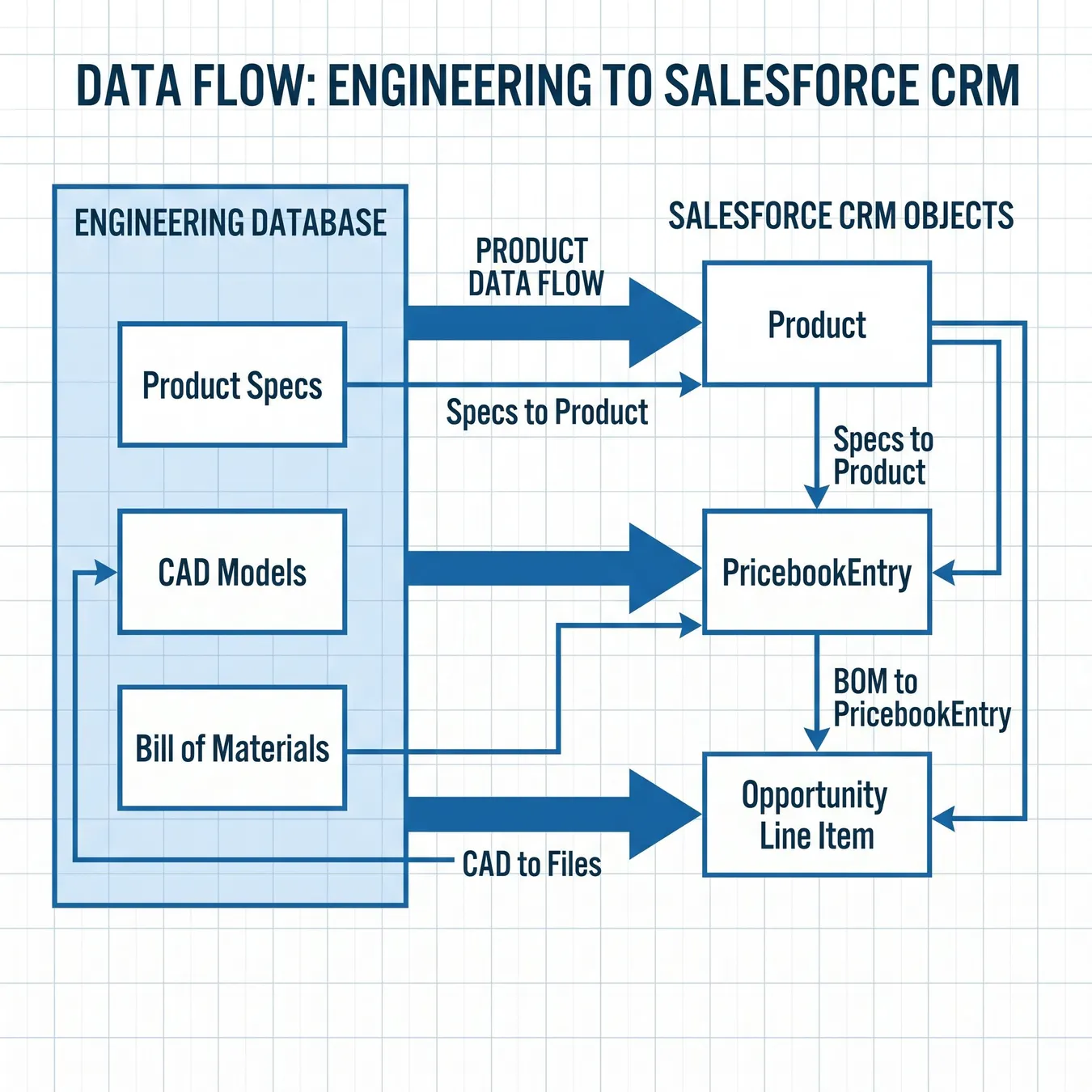
Visualizing the flow of product data from production to GTM execution.
Bridging the Gap: Product Lifecycle Management Marketing
Effective product lifecycle management marketing ensures that your revenue teams have the most accurate data. When engineering updates a spec, the marketing team should see that change reflected in their collateral immediately, reducing the risk of selling outdated or incorrect product versions.
Info.
// Operational Efficiency Note
Core Components of Salesforce PLM Systems
Building a robust system requires specialized product management software production marketing capabilities. These systems must handle high-volume data transfers while maintaining the integrity of the Salesforce data model.
| Feature | Production Benefit | Marketing Benefit |
|---|---|---|
| BOM Integration | Accurate parts tracking | Precise feature listings |
| Asset Library | Technical drawings storage | Direct access to renders |
| Stage Gates | Controlled release cycles | Predictable launch dates |
Engineering Strategy for PLM Execution
Success depends on choosing the right product marketing management software for strategy and execution. We focus on creating custom objects and Apex triggers that automate the transition of products through their various lifecycle stages.
- 01
Audit existing product data silos
- 02
Map engineering fields to Salesforce CRM objects
- 03
Develop custom middleware for real-time syncing
- 04
Build validation rules for GTM readiness
- 05
Deploy automated notification systems for stakeholders
Common Challenges in Salesforce PLM Implementation
Use standard objects where possible to maintain compatibility
Implement strict data validation at the entry point
Automate the handoff between engineering and sales
Over-customize the UI at the expense of performance
Ignore the need for historical versioning
Allow manual data entry for technical specifications
Technical Architecture for Scale
Scaling a PLM system requires a deep understanding of salesforce revops principles. By aligning the data architecture with revenue goals, organizations can ensure that their technical infrastructure supports growth rather than hindering it.
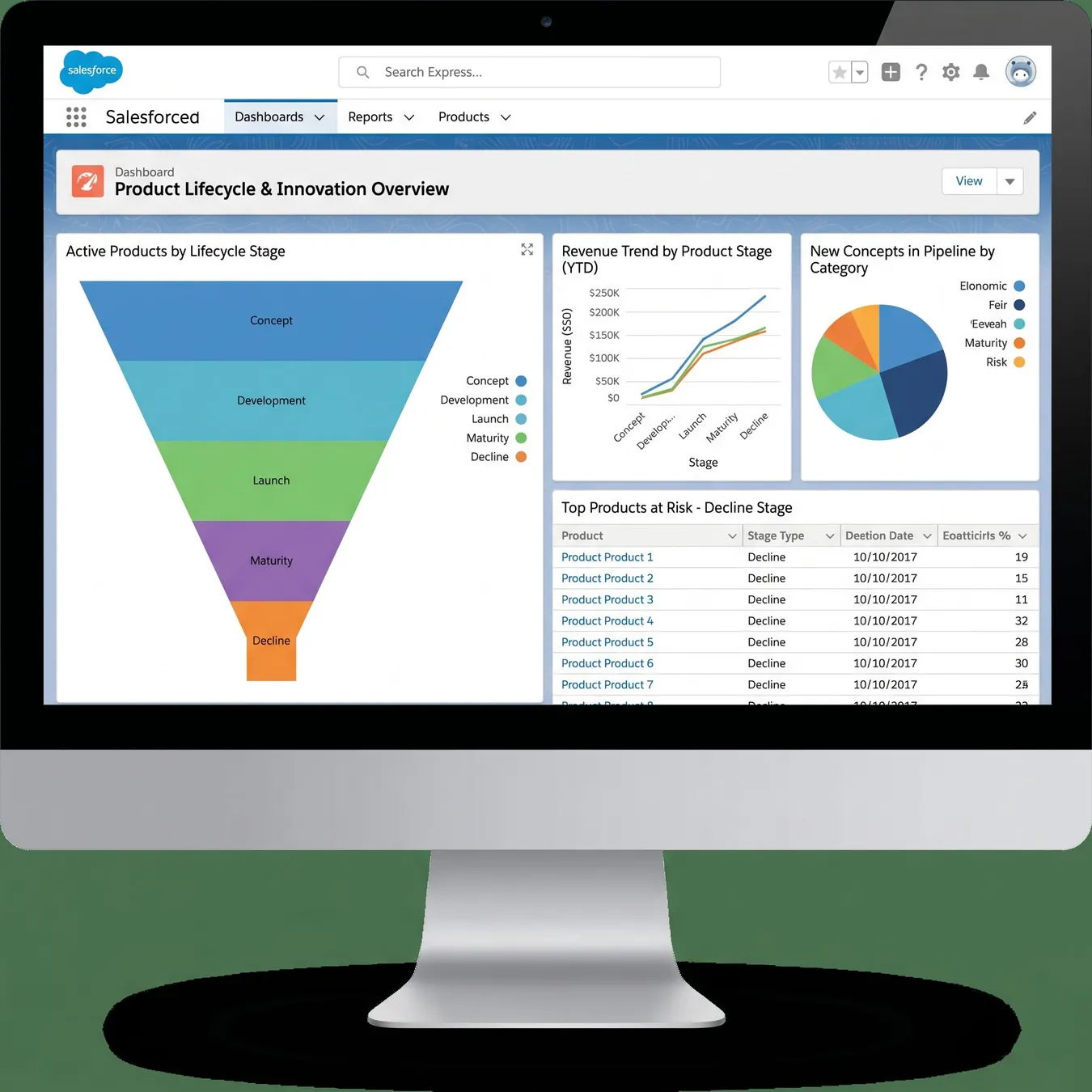
Real-time visibility into product readiness.
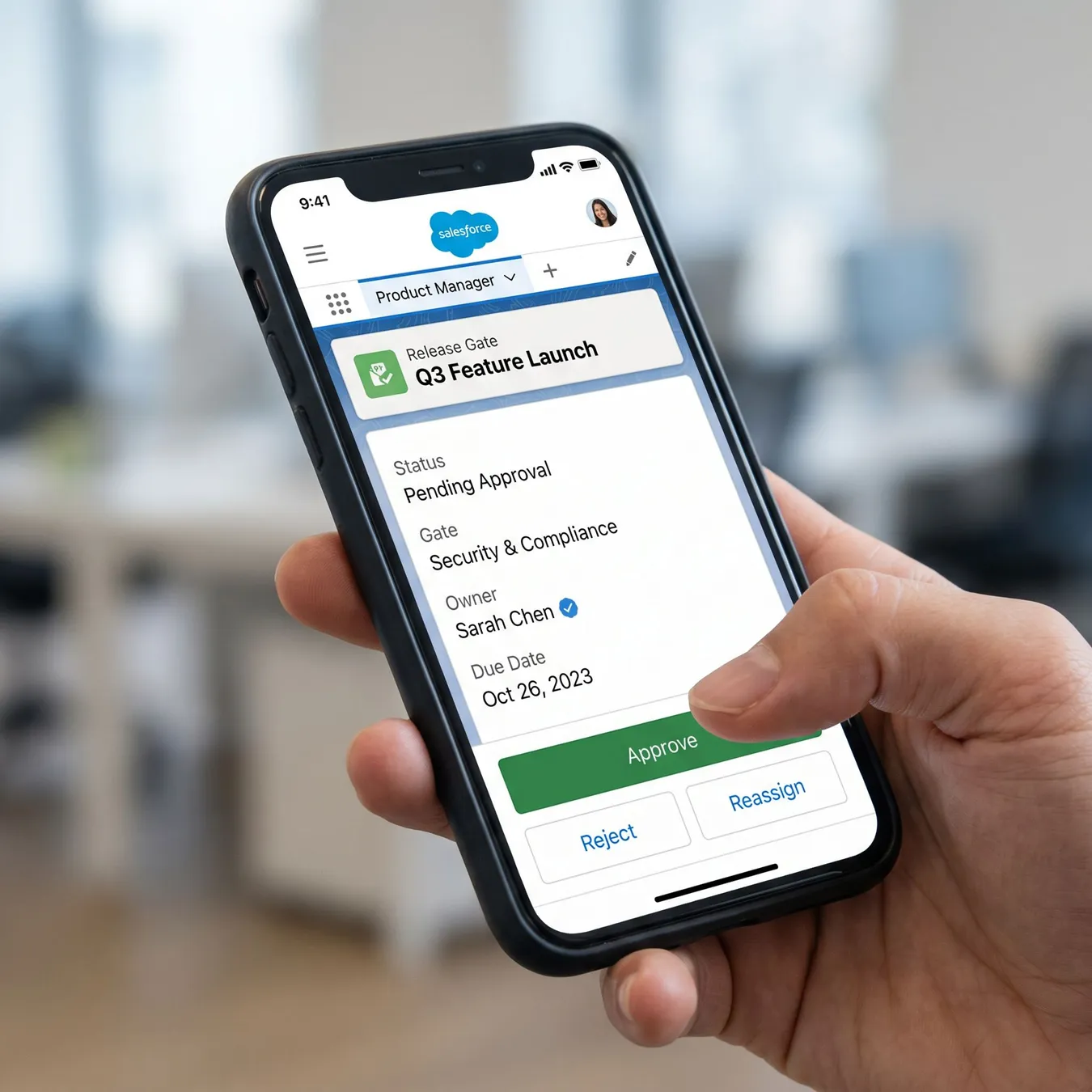
Mobile-first approvals for faster production cycles.
Integrating Production Data with Marketing Workflows
The most effective product lifecycle management solutions are those that feel invisible to the end user. When a product moves from 'In Development' to 'Ready for Launch,' the system should automatically trigger the creation of marketing campaigns and sales enablement tasks.
Automating Asset Distribution
We build systems that link CAD files and technical drawings directly to Salesforce records, allowing marketing teams to pull the latest renders without leaving their CRM environment.
Ensuring Data Integrity and Security
Security is paramount when handling proprietary product data. Implementing devops for salesforce ensures that every change to the PLM logic is tested and audited before it hits production.
35%
Reduction in Time-to-Market
99.9%
Data Accuracy Improvement
50h/mo
Manual Task Reduction
Lifecycle Management for Digital and Physical Products
Whether you are shipping hardware or software, the principles of software product life cycle management apply. Salesforce provides a flexible enough framework to manage both physical inventory and digital entitlements in a single view.
Frequently Asked Questions
The Studio 402 Approach to Salesforce Engineering
At Studio 402, we don't just configure Salesforce; we engineer it. We specialize in building custom product lifecycle management solutions that bridge the gap between complex production requirements and high-velocity GTM execution.
From Prototype to Production
We help companies move past 'vibe-coded' prototypes and fragile integrations. Our team builds durable, scalable Salesforce systems that handle the rigors of real-world product management.
Custom PLM Features We Build
Automated Bill of Materials (BOM) syncing
Custom release gate approval workflows
Marketing asset auto-tagging and distribution
Real-time inventory and SKU status tracking
Why Engineering Matters for PLM
Off-the-shelf solutions often fail because they don't account for the unique way your business operates. Custom engineering allows you to tailor every field, trigger, and dashboard to your specific production and marketing needs.
Studio 402 transformed our Salesforce instance from a simple CRM into a full-scale operational engine that powers our entire product launch cycle.
Alex Rivera · VP of Operations
Building a Durable System for the Future
As your product line grows, your systems must evolve. We design our Salesforce PLM architectures to be modular, allowing for easy updates as you add new product categories or expand into new markets.
Continuous Improvement and Support
Our partnership doesn't end at launch. We provide ongoing engineering support to ensure your PLM system stays optimized as Salesforce releases new features and your business requirements change.
Ready to Bridge the Gap Between Production and GTM?
If your product data is scattered across disconnected tools, it's time to build a unified system. Studio 402 provides the senior engineering expertise needed to turn Salesforce into your primary product lifecycle management platform.
Build Your Salesforce PLM System
Let's discuss how custom Salesforce engineering can streamline your product lifecycle and accelerate your GTM motion.
Explore Related Solutions
Keep reading
More in GTM & Revenue Operations Systems
Trusted by growth-stage companies to engineer production-ready GTM systems.
Updated for 2026
Our Development Process
01 / 04
phase 01 / 04
Discovery
phase 02 / 04
Architecture
phase 03 / 04
Build
phase 04 / 04
Launch
Technical Consulting for PLM
Not sure where to start? We offer technical consulting to help you map out your PLM roadmap and choose the right stack for your long-term goals.
Conclusion
Salesforce product lifecycle management is the key to a synchronized enterprise. By investing in custom engineering, you ensure that your production data serves your revenue goals, creating a faster, more reliable path from idea to customer.