
Sales Pipeline Automation: Engineering High-Velocity GTM
Sales pipeline automation is the technical process of replacing manual CRM data entry and lead tracking with engineered workflows. By building an automated sales pipeline, teams can ensure every opportunity moves through the funnel with precision and speed, eliminating the operational drag of human error.
- GTM Engineering
- CRM Automation
- RevOps
- High Velocity
The Core Components of Sales Development Automation
Effective sales development automation requires more than just connecting two apps. It involves architecting a system where lead ingestion, enrichment, and routing happen instantly. This is particularly critical for software development companies where technical buyers expect immediate, data-driven responses.
- Automated lead ingestion from webhooks and forms
- Real-time data enrichment via third-party APIs
- Dynamic lead routing based on territory or expertise
- Automated follow-up sequences triggered by behavior
- CRM stage transitions based on engagement signals
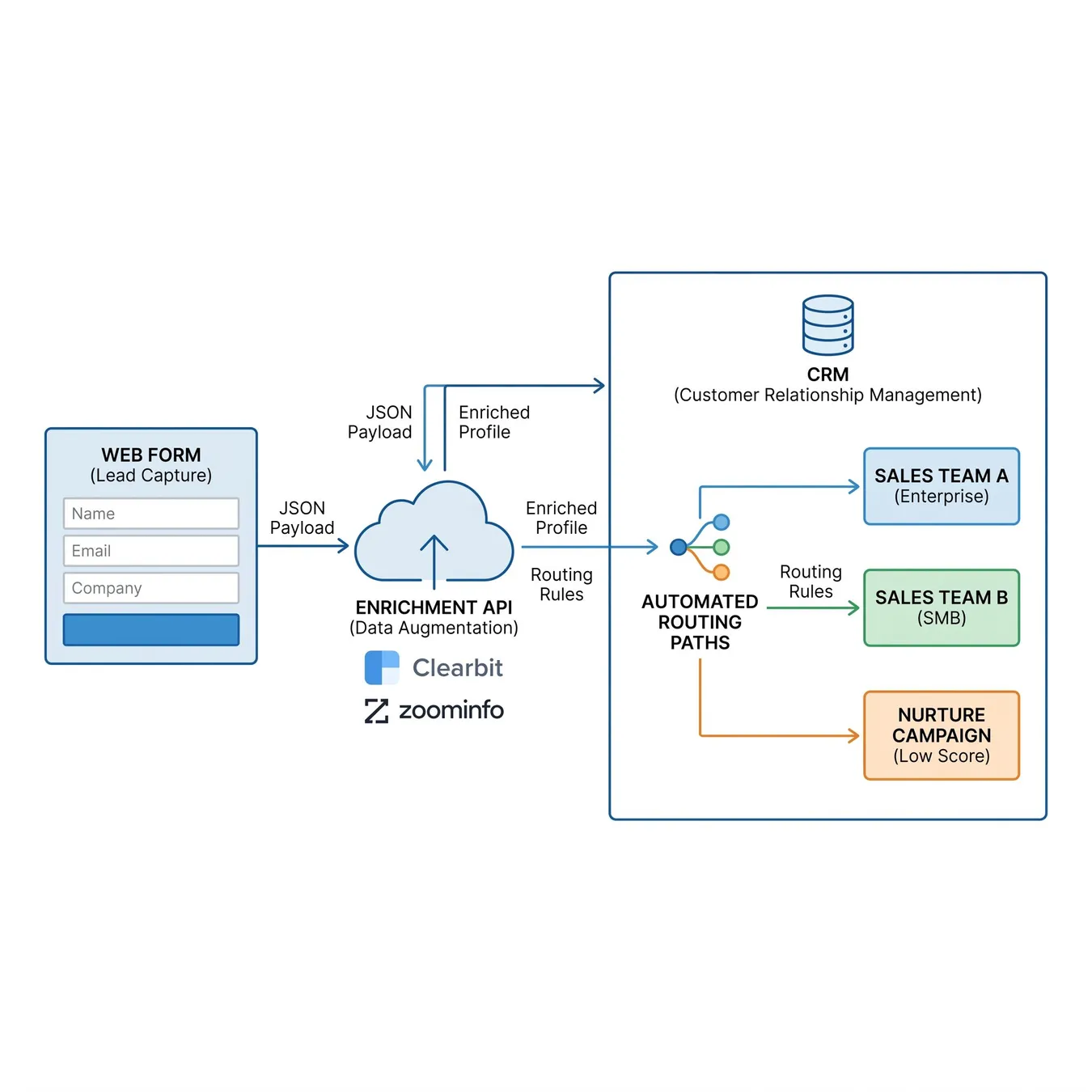
Visualizing the flow of an automated sales pipeline from ingestion to routing.
Why Manual Pipelines Fail at Scale
Manual pipelines create bottlenecks that stifle growth. When sales development automation is absent, leads sit in queues, data becomes stale, and reps spend more time updating records than closing deals. For small business sales automation, these inefficiencies can be the difference between survival and failure.
Trade-off
4 pros · 4 cons
Pros
Instant lead response
Clean, structured data
Predictable GTM velocity
Real-time pipeline visibility
Cons
High risk of lead leakage
Inconsistent data entry
Delayed response times
Manual reporting overhead
Engineering the Lead Ingestion Layer
The foundation of an automated sales pipeline is the ingestion layer. Instead of manual entry, use webhooks and server-side listeners to capture data directly from your product or marketing site. This ensures that every high-intent signal is captured without delay.
Tip.
// Technical Tip
Automated Enrichment and Qualification
Once a lead is captured, the system should automatically enrich the record with firmographic and technographic data. By using ai in sales, you can classify leads based on their tech stack or recent funding rounds before a human ever sees the record.
85%
Reduction in manual data entry
10x
Increase in lead response speed
Dynamic Routing and Handoff Logic
Routing is where most manual pipelines break. Automated routing logic uses predefined rules—such as company size, industry, or product interest—to assign leads to the right account executive instantly. This is a core part of sales automation for software development companies.
- 01
Identify lead source and intent level
- 02
Match lead attributes against rep territories
- 03
Check rep availability and current load
- 04
Assign record and trigger instant notification
- 05
Log the routing event for auditability
Automating CRM Stage Transitions
A truly automated sales pipeline moves opportunities through stages based on objective triggers. For example, when a contract is sent via an integrated tool, the CRM stage should update to 'Negotiation' automatically, triggering a notification to the finance team.
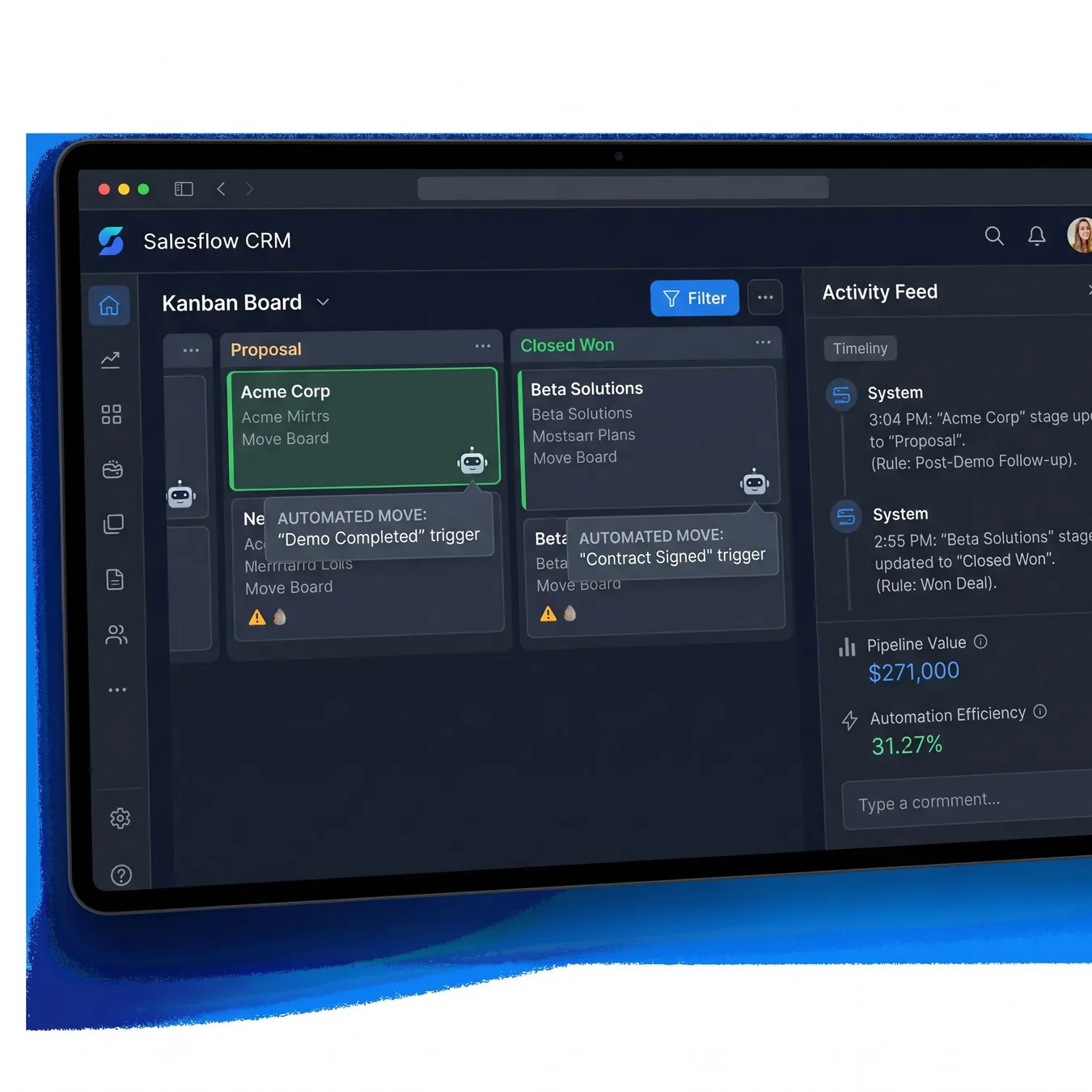
Automated stage tracking.

Real-time rep alerts.
Technical Challenges in Pipeline Automation
Building these systems requires careful consideration of API rate limits, data mapping, and error handling. Without professional salesforce revops engineering, complex automations can often conflict with existing validation rules or legacy workflows.
Use a centralized integration layer
Implement robust error logging
Test automations in a sandbox first
Document every workflow trigger
Hardcode user IDs in automation logic
Automate broken manual processes
Ignore API versioning updates
Over-automate human-critical touchpoints
Maintaining Stability with CRM DevOps
As your automation grows, so does the risk of breaking your GTM motion. Implementing devops for salesforce allows teams to version control their automation logic and deploy changes without disrupting the active sales pipeline.
Measuring the Impact of Automation
Success in pipeline automation is measured by velocity and conversion rates. By removing manual friction, you should see a measurable decrease in 'Time to First Touch' and an increase in the number of opportunities handled per rep.
| Metric | Manual Pipeline | Automated Pipeline |
|---|---|---|
| Lead Response Time | 4-24 Hours | < 5 Minutes |
| Data Accuracy | Variable | High (Systemic) |
| Rep Admin Time | 10+ Hours/Week | < 2 Hours/Week |
Scaling Beyond the Sales Pipeline
Once your sales motion is automated, the same principles can be applied to other areas of the business. Custom workflow automation software can bridge the gap between sales, customer success, and product engineering teams.
Common Questions on Pipeline Engineering
The Studio 402 Approach to GTM Systems
At Studio 402, we don't just set up tools; we engineer durable GTM infrastructure. We help growth-stage companies replace fragile, manual processes with production-grade systems that scale. Whether you are fixing a broken CRM setup or building a new automated motion from scratch, we provide the engineering depth required for high-velocity execution.
Our Pipeline Engineering Process
01 / 05
phase 01 / 05
Discovery & Audit
phase 02 / 05
System Design
phase 03 / 05
Engineering & Build
phase 04 / 05
Testing & QA
phase 05 / 05
Launch & Scale
Ready to Automate Your GTM Motion?
Manual pipelines are a tax on your growth. If your team is struggling with lead leakage, slow response times, or CRM technical debt, it is time to engineer a better way forward. Studio 402 combines product engineering with RevOps expertise to build systems that actually work.
Build Your Automated Pipeline
Stop losing leads to manual workflows. Let's build a high-velocity automated pipeline for your GTM team.
Explore More in GTM Systems
Keep reading
More in GTM & Revenue Operations Systems
Engineering a high-velocity pipeline is a journey from manual chaos to systemic precision. By focusing on the technical foundations of your GTM stack, you unlock the ability to scale without increasing headcount proportionally.
We specialize in the intersection of AI, custom software, and revenue operations. Our goal is to ensure your sales infrastructure is as sophisticated as the product you are selling.
From small business sales automation to complex enterprise routing, the principles of engineering remain the same: reliability, scalability, and visibility.
If you are ready to move beyond basic CRM setups and build a truly automated sales pipeline, our team is ready to help you architect the solution.
Every automated workflow we build is designed to be maintained, audited, and evolved as your business grows.
Contact Studio 402 today to discuss your GTM engineering needs and start building a pipeline that moves at the speed of your business.
Our consultative approach ensures that we understand your unique sales motion before recommending a technical stack.
We believe that the best GTM systems are those that empower humans to do their best work, not replace them.
Join the growing list of companies that have transformed their revenue operations with Studio 402's engineering expertise.
High-velocity GTM is not a dream; it is a matter of engineering.
Let's build the future of your sales operations together.