
Custom CRM Development for Unique Sales Motions
Off-the-shelf customer management tools often force your team into rigid workflows that don't match how you actually sell. When your sales motion involves complex data requirements or non-linear pipelines, a technical CRM built specifically for your operations becomes a competitive advantage.
- Operational CRM
- Analytical CRM
- Custom Workflows
- GTM Infrastructure
Understanding the Need for a Technical CRM
A technical CRM goes beyond basic contact storage. It acts as a work flow crm that orchestrates data across your entire stack, ensuring that every customer interaction is captured and actionable for your revenue teams.
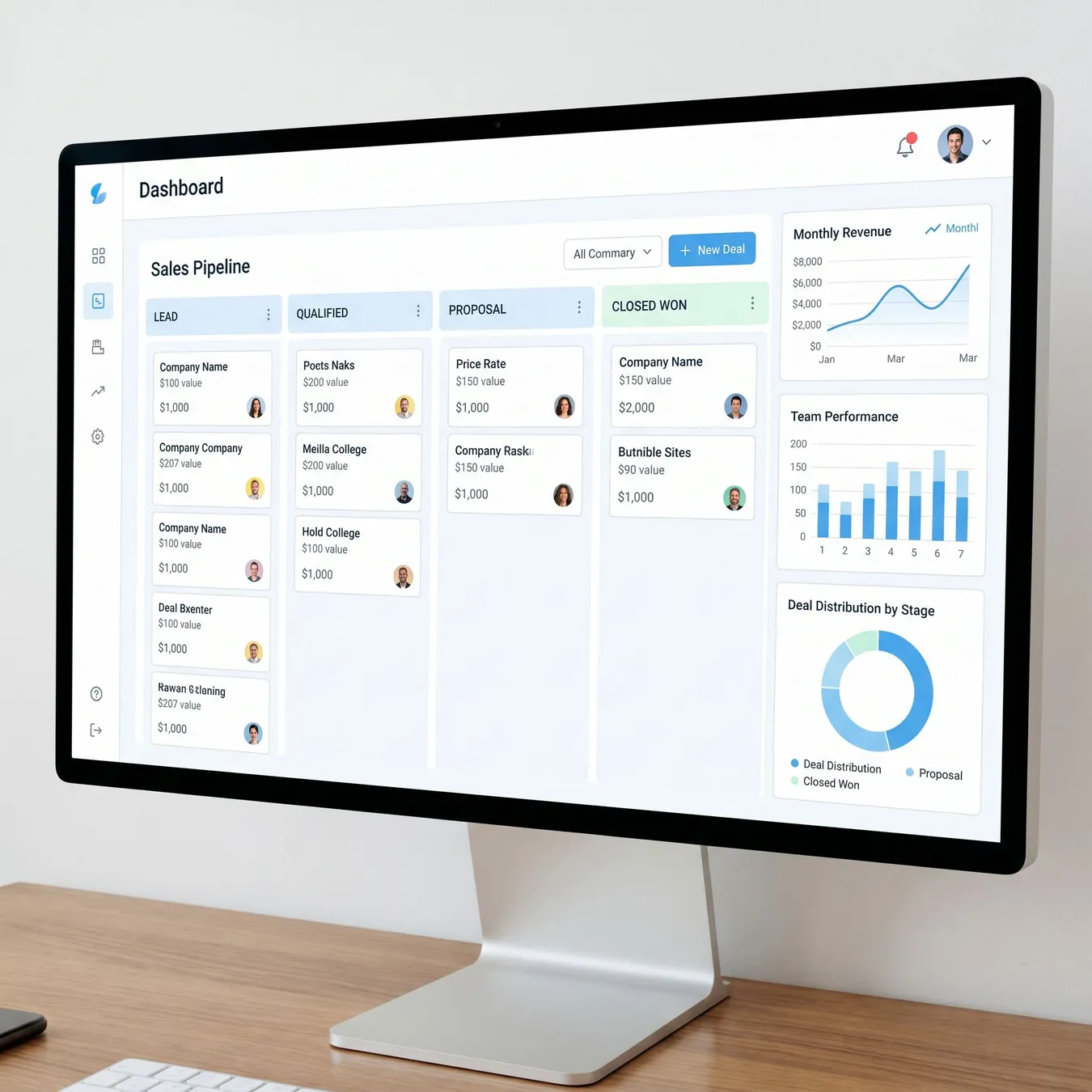
Bespoke CRM interfaces allow teams to visualize unique sales cycles that standard tools can't represent.
Analytical CRM vs. Operational CRM
When you research companies for custom crm management software development, it is vital to distinguish between analytical and operational needs. Most high-growth teams require a hybrid approach that handles both day-to-day execution and long-term data intelligence.
| Feature | Operational CRM | Analytical CRM |
|---|---|---|
| Primary Goal | Sales automation and task management | Data mining and pattern recognition |
| Core Users | Sales reps and success managers | Data analysts and RevOps leaders |
| Data Focus | Real-time customer interactions | Historical trends and forecasting |
Signs You Have Outgrown Standard Customer Relationship Tools
- Your sales process relies on 'shadow spreadsheets' outside the CRM.
- Complex multi-party deal structures cannot be modeled in your current tool.
- Reporting requires manual data exports and hours of cleanup.
- Automations are brittle and frequently break during high-volume periods.
- Your team spends more time fighting the UI than talking to customers.
Warning.
// Efficiency Warning
Designing Custom Workflows for Complex Sales
The core of a bespoke system is the ability to implement sales pipeline automation that mirrors your real-world logic. This ensures that leads move through the funnel based on specific technical triggers rather than manual status updates.
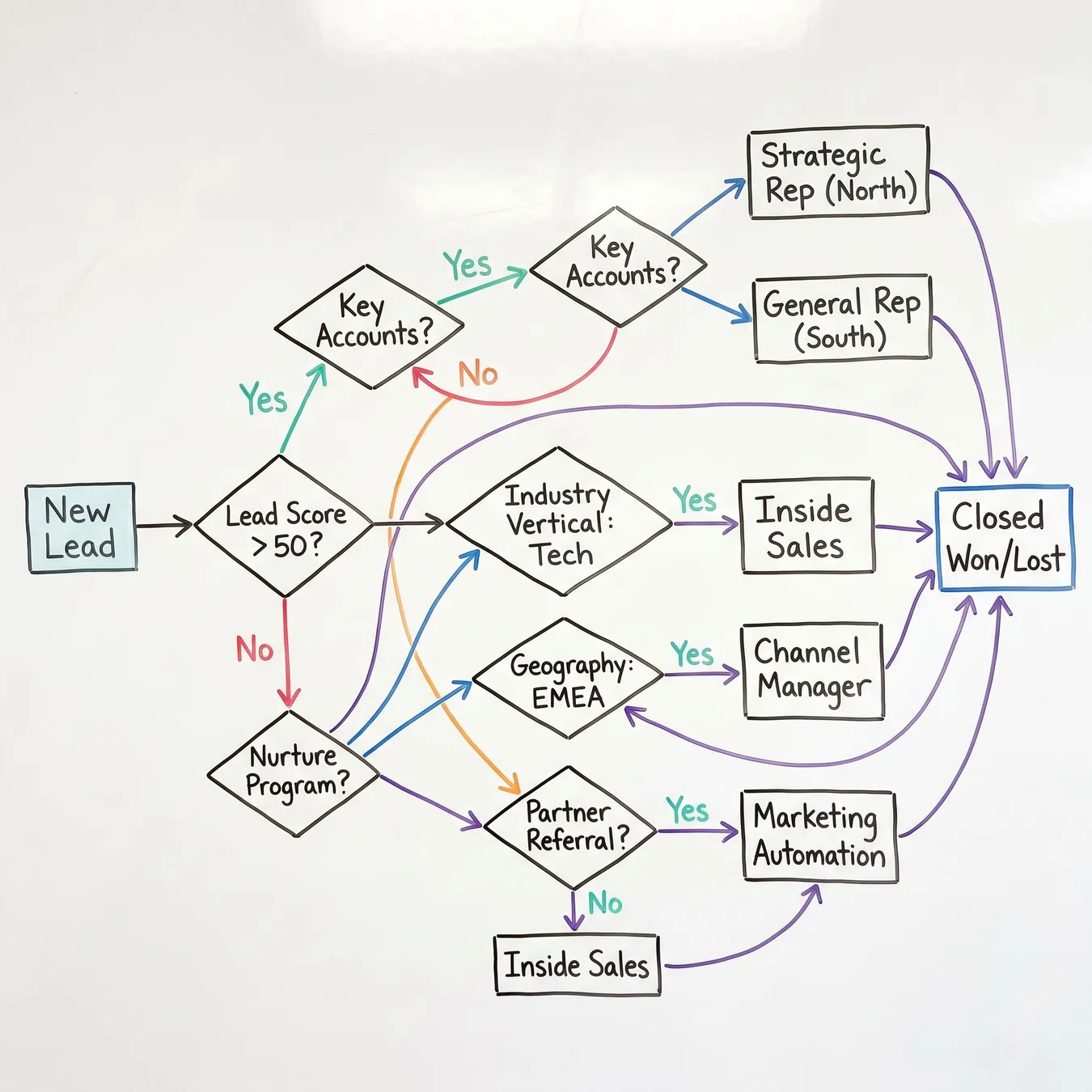
Custom routing logic ensures high-value leads reach the right specialist instantly.
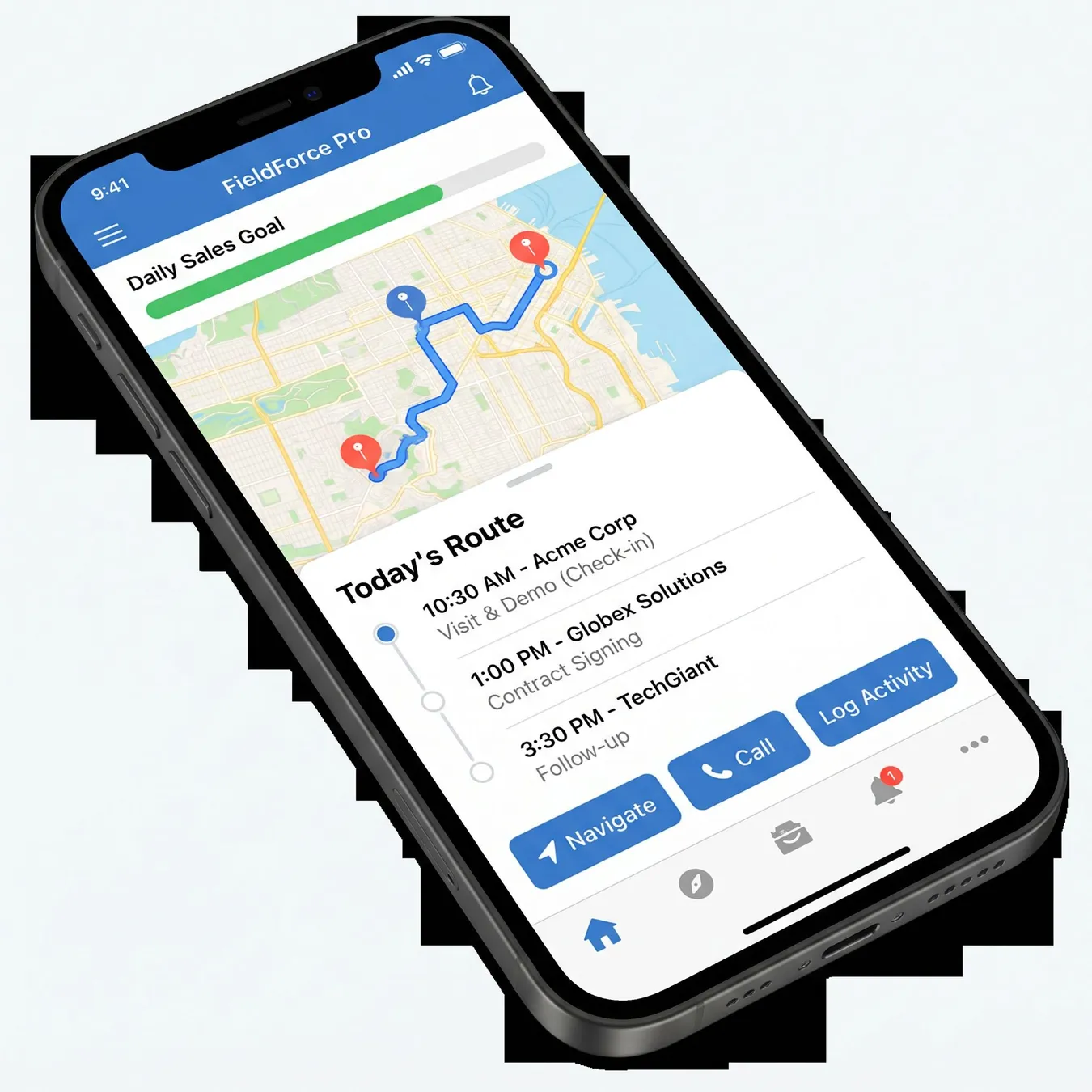
Mobile-first CRM tools designed for specific field operations.
The Architecture of a Modern Technical CRM
Modern systems must be API-first to ensure seamless connectivity. This allows you to integrate marketing automation for tech companies directly into your sales environment, creating a unified view of the customer journey.
- 01
Unified Data Schema: A single source of truth for all customer attributes.
- 02
Event-Driven Architecture: Real-time triggers based on user behavior.
- 03
Extensible UI: Interfaces that only show what the user needs for their specific role.
- 04
Robust API Layer: Easy integration with billing, support, and product tools.
Extending Existing Platforms vs. Building Greenfield
Not every custom CRM project requires starting from zero. Many organizations find success by investing in salesforce revenue operations to customize their existing enterprise instance with bespoke engineering.
Trade-off
3 pros · 3 cons
Pros
Zero per-seat licensing fees
Total control over data security
Perfect fit for unique workflows
Cons
High initial development cost
Requires ongoing maintenance
Longer time to initial launch
Data Integrity and Security in Custom CRM Systems
When building bespoke software, security cannot be an afterthought. Custom systems allow for granular role-based access controls (RBAC) that off-the-shelf tools often simplify too much for complex organizations.
End-to-end encryption for sensitive customer data
Audit logs for every record change
SOC2 compliant infrastructure hosting
Automated data backup and recovery testing
Integrating AI into Your Custom CRM
Custom systems provide the perfect foundation for AI-native features. From automated lead scoring to generative drafting for sales follow-ups, an integrated AI layer can significantly reduce administrative drag.
40%
Reduction in manual entry
2.5x
Increase in lead response speed
30%
Improvement in forecast accuracy
The Development Lifecycle for Bespoke CRM
01 / 05
phase 01 / 05
Discovery & Mapping
phase 02 / 05
Architecture Design
phase 03 / 05
MVP Build
phase 04 / 05
Testing & Iteration
phase 05 / 05
Full Deployment
Common Pitfalls in Custom CRM Projects
Focus on the user experience for sales reps first.
Ensure data portability with robust export features.
Build for mobile accessibility from day one.
Over-complicate the UI with unnecessary fields.
Ignore the need for clean historical data migration.
Build a silo that doesn't talk to your billing system.
Measuring the ROI of Custom CRM Software
The return on investment for a custom build is measured in sales velocity and data clarity. By eliminating manual work, your team can focus on high-value activities that drive revenue.
Our custom CRM didn't just organize our data; it fundamentally changed how our sales team prioritizes their day, leading to a record-breaking quarter.
Sarah Jenkins · VP of Revenue Operations
Future-Proofing Your Sales Infrastructure
A custom system is an evolving asset. Unlike SaaS platforms where you wait for a roadmap update, a bespoke CRM allows you to ship new features as your market and sales strategy change.
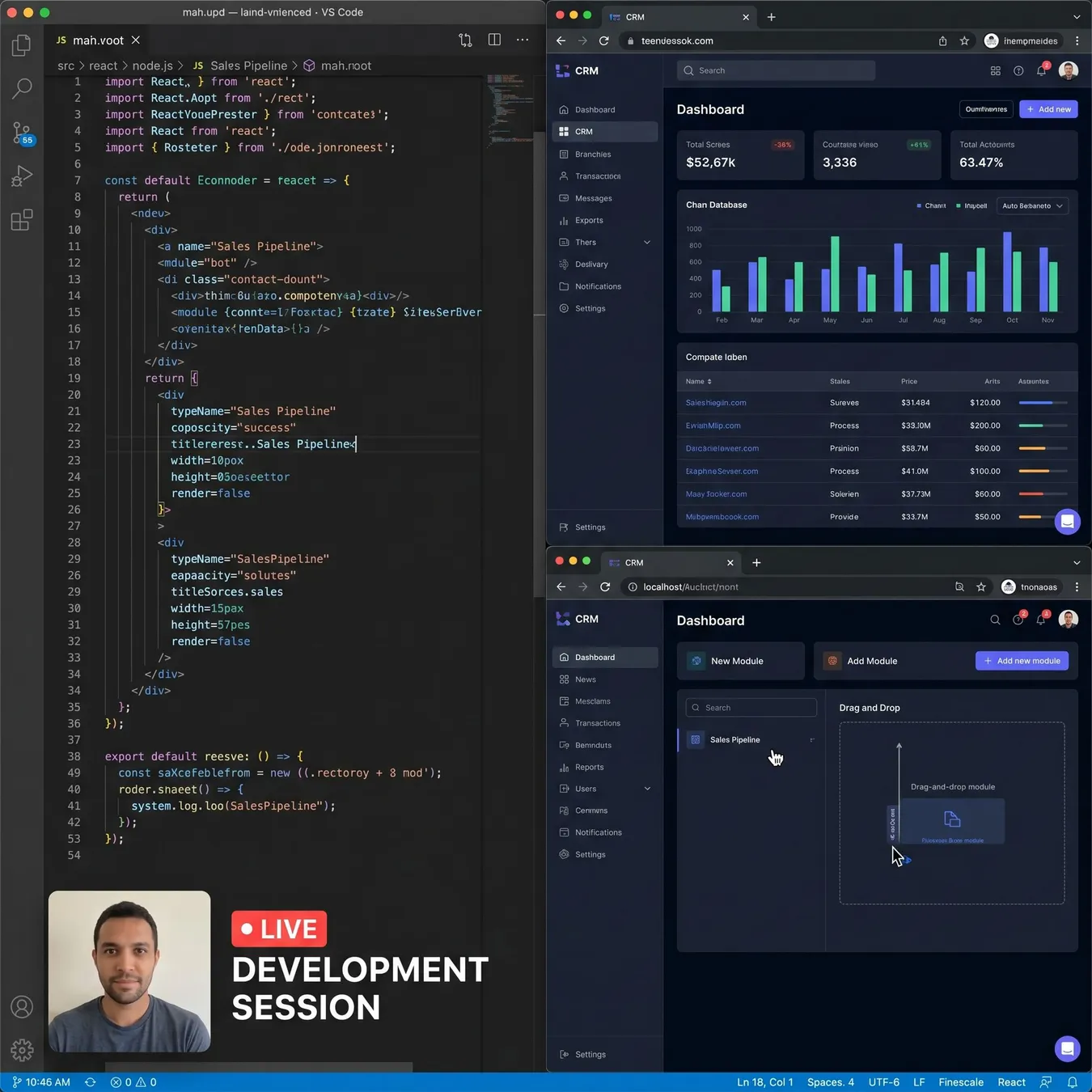
Custom systems allow for rapid iteration as your business needs evolve.
How Studio 402 Approaches CRM Engineering
At Studio 402, we specialize in bespoke software development services for complex operations. We don't just build tools; we engineer the systems that power your growth.
Whether you are looking to rescue a failing prototype or build a greenfield operational system, our team provides the senior engineering depth required for production-ready outcomes.
Trusted by growth-stage startups and mid-market operators to build durable GTM systems.
Over 50 custom systems deployed since 2022.
Frequently Asked Questions
Explore Related GTM Systems
Build Your Custom Sales Infrastructure
Ready to build a CRM that actually fits your sales motion? Let’s discuss your unique requirements and design a system that scales.
Keep reading
More in GTM & Revenue Operations Systems
Technical CRM Implementation Details
Our approach focuses on high-performance backends that can handle millions of events without latency, ensuring your sales data is always fresh and accurate.
Operational CRM Best Practices
We prioritize low-friction interfaces that minimize the number of clicks required to update a record, keeping your sales team focused on closing deals.
Analytical CRM Capabilities
By embedding advanced analytics directly into the CRM, we provide RevOps leaders with real-time insights into pipeline health and rep performance.
Custom Work Flow CRM Logic
Every business has a unique 'happy path' for customers. We code that path into the system to ensure no lead is ever left behind.
Customer Relationship Tools Integration
We ensure your CRM acts as the central nervous system for your business, connecting to your email, calendar, and Slack for total visibility.
Customer Management Tools for Scale
As you grow, your data needs will shift. Our architectures are designed to be modular, allowing for easy expansion as you enter new markets.
Researching Custom CRM Partners
When evaluating partners, look for teams that understand both the engineering challenges and the business goals of a modern sales organization.