
DevOps for Salesforce: Engineering Reliable CRM Pipelines
Managing Salesforce deployments often feels like a high-stakes manual effort. Without devops for salesforce, teams struggle with metadata conflicts, overwritten changes, and a lack of auditability. Engineering reliable pipelines is the only way to scale CRM operations without accumulating massive technical debt.
80%
Reduction in deployment errors
4x
Faster release velocity
100%
Version control auditability
Why Salesforce Needs Professional DevOps
Standard Salesforce development often relies on change sets, which are manual, error-prone, and disconnected from modern software engineering standards. Transitioning to a source-driven model allows your team to treat CRM configuration as code, ensuring every change is tracked and tested.
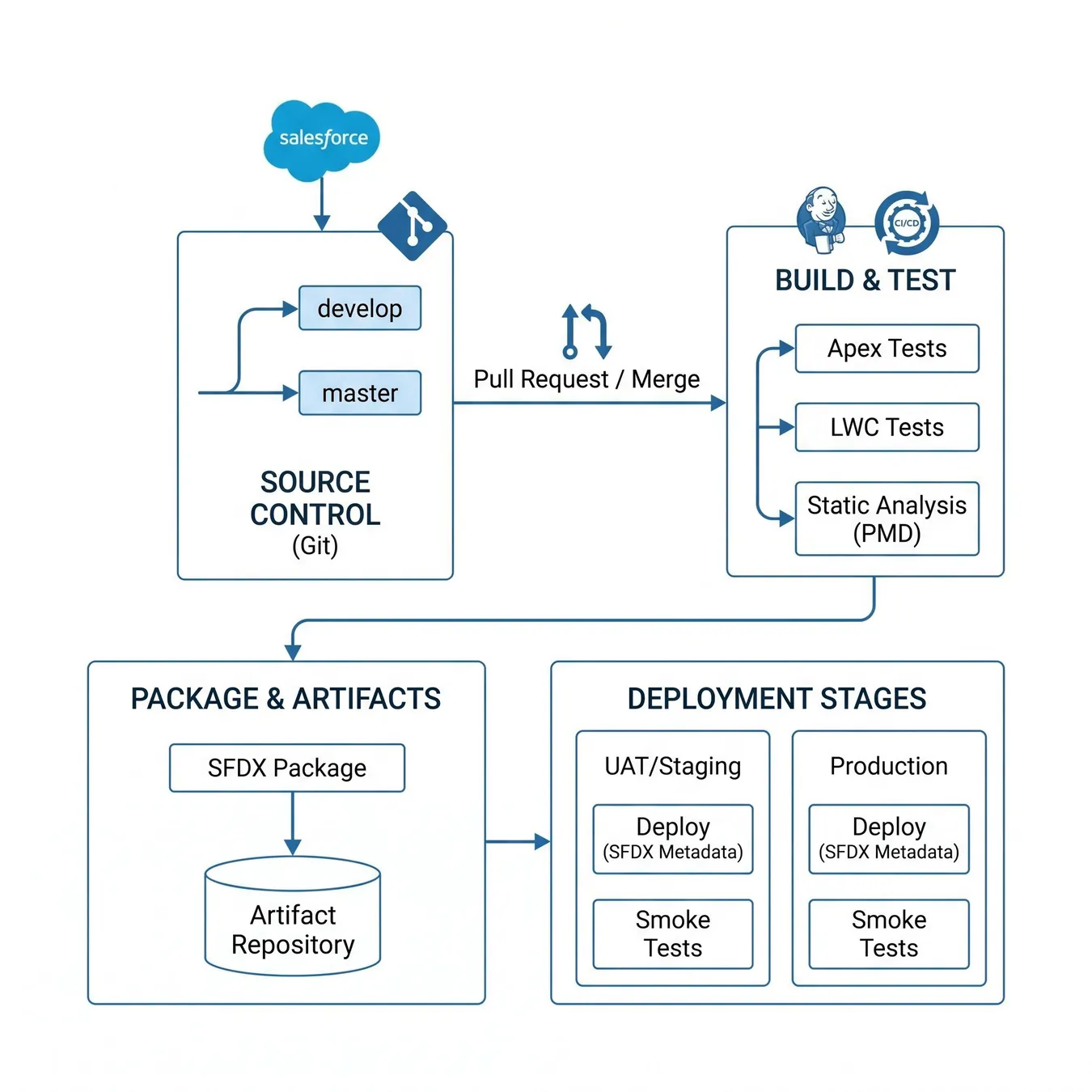
A modern source-driven Salesforce deployment architecture.
Core Components of a Salesforce Pipeline
- Version Control (Git) as the single source of truth
- Scratch Orgs for isolated feature development
- Automated Apex testing and linting
- Continuous Integration (CI) for validation
- Continuous Deployment (CD) to sandboxes and production
The Shift from Change Sets to Source Control
Relying on change sets creates bottlenecks and makes rollbacks nearly impossible. By implementing devops for salesforce, you move toward a repository-centric workflow where peer reviews and automated checks happen before code ever touches a shared environment.
Trade-off
3 pros · 3 cons
Pros
Full version history of all metadata
Automated conflict resolution
Consistent, repeatable deployments
Cons
Manual tracking of dependencies
No easy way to revert changes
High risk of production overrides
Implementing Automated Testing
Automated testing is the backbone of reliability. Beyond Apex unit tests, modern pipelines include UI testing and static code analysis to catch security vulnerabilities and performance regressions early in the lifecycle.
Tip.
// Pro Tip
Environment Management Strategy
A robust pipeline requires a clear environment strategy. This typically involves developer sandboxes, a shared integration environment, a UAT (User Acceptance Testing) stage, and finally, production.
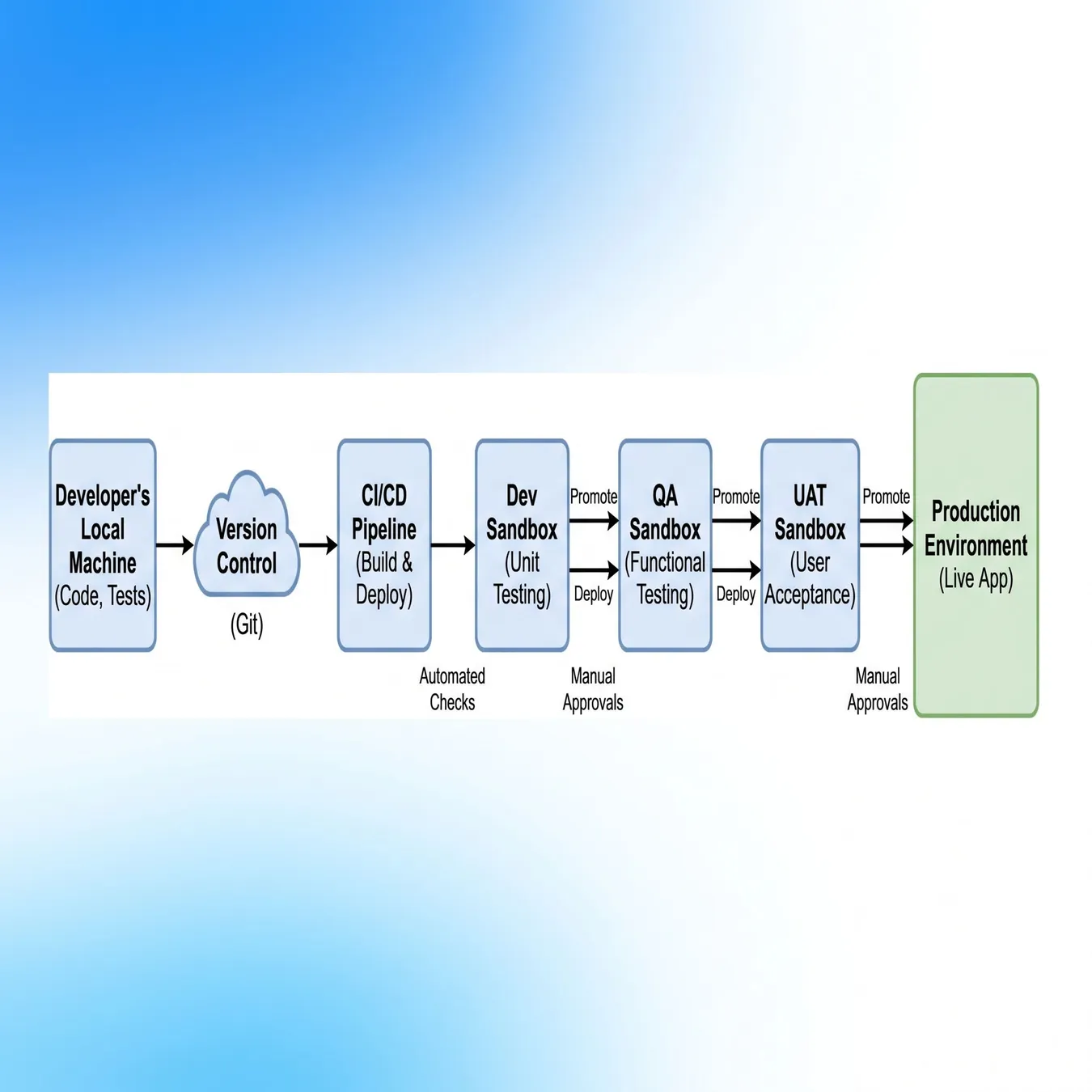
Standard Salesforce environment promotion path.
Managing Metadata and Data Dependencies
Salesforce DevOps isn't just about code; it's about metadata. Managing complex dependencies between custom objects, flows, and permissions requires sophisticated tooling to ensure deployments don't break existing crm processes and systems.
The Role of Salesforce DX (SFDX)
SFDX revolutionized how engineers interact with the platform. It provides the command-line interface necessary to automate tasks that were previously only possible through the browser UI, enabling true CI/CD.
Continuous Integration Workflows
01 / 04
phase 01 / 04
Commit
phase 02 / 04
Validate
phase 03 / 04
Review
phase 04 / 04
Merge
Handling Large-Scale Deployments
For enterprise organizations, deployments can involve thousands of components. Using delta deployments—only shipping what has changed—drastically reduces deployment windows and minimizes downtime.
Security and Compliance in DevOps
DevOps provides a natural audit trail. By enforcing that all changes go through version control, you ensure that every modification to your CRM is documented, approved, and reversible.
Use Git as the source of truth
Automate unit tests on every PR
Use scratch orgs for development
Make direct changes in production
Ignore failed test results
Manually track metadata changes
Monitoring and Observability
Post-deployment monitoring is critical. Tracking error logs and system performance ensures that any issues introduced during a release are identified and remediated before they impact users.
Scaling with Salesforce RevOps
Reliable pipelines are the foundation of a high-performing salesforce revops function. When the underlying infrastructure is stable, the revenue team can iterate on sales motions and pricing strategies with total confidence.
DevOps for CRM vs. Traditional SaaS
While many principles overlap, devops saas for product platforms often focuses on containerization, whereas Salesforce DevOps focuses on metadata orchestration and multi-tenant environment constraints.
Common Pitfalls in CRM DevOps
Many teams fail because they try to automate a broken process. Before building a pipeline, audit your metadata for technical debt and ensure your team is trained on Git fundamentals.
The Future of AI in Salesforce DevOps
AI is beginning to play a role in automated code reviews and predictive impact analysis. Soon, pipelines will be able to suggest fixes for failing tests or identify potential deployment conflicts before they occur.
Frequently Asked Questions
Bridge: From Manual Chaos to Engineered Reliability
If your team is struggling with slow releases and frequent production bugs, it's time to treat your CRM like the critical software platform it is. Studio 402 specializes in building the infrastructure that makes this possible.
For organizations that want to focus on their business rather than their pipelines, we also offer devops managed services to ensure your GTM stack remains stable and scalable.
How Studio 402 Can Help
We don't just set up tools; we engineer outcomes. From auditing your current Salesforce architecture to implementing custom CI/CD pipelines, we ensure your engineering standards match your growth ambitions.
Build a Reliable Salesforce Pipeline
Stop fighting with change sets and start shipping with confidence. Let's engineer a CRM pipeline that scales with your business.
Keep reading
More in GTM & Revenue Operations Systems
Advanced Pipeline Optimization
Once the basics are in place, you can optimize for speed. Parallel testing and automated environment cleanup can reduce CI cycle times by up to 50%, allowing for more frequent deployments.
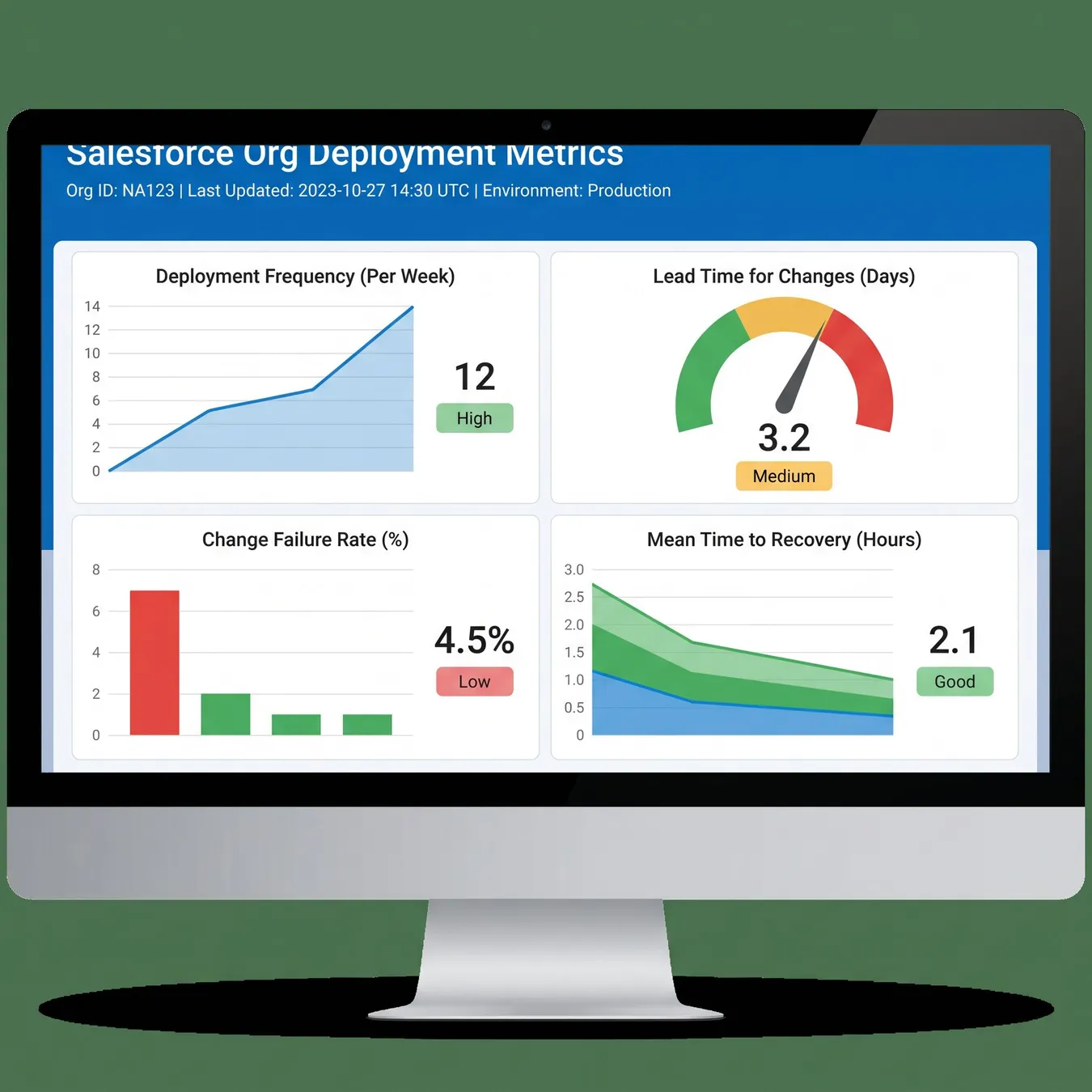
Key DevOps metrics for tracking CRM pipeline health.
The Importance of Peer Review
Peer reviews in Git are the best way to spread knowledge across the team and catch logical errors that automated tests might miss. It turns every deployment into a learning opportunity.
Conclusion: The Path Forward
DevOps for Salesforce is no longer optional for scaling companies. By adopting engineering discipline, you protect your most valuable customer data and unlock the true potential of your GTM motion.
- Salesforce
- DevOps
- CI/CD
- RevOps
- Engineering