
Overview
Technical Advice for First-Time Founders
Navigate your first build with strategic clarity. Learn how to manage engineering teams, avoid technical debt, and ship an MVP that actually scales.

Navigating Your First Build: A Guide for Founders
For first founders, the transition from a vision to a functional product is often the most volatile phase of the startup journey. The pressure to ship quickly can lead to shortcuts that compromise long-term stability.
Success requires balancing speed with production-grade engineering. Understanding the pre seed and seed stage technical requirements is essential to ensure your product survives real-world usage and investor scrutiny.
70%
Startups that fail due to premature scaling
40%
Development time often lost to technical debt
3-6 Mo
Average time to ship a production-ready MVP
Defining the Scope of Your First Build
The most common mistake founders first make is over-scoping the initial release. A production-ready MVP should focus on the core value proposition while maintaining high standards for security and performance.
- Identify the one problem your product solves best.
- Strip away secondary features that don't support the core loop.
- Prioritize user authentication and data security from day one.
- Ensure the architecture allows for modular expansion.
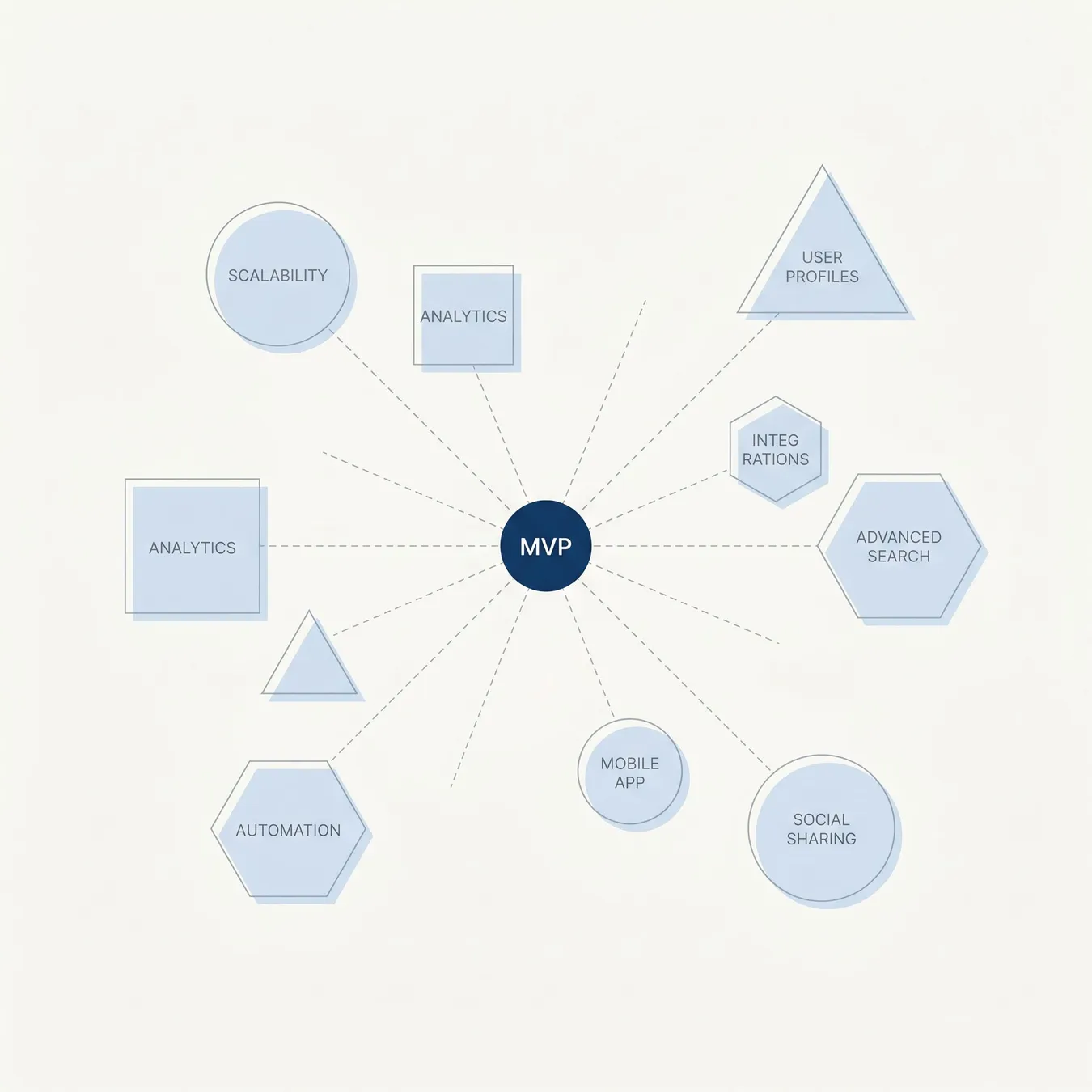
Focusing on the core value proposition.
Managing Technical Debt Early On
Technical debt is inevitable, but it must be managed strategically. For first founders, the goal is not zero debt, but 'intentional debt'—knowing exactly where you took shortcuts and having a plan to refactor.
Document all known architectural shortcuts.
Use standard, well-supported frameworks.
Write automated tests for critical business logic.
Hardcode values that will change frequently.
Ignore security warnings in third-party libraries.
Build custom solutions for solved problems like auth or billing.
Building for Future Investment
Investors look for technical foundations that can support rapid growth. Aligning your build with a founders venture strategy ensures that your code passes due diligence during your next funding round.
Key Technical Due Diligence Factors
| Factor | Investor Expectation | Founder Priority |
|---|---|---|
| Scalability | Can it handle 10x users? | Horizontal scaling plan |
| Security | Is user data protected? | Encryption and Auth |
| Documentation | Can a new dev understand it? | READMEs and API docs |
The Engineering Lifecycle for Founders
01 / 04
phase 01 / 04
Discovery & Architecture
phase 02 / 04
Core Build
phase 03 / 04
Hardening
phase 04 / 04
Launch & Iterate
When to Transition Technical Leadership
As your product gains traction, your role changes from builder to leader. Knowing when to hire a cto is a critical milestone that prevents engineering bottlenecks as you scale.
Tip.
// Founder Tip
Structuring Your First Team
A common challenge for founders first is organizing their talent. A proper engineering team structure allows for parallel development and faster release cycles.
Common Team Pitfalls
- Hiring too many juniors without senior oversight.
- Lack of clear ownership over specific modules.
- Inconsistent code review processes.
- Poor communication between product and engineering.
Choosing Your Tech Stack
For first founders, the 'best' stack is usually the one that allows your team to move fastest without sacrificing security. Avoid chasing every new trend.
Trade-off
3 pros · 3 cons
Pros
Faster hiring for popular languages
Extensive community support
Proven reliability at scale
Cons
Potential for higher infrastructure costs
Risk of legacy debt in older frameworks
Limited specialized talent for niche stacks
Production Hardening Checklist
Implement SSL/TLS for all traffic
Set up automated database backups
Configure error monitoring and logging
Perform a basic penetration test
Optimize frontend assets for speed
Navigating the Build with Studio 402
At Studio 402, we specialize in helping first-time founders bridge the gap between a vision and a production-grade reality. We don't just build prototypes; we engineer foundations.
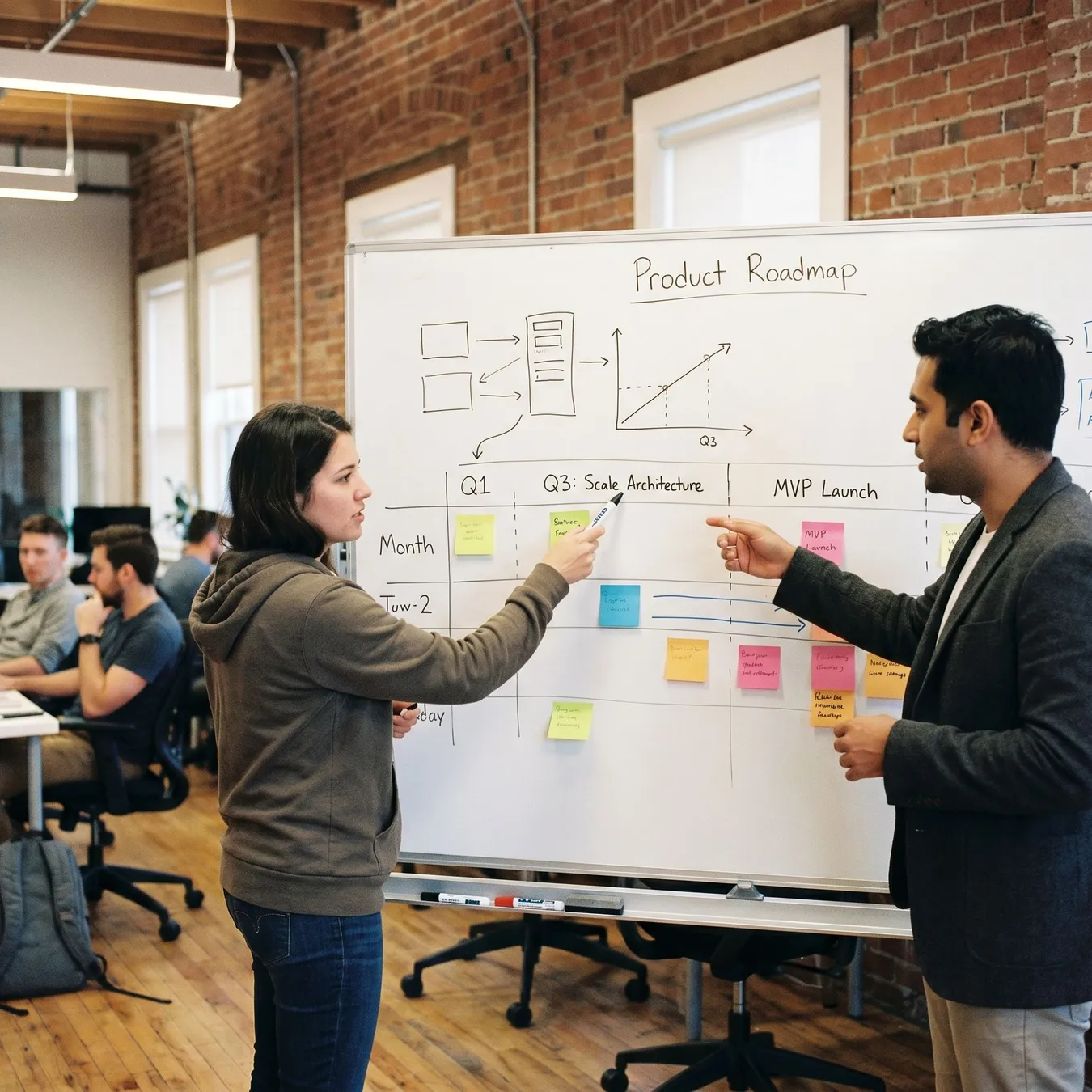
Collaborative product engineering.

Built for real-world scale.
Frequently Asked Questions
Founder Testimonials
Studio 402 took our messy prototype and turned it into a scalable platform that helped us close our Seed round with confidence.
Strategic Resources for Founders
Ready to Ship Your First Build?
Navigating the technical landscape doesn't have to be a solo journey. Whether you're starting from scratch or need to rescue a prototype, we provide the engineering depth you need.
Build Your Production-Ready MVP
Stop guessing and start shipping. Let's discuss your technical roadmap and build a product that scales.
Explore More Founder Insights
Keep reading
More in Founder & Peer Networks
Building a startup is as much about the community as it is about the code. Connect with other operators in our network to share lessons learned and technical strategies.
- Founder Advice
- MVP Strategy
- Technical Leadership
- Startup Growth
Final Thoughts for First Founders
Your first build is the foundation of your company's future. By focusing on quality, security, and strategic debt management, you set yourself up for long-term success.
Remember that every great product started with a single, well-engineered release. Don't let the complexity of the build distract you from the value you're creating for your users.
We are here to help you navigate these decisions. From stack selection to team structure, Studio 402 is your partner in production-grade engineering.
Stay focused, ship intentionally, and keep building.
Trusted by 50+ founders to launch production-ready software.
Updated for 2026 startup standards.
Our approach combines senior engineering expertise with the speed required by modern startup cycles. We ensure your first build isn't your last.
Technical Strategy Summary
- Prioritize core functionality over feature bloat.
- Invest in security and infrastructure early.
- Manage technical debt with a clear refactoring plan.
- Align your build with future venture capital requirements.
Thank you for reading our guide for first founders. We look forward to seeing what you build next.