
How to Structure High-Performance AI Startup Teams
Building an AI-native product requires more than just hiring a few LLM enthusiasts. To achieve production-grade reliability, your ai startup team structure must balance research-oriented data science with rigorous software engineering and product-led operational systems.
- Team Structure
- AI Strategy
- Scaling
- Founder Advice
The Core Pillars of an AI-Native Organization
In 2026, the distinction between 'AI' and 'software' is blurring. However, the specialized skills required to manage context windows, vector databases, and agentic workflows necessitate a specific organizational design that prevents bottlenecks.
3:1
Eng to Data Ratio
40%
Ops Overhead Reduction
2x
Shipping Velocity
Defining Key Roles in Your AI Startup
A common mistake is over-hiring for PhD-level research roles before the foundational product is stable. Most early-stage AI startups actually need strong product engineers who can integrate models rather than build them from scratch.
- AI Product Engineer: Focuses on the application layer and LLM orchestration.
- Data Infrastructure Engineer: Manages the pipelines, embeddings, and vector storage.
- Product Manager (AI): Specializes in non-deterministic UX and prompt evaluation.
- MLOps Specialist: Ensures model reliability, latency monitoring, and cost control.
The Evolution of Engineering Team Structure
As you move from MVP to Series A, your engineering team structure will shift from generalists to specialized squads. Early on, everyone touches the model; later, you need dedicated teams for core infrastructure.
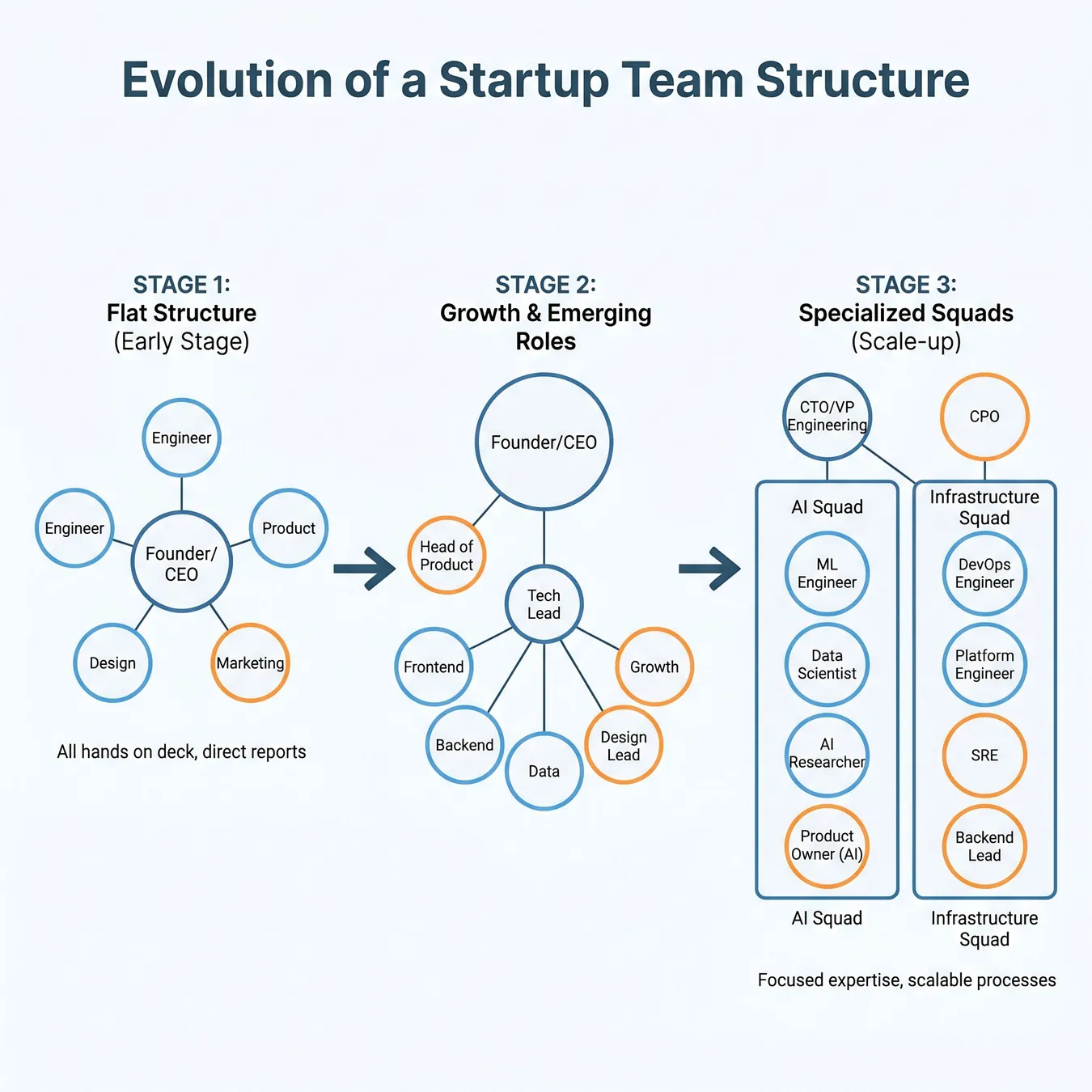
Visualizing the transition from lean MVP teams to scaled AI organizations.
Managing Technical Teams in an AI-First World
Effective leadership involves managing technical teams by setting clear boundaries between experimental R&D and production-ready feature delivery. This prevents 'research debt' from stalling your roadmap.
Tip.
// The 70/30 Rule
Avoiding the AI Prototype Trap
Many teams fail because they optimize for the 'vibe' of the AI response rather than the durability of the system. High-performance teams prioritize evaluation frameworks and automated testing over manual prompt tweaking.
Trade-off
3 pros · 3 cons
Pros
Rapid iteration on core features
Lower technical debt in the long run
Clearer path to SOC2 and compliance
Cons
Slower initial 'wow' factor
Higher upfront infrastructure cost
Requires more senior engineering talent
Infrastructure and Platform Considerations
Scaling AI requires a robust platform engineering team structure to handle the unique demands of GPU orchestration and high-throughput data processing. Without this, your engineers will spend more time on DevOps than on building features.
Hiring for AI: Beyond the Buzzwords
When you are ready to grow, knowing how to hire software engineers who understand the nuances of non-deterministic systems is critical. Look for builders who value system reliability over model complexity.
Define clear ownership between product and data roles
Establish an AI evaluation (evals) pipeline
Set up automated cost-monitoring for API usage
Implement a 'human-in-the-loop' feedback system
Common Organizational Bottlenecks
The most frequent bottleneck in AI startups is the 'Data Silo,' where data scientists build models that engineers cannot easily deploy. High-performance teams integrate these roles into cross-functional squads.

Cross-functional collaboration is the heartbeat of AI startups.
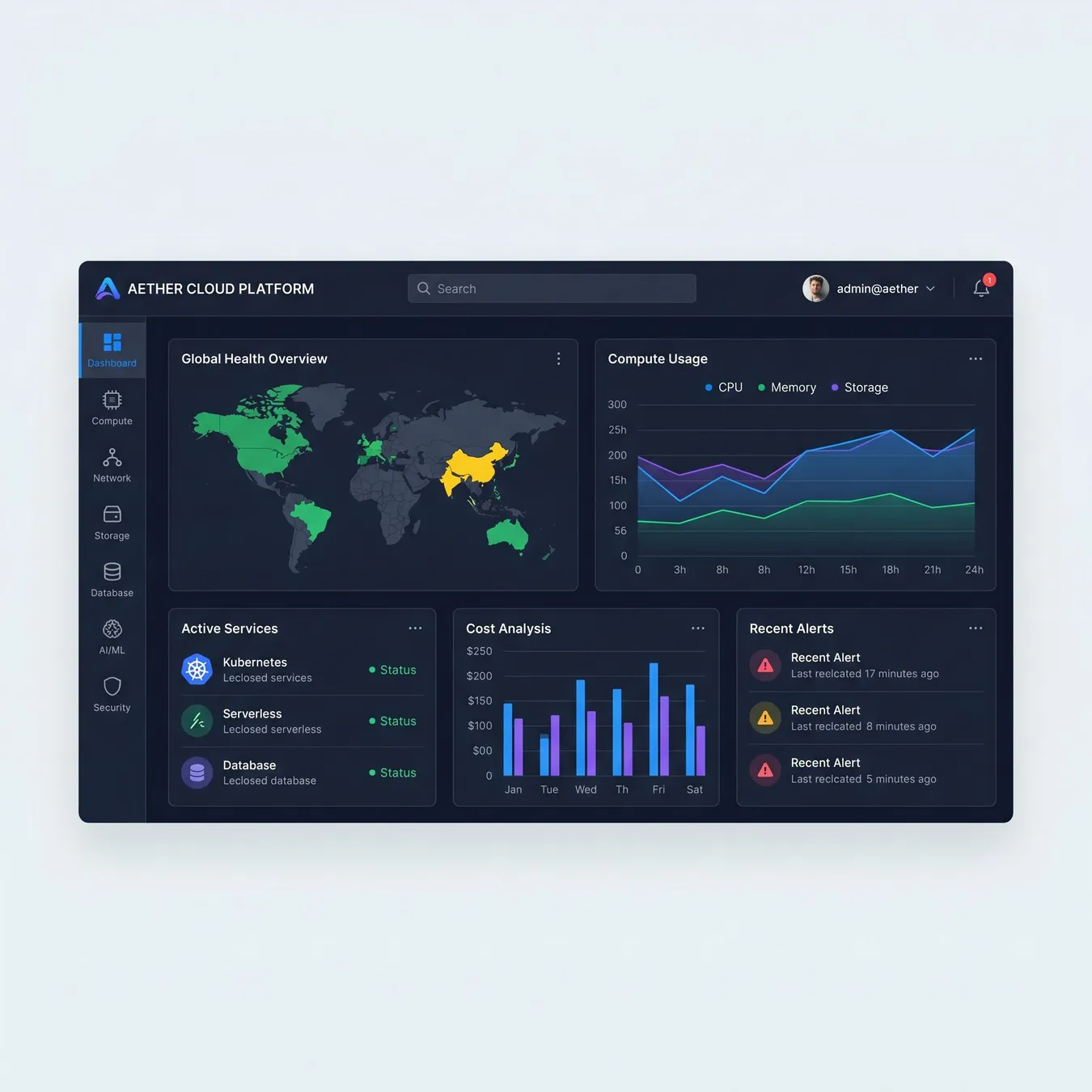
Visibility into system performance prevents scaling bottlenecks.
The Role of the Technical Founder
Technical founders must act as the bridge between the 'possible' and the 'practical.' This means making tough build-vs-buy decisions on core AI infrastructure to keep the team focused on unique value.
The best AI teams don't just build models; they build systems that make models useful for real people.
Senior Product Architect · Studio 402
Step-by-Step: Building Your Initial Team
01 / 03
phase 01 / 03
Phase 1: The Founding Trio
phase 02 / 03
Phase 2: The Hardening
phase 03 / 03
Phase 3: The Scale-Up
AI Startup Team Structure FAQs
Bridging Strategy and Execution
Designing a team is only half the battle; executing on the product vision requires a partner who understands both the code and the operational systems. If you are struggling to move from a vibe-coded prototype to a production-ready system, you need more than just advice.
At Studio 402, we help founders navigate these exact transitions. Whether you are auditing an existing codebase or building a new AI-native platform from scratch, we provide the senior engineering depth required to scale.
Helping founders ship production-ready AI since the first LLM wave.
Trusted by venture-backed startups and growth-stage operators.
Do's and Don'ts for AI Team Leaders
Hire engineers who value testing and observability
Integrate AI specialists into product squads
Focus on data quality before model complexity
Hire a large research team before finding PMF
Let AI features exist in a siloed environment
Ignore the operational costs of running LLMs
The Future of AI-Native Workflows
The most successful teams in 2026 are those that treat AI as a core component of their infrastructure, not a bolt-on feature. This requires a mindset shift from 'building with AI' to 'building AI-native systems' that are durable and scalable.
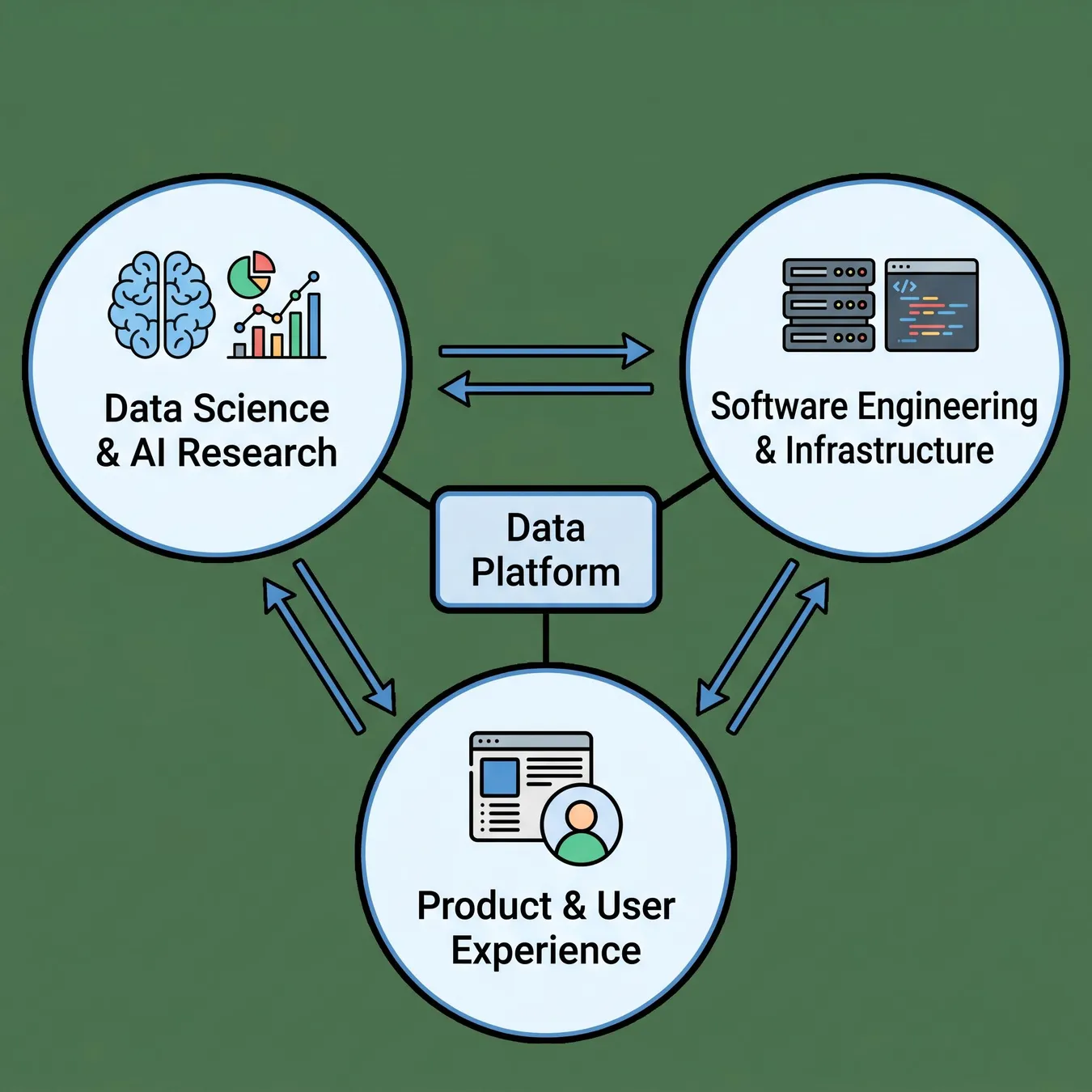
Understanding the data and feedback loops in a high-performance team.
Summary of AI Team Roles
| Role | Primary Focus | Key Metric |
|---|---|---|
| AI Engineer | LLM Integration | Feature Velocity |
| Data Engineer | Vector DBs & RAG | Retrieval Latency |
| Product Manager | User Experience | User Retention |
| MLOps | Reliability | System Uptime |
Building Your Foundation with Studio 402
If you are planning to scale your AI startup, Studio 402 can help by providing the fractional engineering leadership and build capacity you need to reach your next milestone without the overhead of a massive internal team.
Ready to Build Your AI-Native Future?
Let's discuss your team structure and product roadmap. We help founders turn AI prototypes into production-ready systems.
Explore More Founder Insights
Keep reading
More in Founder & Peer Networks
Final Thoughts on AI Leadership
The landscape of AI is shifting weekly, but the principles of good engineering remain constant. Focus on people, process, and production-grade standards to win.
Studio 402 helped us rethink our entire engineering approach. We went from a buggy demo to a scalable platform in record time.
- 01
Audit your current technical debt
- 02
Identify your core AI value proposition
- 03
Hire for reliability over hype
- 04
Partner for scale when needed
The Importance of Evaluation Frameworks
Without a way to measure the performance of your AI, your team is flying blind. High-performance teams build 'evals' into their CI/CD pipeline from day one.

Automated evals are the secret weapon of successful AI teams.
Balancing Speed and Quality
Speed is the only advantage a startup has, but speed without quality leads to a 'vibe-code' collapse. Structure your team to reward durable code, not just fast demos.
For more strategic advice on building and scaling, explore our founder-led advisory resources or reach out to our team directly.