
AI Product Engineering: Prototype to Production
For many ai founders, the journey from a successful vibe-coded demo to a production-ready system is where the real engineering begins. While LLMs make it easy to build a prototype, scaling that prototype into a durable business requires moving beyond prompt engineering into rigorous product systems.
- AI Engineering
- Scale
- Production-Ready
- Founder Insights
The Prototype Trap: Why Vibe-Coding Fails at Scale
Many founders ai start with tools that prioritize speed over structure. While this is great for validation, these systems often lack the observability and error handling needed for real-world users.
Transitioning requires a shift in mindset. You are no longer just testing if the model can answer; you are building a platform that must remain reliable even when the model behaves unpredictably.
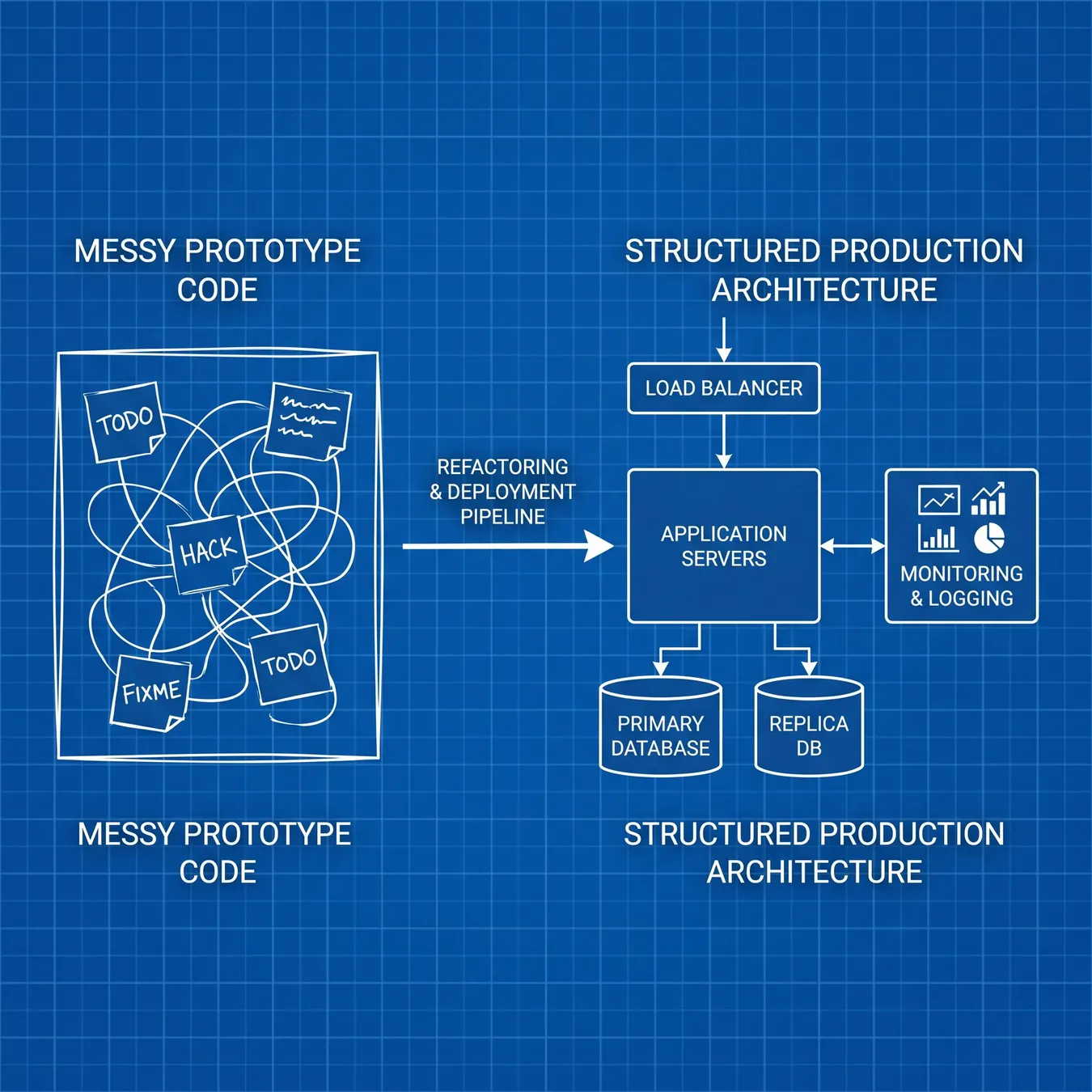
The gap between a demo and a production system is wider than most founders realize.
Core Technical Hurdles for AI Startups
The most common hurdles involve data consistency, latency, and cost management. Without a clear strategy, these factors can quickly erode the unit economics of your product.
- Non-deterministic outputs causing UI breakage
- Token cost spikes during high usage
- Context window management and retrieval quality
- Security vulnerabilities in prompt injection
- Lack of automated evaluation frameworks
Managing Model Non-Determinism
In production, you need predictable outputs. This often means moving away from raw text responses toward structured JSON schemas and rigorous validation layers.
Moving Beyond No-Code AI Tools
While no-code ai tools are excellent for early testing, they often hit a ceiling when you need custom logic or deep integrations.
Trade-off
4 pros · 3 cons
Pros
Full control over data flow
Lower long-term operational costs
Custom evaluation pipelines
Better security posture
Cons
Higher initial engineering effort
Requires specialized AI talent
Longer time to first feature
The Production Hardening Checklist
Implement structured output validation
Set up LLM observability and logging
Define a clear RAG evaluation metric
Establish rate limiting and cost quotas
Create a regression testing suite for prompts
Structuring Your Engineering Team
Building AI products requires a specific ai startup team structure that balances traditional software engineering with data science and prompt optimization.
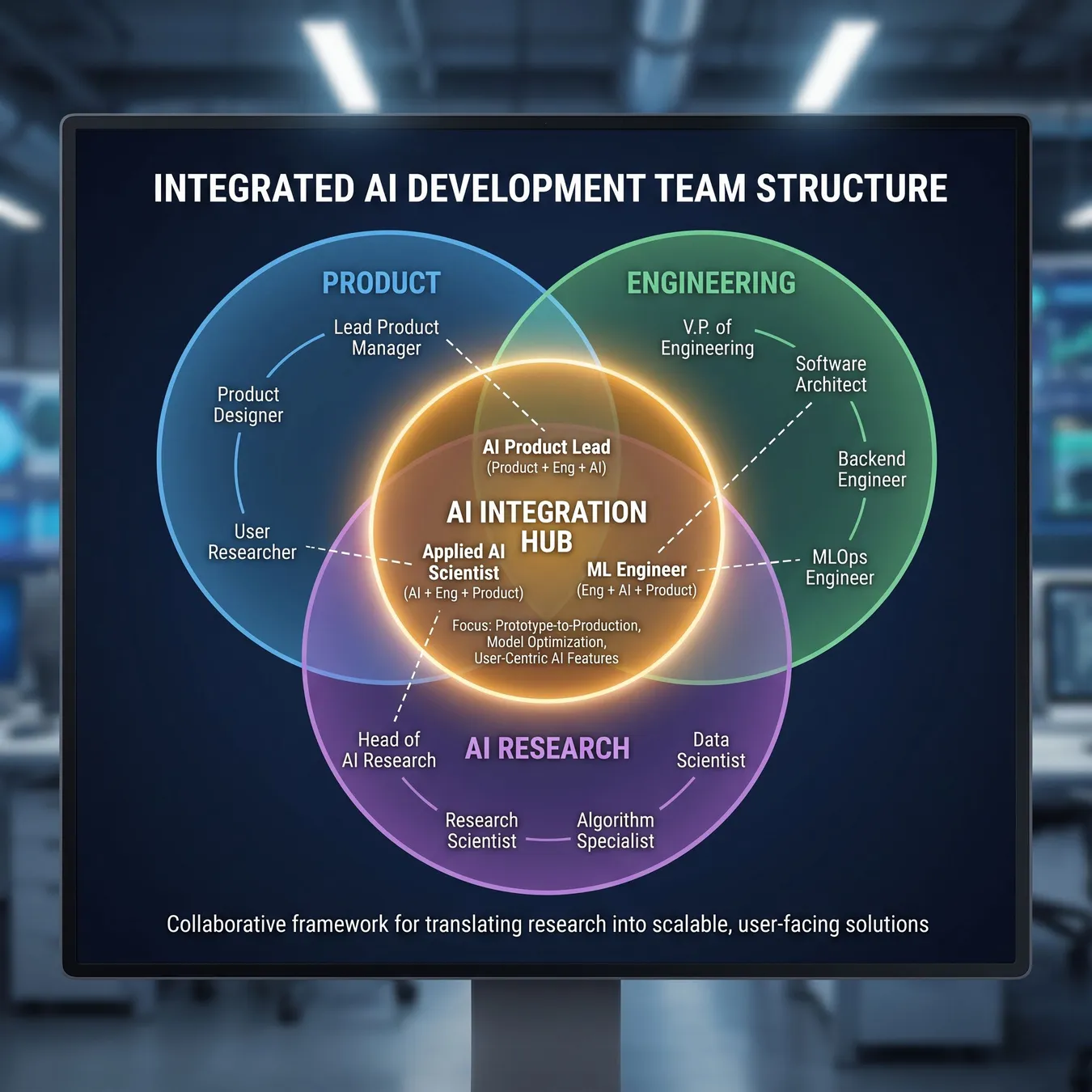
Effective AI teams integrate model expertise directly into the product squad.
Advice for First-Time AI Founders
For first founders, the pressure to ship can lead to taking shortcuts that become massive technical debt later. Focus on building a modular architecture from day one.
Tip.
// Founder Tip
Identifying Scalable AI Business Ideas
When evaluating business ideas using ai, look for problems where the LLM is a component of the solution, not the entire product.
The Roadmap to Production
01 / 04
phase 01 / 04
Audit the Prototype
phase 02 / 04
Infrastructure Setup
phase 03 / 04
Hardening & Security
phase 04 / 04
Scaling & Optimization
Common Pitfalls in AI Scaling
Use semantic caching to reduce costs
Implement human-in-the-loop for high-stakes tasks
Version control your prompts like code
Rely solely on the LLM for business logic
Ignore the latency impact of long chains
Hardcode API keys or sensitive prompts
Key Performance Metrics for AI Systems
99.9%
Uptime Target
<2s
P90 Latency
95%
Output Accuracy
Peer Insights: Lessons from the Trenches
The difference between a demo and a product is how it handles the 1% of cases where the model wants to hallucinate.
Alex R. · Series A AI Founder
Cost Management Strategies
Scaling an AI product can be prohibitively expensive if you don't optimize your token usage. Consider using smaller models for simpler classification tasks.
| Task Type | Recommended Model | Cost Profile |
|---|---|---|
| Simple Classification | Small/Local Model | Low |
| Complex Reasoning | Frontier LLM | High |
| Data Extraction | Fine-tuned Model | Medium |
Security and Compliance in AI
Production systems must handle PII and sensitive data with care. This is especially true for AI systems that might inadvertently store user data in logs or context.
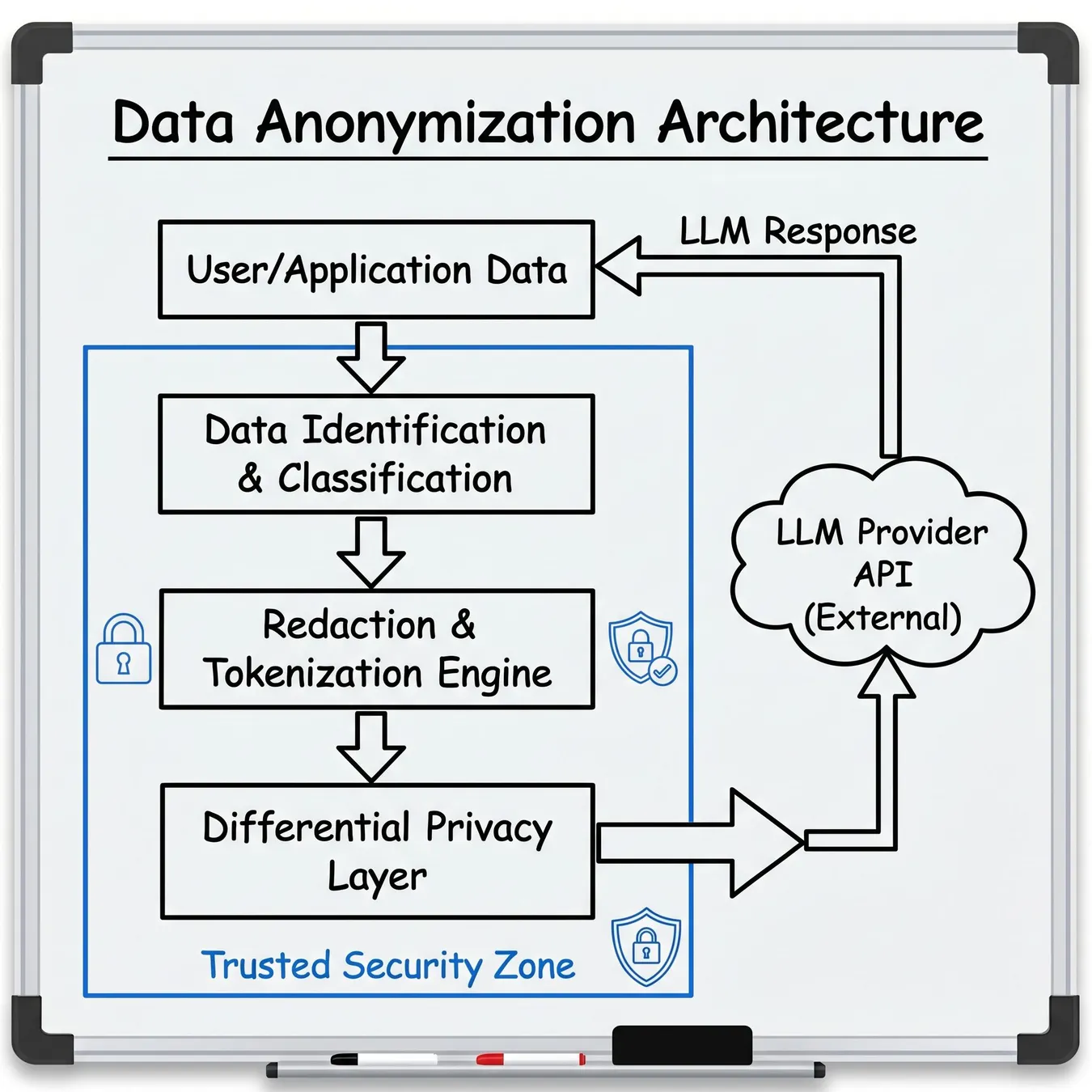
Protecting user data is a non-negotiable requirement for production AI.
The Role of Observability
You cannot fix what you cannot measure. Modern AI engineering requires tracing every request to understand where failures occur.
Tracing and Debugging
Use tools that allow you to replay failed requests and adjust prompts in a sandbox environment before redeploying.
Bridging to Professional Engineering
If you find your prototype is hitting these walls, it might be time to partner with a studio that specializes in production hardening. Studio 402 helps founders bridge the gap between a demo and a durable system.
We don't just fix bugs; we re-architect your AI integration for long-term scale, security, and performance.

Studio 402 brings production-grade discipline to AI innovation.
Frequently Asked Questions
Next Steps for Your AI Build
Transitioning to production is a significant milestone. Whether you are refactoring a rescue project or building from scratch, focus on durability over hype.
Ready to Scale Your AI Product?
Stop fighting with fragile prototypes. Let's build a production-ready system that grows with your business.
Keep reading