
Agile Mobile Development for Complex Product Requirements
Managing technical complexity in mobile apps requires more than just a list of features. It demands a rigorous agile development process that balances rapid iteration with production-grade stability. For growth-stage teams, the challenge is evolving the product without breaking the foundation.
2-Week
Sprint Cycles
100%
Automated Testing
99.9%
Uptime Targets
Why Agile is Essential for Complex Mobile Apps
Agile development companies for complex mobile apps prioritize adaptability. When building mobile apps at scale, requirements often shift as user data comes in. An iterative approach ensures that these changes are integrated safely into the codebase.
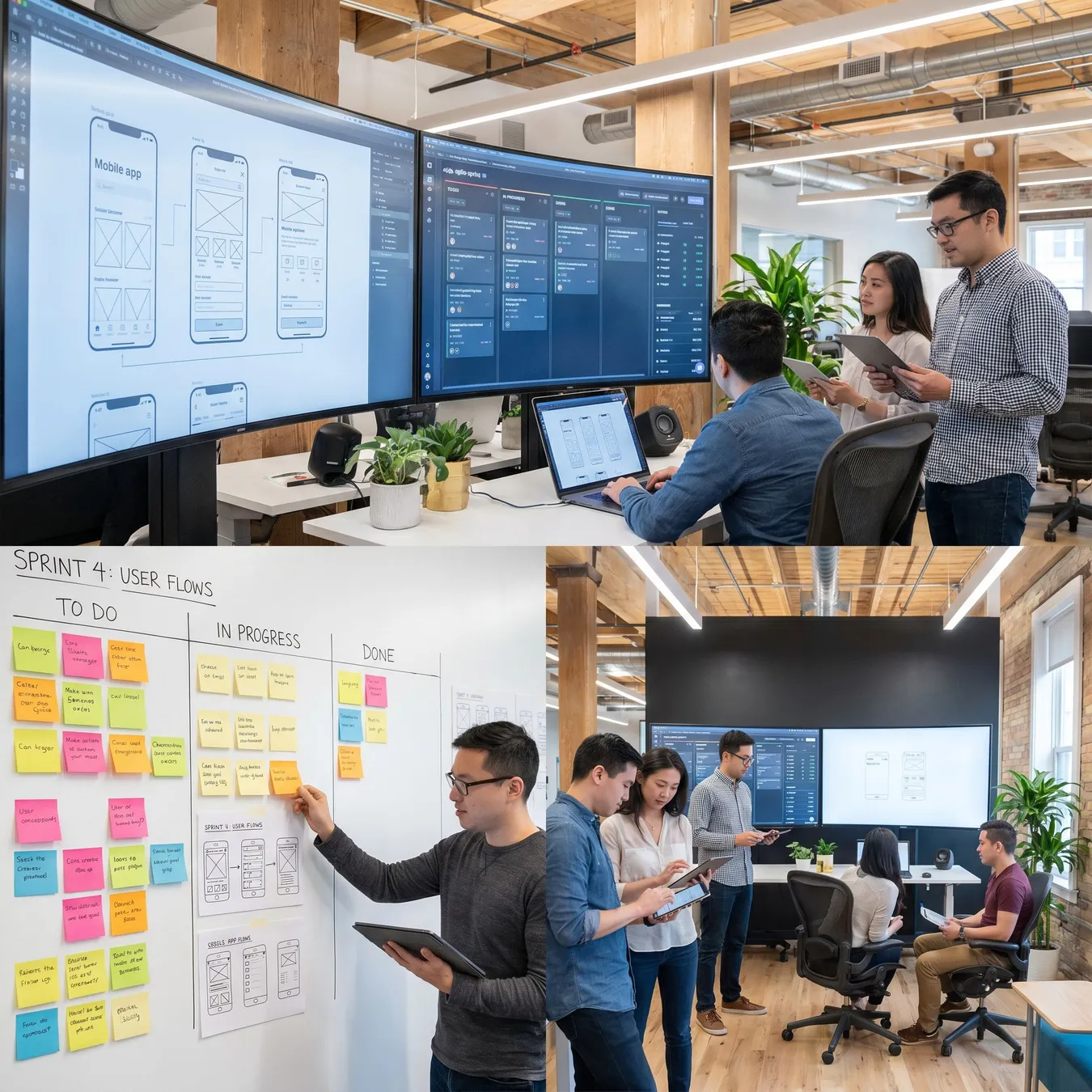
Agile workflows bridge the gap between complex requirements and functional code.
Managing the Scope of Mobile App Development
Before the first line of code is written, defining the scope of mobile app development is critical. This involves mapping out technical constraints, third-party integrations, and user personas to create a roadmap that supports agile delivery.
- Feature prioritization based on business value
- Technical feasibility audits for third-party APIs
- User journey mapping for complex workflows
- Security and compliance requirement gathering
Iterative Engineering for Cross-Platform Success
Agile software development companies cross-platform mobile apps leverage shared codebases to speed up delivery. By using frameworks like React Native or Flutter, teams can iterate on iOS and Android simultaneously without doubling the engineering effort.

Unified codebases for faster iteration.

Consistent cross-platform performance.
The Agile Mobile Development Lifecycle
01 / 05
phase 01 / 05
Discovery & Backlog
phase 02 / 05
Sprint Planning
phase 03 / 05
Iterative Build
phase 04 / 05
QA & User Testing
phase 05 / 05
Release & Retrospective
Technical Rigor in Agile Environments
Agile is not an excuse for sloppy code. In fact, mobile app engineering requires even stricter standards when iterating quickly. Automated testing and CI/CD pipelines are the guardrails that prevent regressions in complex systems.
Info.
// Continuous Integration
Tools for Agile Mobile Delivery
The right stack makes all the difference. Utilizing modern agile development process tools allows for transparent communication between product owners and engineering teams, ensuring no requirement is lost in translation.
| Tool Category | Purpose | Example |
|---|---|---|
| Project Management | Backlog & Sprints | Jira / Linear |
| Version Control | Code Collaboration | GitHub / GitLab |
| CI/CD | Automated Deploys | Bitrise / CircleCI |
| Communication | Real-time Sync | Slack |
Handling Complex Integrations
Complex mobile apps often require deep integration with legacy systems, AI models, or third-party fintech APIs. Agile allows teams to tackle these integrations in phases, reducing the risk of a single point of failure.
Break integrations into small, testable modules
Use mock APIs for parallel development
Document all edge cases for third-party data
Attempt to build all integrations in one sprint
Ignore error handling for external services
Hardcode API credentials in the mobile client
Quality Assurance in Agile Mobile Builds
Testing is not a phase at the end; it is a continuous activity. In an agile mobile environment, QA engineers work alongside developers to write tests as features are being built.
Unit testing for core business logic
UI automation for critical user paths
Manual exploratory testing on physical devices
Performance benchmarking for low-end hardware
Scaling the Agile Process
As your user base grows, your agile process must evolve. This might mean moving from a single scrum team to multiple squads or adopting more sophisticated release management strategies like feature flagging.
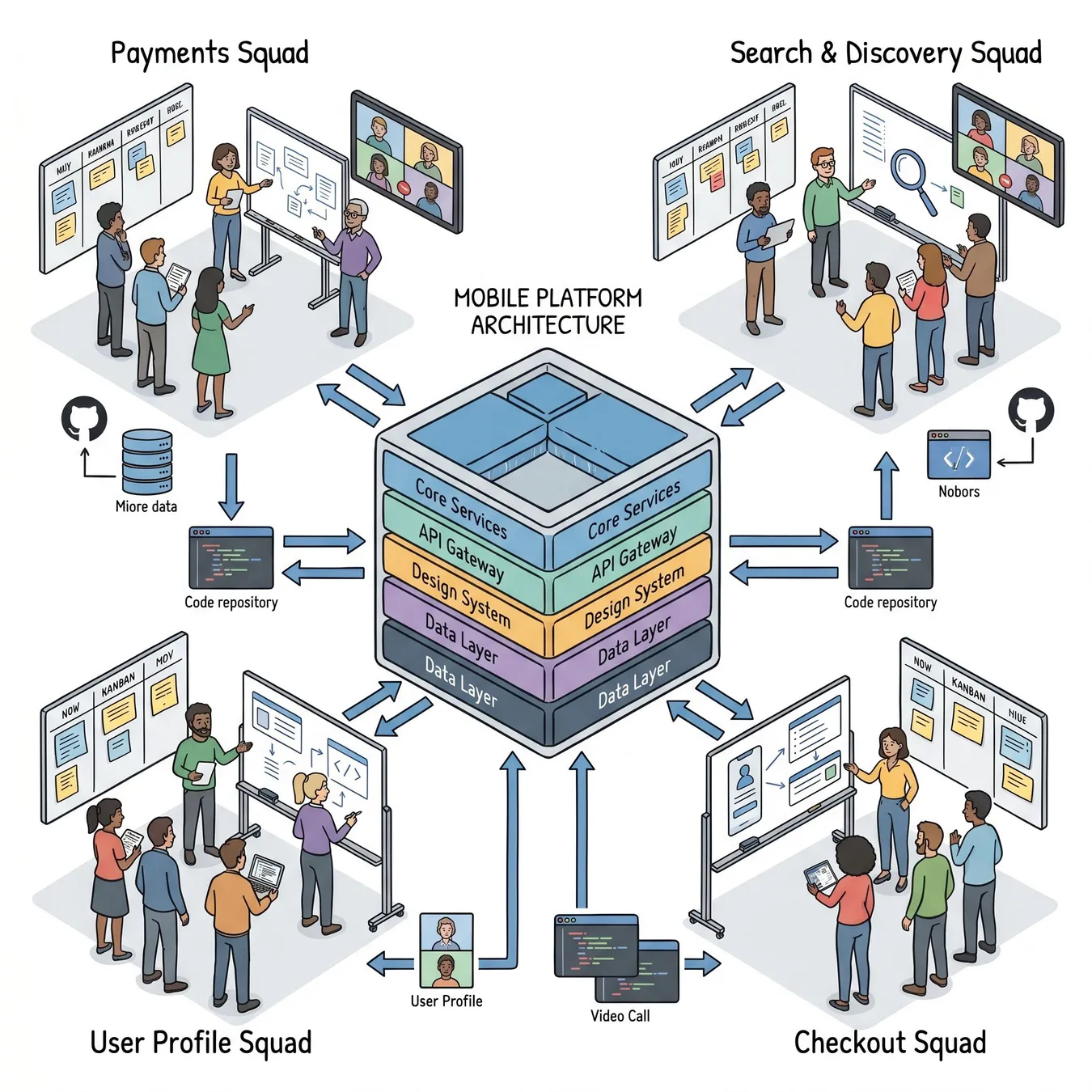
Scaling agile for enterprise-grade mobile applications.
Common Challenges in Agile Mobile Development
Agile for Startups vs. Growth-Stage Teams
While startups focus on speed to MVP, growth-stage teams must focus on stability. Agile provides the framework for both, shifting the focus from 'build fast' to 'build right' as the product matures.
Trade-off
3 pros · 3 cons
Pros
Faster time-to-market for core features
Higher visibility into development progress
Reduced risk of building the wrong product
Cons
Requires high level of stakeholder involvement
Can lead to scope creep if not managed
Initial setup of CI/CD takes time
The Role of the Product Owner
A successful agile mobile project requires a strong Product Owner who can make tough calls on prioritization. They act as the bridge between business goals and the engineering team's execution.
Agile is not about doing more work in less time; it is about doing the right work at the right time to deliver maximum value.
Studio 402 Engineering Lead
Future-Proofing Your Mobile App
Agile development ensures that your app is ready for what's next. Whether it's integrating new AI capabilities or supporting the latest OS features, an iterative foundation makes these transitions seamless.
Partnering with Studio 402 for Agile Mobile Builds
At Studio 402, we don't just build apps; we engineer products. Our agile process is designed for companies that need production-ready outcomes for complex requirements. We combine senior engineering depth with a focus on long-term scalability.
Trusted by growth-stage teams to ship complex mobile products.
From MVP to high-scale production systems.
How We Manage Your Project
We provide full transparency into our development process. You'll have access to our sprint boards, real-time staging builds, and direct communication with the engineers building your product.
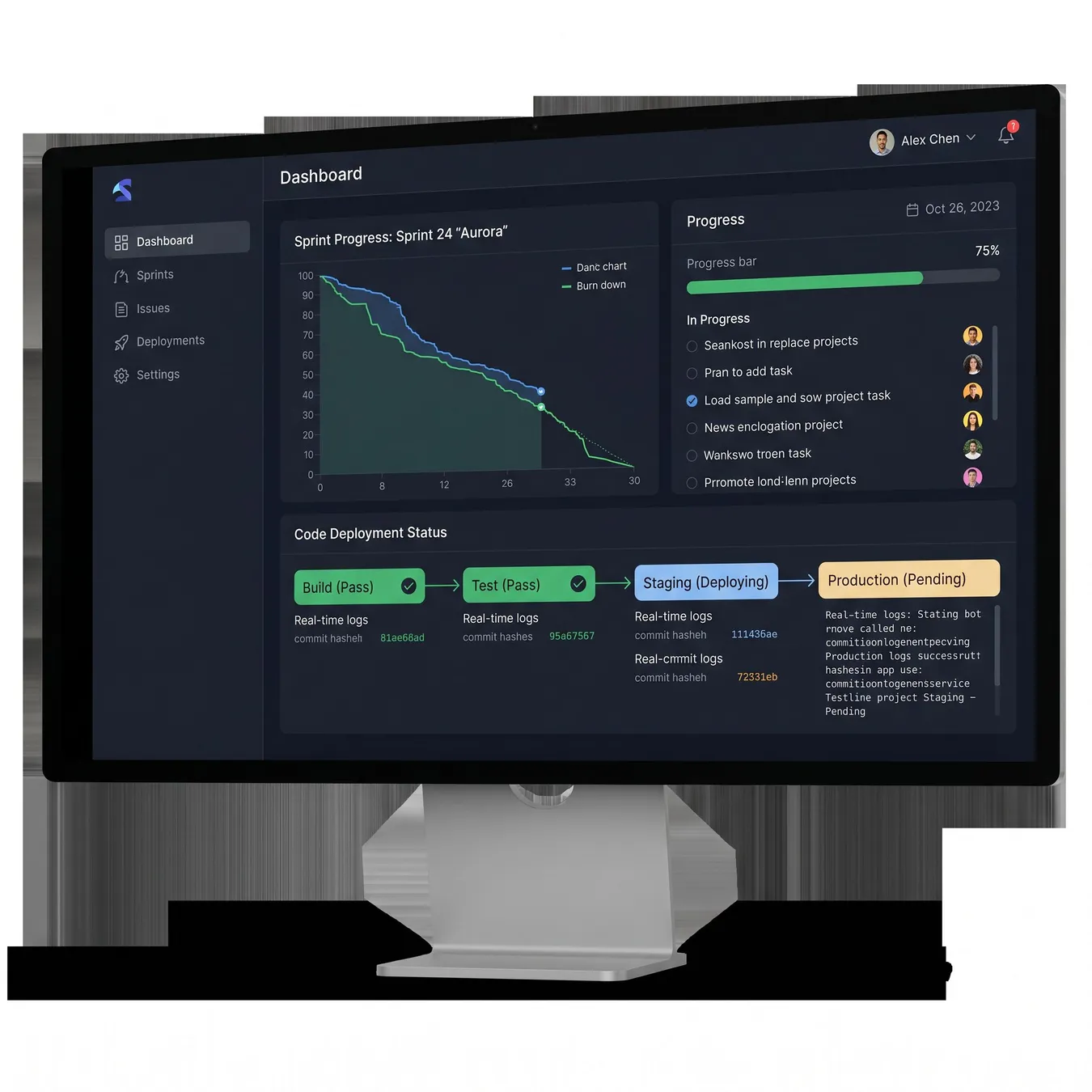
Full visibility into every stage of the build.
Ready to Build Your Mobile Product?
If you are looking for agile development companies for complex mobile apps that prioritize engineering quality over quick fixes, we are ready to help. Our team specializes in turning complex requirements into durable software.
Start Your Agile Mobile Project
Let's discuss your requirements and build a roadmap for a production-ready mobile application.
Explore More Mobile Insights
Keep reading
More in Mobile App Development
Agile Documentation Standards
We maintain living documentation throughout the agile lifecycle. This ensures that as the product grows, the knowledge base remains accurate for future developers and stakeholders.
User Feedback Integration
Agile allows us to bake user feedback directly into the next sprint. This tight feedback loop is what separates successful mobile products from those that fail to find market fit.
Risk Mitigation Strategies
By breaking down complex features into smaller tasks, we identify technical risks early. This proactive approach prevents 'big bang' failures at the end of a long development cycle.
Post-Launch Agile Support
Our partnership doesn't end at launch. We continue to use agile methodologies to manage feature requests, bug fixes, and performance optimizations in production.