
DevOps and Cloud Infrastructure Engineering Services
Scaling a SaaS product requires more than just code; it demands a production-grade foundation. Leading devops companies focus on creating environments where software is secure, observable, and resilient under load.
Modern infrastructure relies on infrastructure deployment automation to eliminate manual errors and ensure consistency across staging and production environments.
99.99%
Uptime Target
< 10 min
Deployment Time
100%
IaC Coverage
The Role of DevOps in Modern SaaS Scaling
DevOps is the bridge between writing features and delivering value. For growth-stage companies, devops saas strategies ensure that multi-tenant architectures remain isolated and performant.
- Continuous Integration and Continuous Deployment (CI/CD) pipelines
- Infrastructure as Code (IaC) using Terraform or CloudFormation
- Real-time monitoring and centralized logging
- Automated scaling and self-healing systems
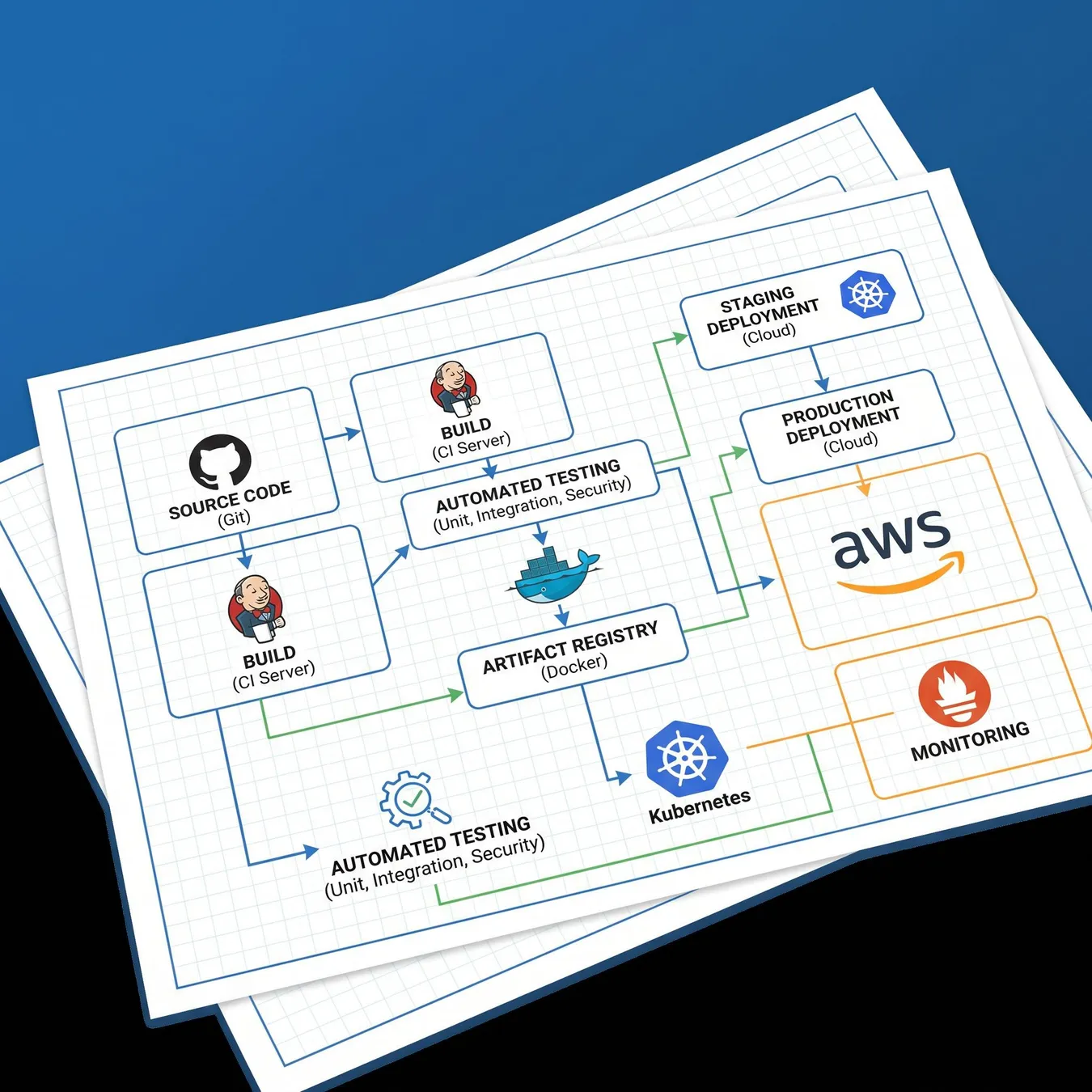
A standard production-grade DevOps workflow.
Cloud Infrastructure Engineering on AWS
Building devops on aws allows teams to leverage a massive ecosystem of managed services, reducing the operational burden of maintaining servers.
Info.
// Why AWS?
Securing Your Cloud Environment
Security must be baked into the pipeline, not added as an afterthought. This involves securing cloud infrastructure through identity management and encrypted data layers.
Use multi-factor authentication for all cloud access
Rotate secrets and API keys automatically
Implement the principle of least privilege
Hardcode credentials in your source code
Leave S3 buckets open to the public
Ignore security patches for container images
Automated QA and Testing Pipelines
To maintain high velocity, teams often outsource automated qa development to ensure that every pull request is validated before it hits production.
Unit testing coverage > 80%
End-to-end integration tests
Load testing for critical paths
Automated security vulnerability scanning
Infrastructure as Code (IaC) Benefits
IaC allows you to treat your infrastructure exactly like your application code, with version control and peer reviews.
| Feature | Manual Config | IaC (Terraform) |
|---|---|---|
| Speed | Slow/Manual | Fast/Automated |
| Consistency | Error-prone | Guaranteed |
| Documentation | Often missing | Self-documenting |
Monitoring and Observability
You cannot fix what you cannot see. Modern observability platforms provide deep insights into application performance and user behavior.

Real-time observability dashboard.
Containerization and Orchestration
Docker and Kubernetes have become the industry standard for packaging and managing applications at scale.
- Consistent environments from dev to prod
- Efficient resource utilization
- Simplified scaling of microservices
- Faster recovery from hardware failures
Disaster Recovery and Business Continuity
A robust DevOps strategy includes automated backups and cross-region failover capabilities to protect against cloud provider outages.
- 01
Define Recovery Point Objectives (RPO)
- 02
Implement automated database snapshots
- 03
Test failover procedures quarterly
- 04
Document manual override steps
Cost Optimization in the Cloud
Cloud costs can spiral out of control without proper governance. DevOps engineers use automation to shut down unused resources and right-size instances.
Tip.
// FinOps Tip
The Evolution of Platform Engineering
Platform engineering is the next step for DevOps, focusing on creating internal developer portals that allow engineers to self-serve infrastructure.
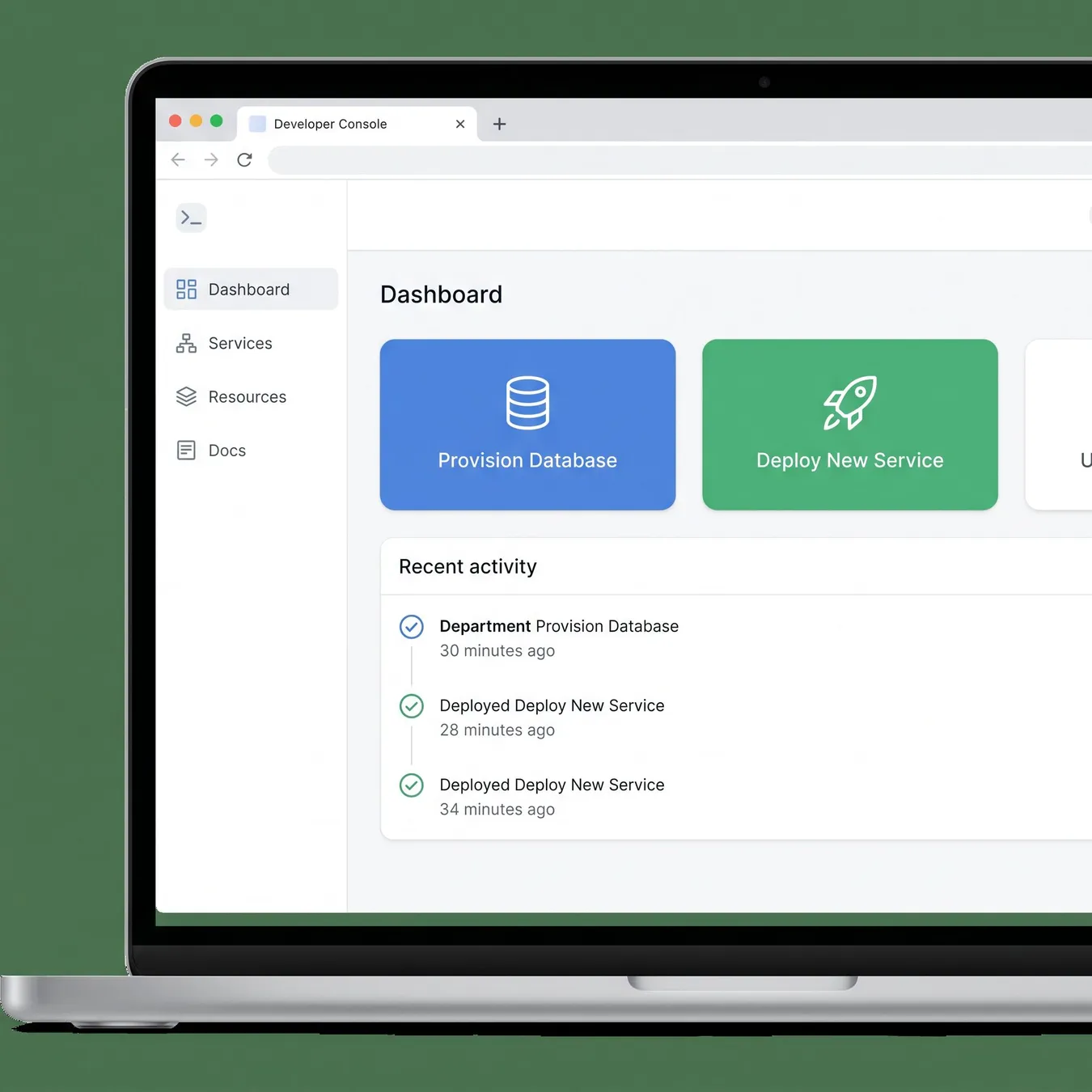
Internal Developer Platforms (IDP) reduce friction.
Managing Technical Debt in Infrastructure
Just like code, infrastructure accumulates debt. Regular audits and refactoring of cloud configurations are necessary for long-term health.
Trade-off
3 pros · 3 cons
Pros
Faster feature delivery
Higher system reliability
Better security posture
Cons
Initial setup complexity
Requires specialized talent
Ongoing maintenance cost
Hybrid and Multi-Cloud Strategies
While most startups begin on a single provider, larger organizations often explore multi-cloud to avoid vendor lock-in.
DevOps for AI and Machine Learning
MLOps brings DevOps principles to machine learning, managing the lifecycle of models, data pipelines, and training environments.
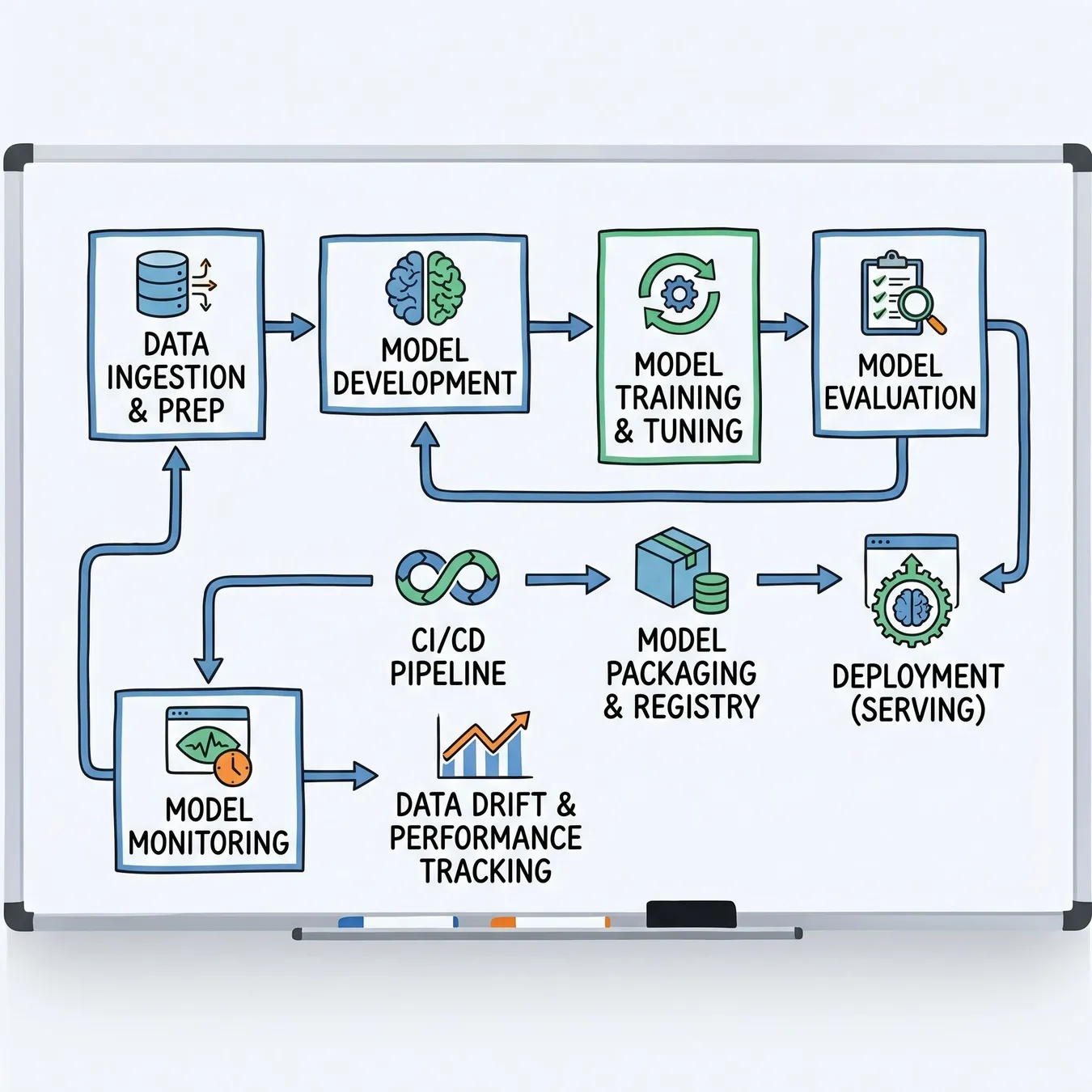
The MLOps lifecycle.
Why Partner with DevOps Experts?
Many companies find that custom software developers with strong devops expertise provide a more cohesive experience than hiring separate teams for code and ops.
Infrastructure is no longer a separate department; it is a core part of the product engineering lifecycle.
Studio 402 Engineering · Platform Lead
Studio 402: Your Infrastructure Partner
At Studio 402, we don't just build apps; we build the systems that run them. Our team combines deep product engineering with production-grade cloud architecture.
Whether you are migrating from a fragile setup or building a new SaaS from scratch, we provide the senior leverage needed to scale securely.
01 / 03
phase 01 / 03
Audit & Discovery
phase 02 / 03
Architecture Design
phase 03 / 03
Implementation
Trusted by growth-stage startups to manage production infrastructure.
Updated for 2026 standards.
Frequently Asked Questions
Scale Your Infrastructure Today
Stop fighting manual deploys. Let us build a production-grade foundation for your SaaS.
Keep reading