
Aligning Custom Software Development with Business Goals
Successful software isn't just about clean code; it's about commercial outcomes. For founders, the challenge lies in ensuring that every engineering sprint moves the needle on business metrics. This requires a deep understanding of when to build custom software to gain a competitive advantage versus using off-the-shelf solutions.
70%
Digital transformations that fail due to lack of alignment
3x
Faster ROI when technical roadmaps match business KPIs
Understanding Business Modeling in Software Engineering
Business modeling in software engineering is the process of translating commercial logic into technical requirements. It ensures that the software architecture supports the revenue model, customer acquisition flow, and operational efficiency targets of the organization.
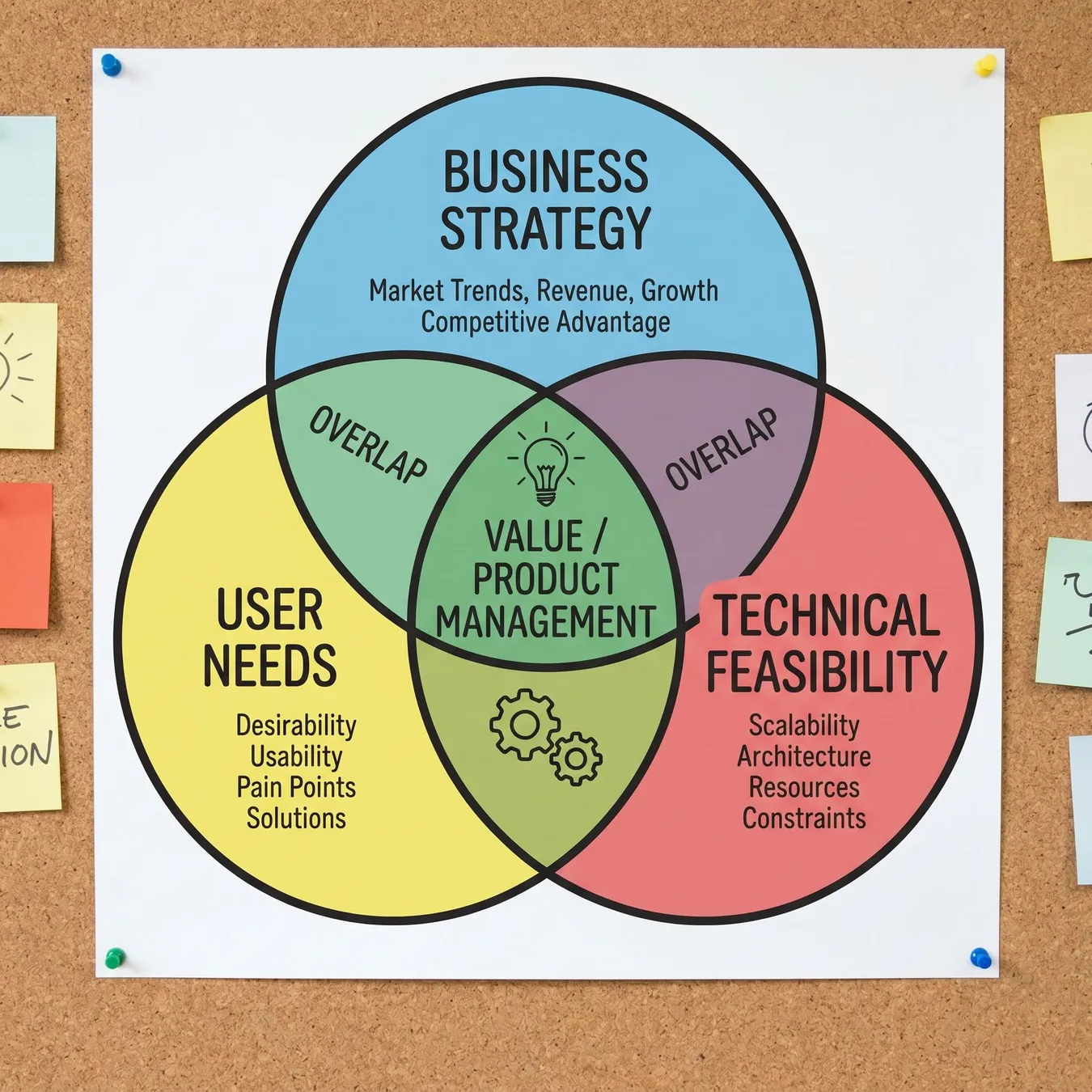
The core pillars of strategic software alignment.
The Role of the Software Engineering Architect
Bridging the gap between a founder's vision and a developer's execution often requires a software engineering architect. This role is responsible for ensuring that the system's structural decisions don't just solve today's bugs but also enable tomorrow's growth.
- Translating business KPIs into technical performance metrics
- Selecting a tech stack that balances speed-to-market with scalability
- Designing data models that reflect real-world business entities
- Mitigating technical debt that could block future commercial pivots
Evaluating Build vs. Buy for Strategic Alignment
Not every business problem requires a custom-coded solution. Founders must evaluate low code vs no code options against the need for proprietary intellectual property and specialized workflows that off-the-shelf tools cannot handle.
Trade-off
3 pros · 3 cons
Pros
Total control over user experience
Proprietary IP and data ownership
Infinite scalability for unique logic
Cons
Higher initial capital expenditure
Longer time to initial launch
Ongoing maintenance responsibility
Mapping Technical Milestones to Commercial Goals
Alignment fails when engineering teams work in a vacuum. To succeed, technical milestones must be explicitly linked to business outcomes like 'reducing churn' or 'increasing checkout conversion rates'.
01 / 04
phase 01 / 04
Discovery
phase 02 / 04
Architecture Design
phase 03 / 04
Iterative Build
phase 04 / 04
Performance Audit
Common Pitfalls in Business-Technical Alignment
Involve technical leads in strategy meetings
Prioritize features based on revenue impact
Build for observability from day one
Treat developers as order-takers
Over-engineer for hypothetical scale
Ignore technical debt until it stops growth
Strategic Product Advisory for Growth
Many founders find that working with custom software development providers strategic product advisory teams helps them navigate complex trade-offs. This partnership ensures that the software isn't just a cost center, but a primary driver of enterprise value.
Info.
// The Value of Advisory
Designing for Operational Efficiency
Custom software should eliminate manual bottlenecks. If your team is still using spreadsheets to manage core workflows, your software alignment is incomplete.
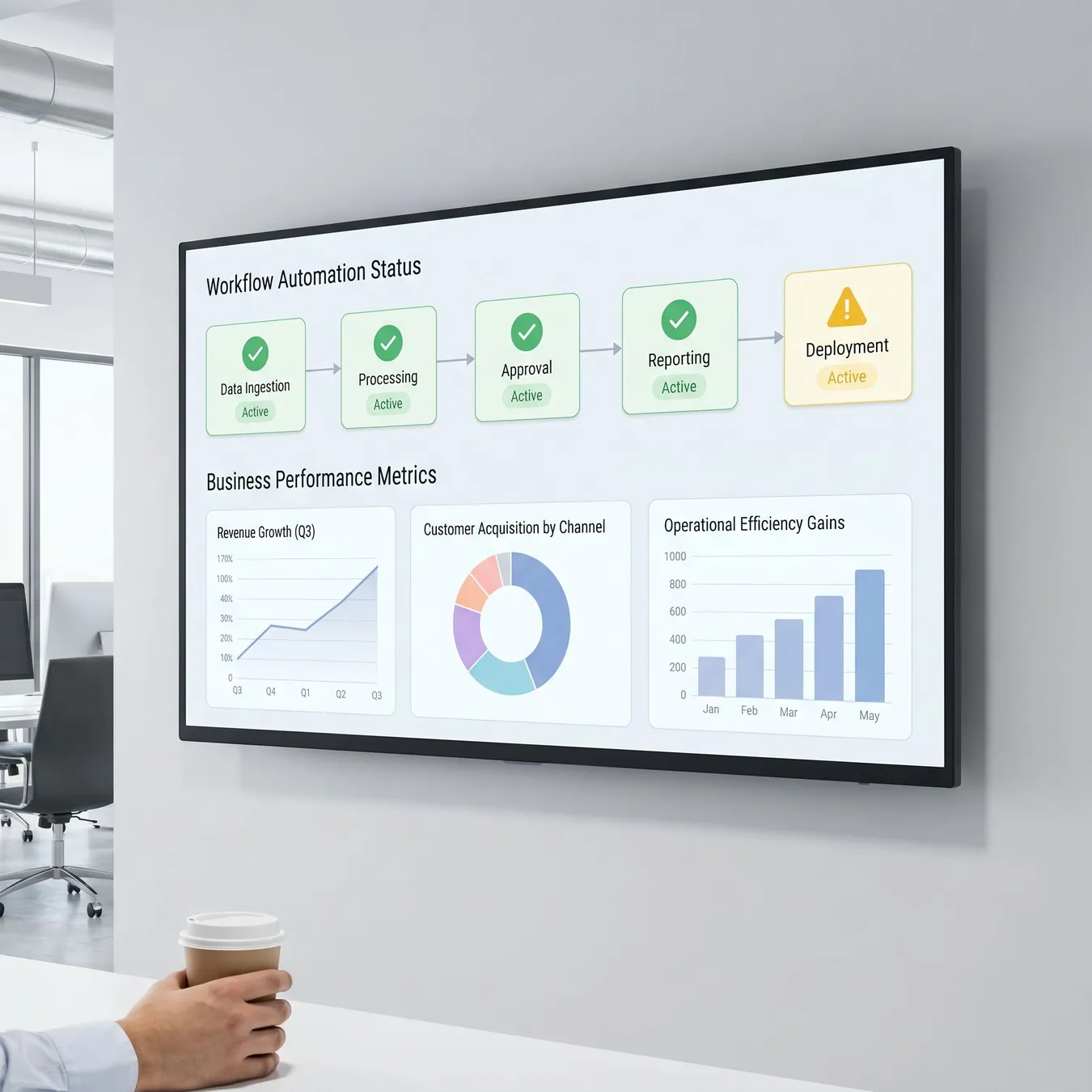
Operational software should provide clarity, not complexity.
The Importance of Data Modeling
Your database schema is a reflection of your business model. If you can't accurately report on customer lifetime value or unit economics, your data model is likely misaligned with your commercial needs.
Scaling Technical Infrastructure with Revenue
Infrastructure costs should scale predictably with usage. Alignment means ensuring that a 10x increase in customers doesn't lead to a 50x increase in cloud spend.
Building for Long-Term Maintainability
A business goal of 'long-term stability' requires a technical commitment to testing, documentation, and modular architecture. Shortcuts taken today are high-interest loans against your future velocity.
Software is the physical manifestation of business logic. If the logic is fuzzy, the software will be fragile.
Senior Product Engineer · Studio 402
Integrating AI with Business Purpose
AI shouldn't be a bolt-on. Aligning AI features with business goals means identifying specific tasks—like customer support or data entry—where LLMs can provide measurable efficiency gains.
Customer-Centric Engineering
Every line of code should ultimately serve the user. Technical alignment means prioritizing features that solve the most painful customer problems first.
Measuring Success: Technical vs. Business KPIs
| Technical Metric | Business Outcome | Alignment Goal |
|---|---|---|
| API Latency | User Retention | Faster apps reduce bounce rates |
| Deployment Frequency | Market Agility | Shipping faster captures trends |
| Error Rate | Customer Trust | Stability builds brand loyalty |
The Cost of Misalignment
When software and business goals diverge, you end up with 'vibe-code'—products that look good in demos but fail to handle real-world edge cases or scale efficiently.
Strategic Roadmapping for Founders
A roadmap is a living document. It should be reviewed monthly to ensure that technical priorities still match the evolving commercial landscape of the startup.
Choosing the Right Execution Partner
Finding a custom software development partner who understands venture strategy is critical. You need more than just developers; you need a team that thinks like co-founders.
Frequently Asked Questions
Bridging Strategy and Production
At Studio 402, we don't just take tickets. We act as a senior technical partner, helping founders navigate the transition from idea to production-ready software. We specialize in building foundations that don't just work—they grow.
Trusted by venture-backed founders to ship scalable software.
From MVP to Series B and beyond.
Our Approach to Alignment
We combine product engineering with platform depth to ensure your software is an asset, not a liability. Whether you are building from zero or rescuing a prototype, we focus on the outcomes that matter to your business.
Build Software That Drives Your Business Forward
Stop guessing and start building with a partner who understands your commercial goals. Let's discuss your product roadmap today.
Deepen Your Strategic Knowledge
Keep reading
More in Technical Consulting & Venture Strategy
- Strategy
- Engineering
- Founders
- Scale
Ensuring your custom software development business goals are met requires constant vigilance and a partner who values production-ready outcomes over simple feature delivery.
By focusing on business modeling in software engineering, you create a resilient product that can adapt to market changes without requiring a total rebuild.
Strategic product advisory is the final piece of the puzzle, providing the external perspective needed to identify architectural risks before they become commercial crises.