
Technical Due Diligence Checklist for 2026
Technical due diligence is a critical audit of a company's software, architecture, and engineering processes. For founders in the pre seed and seed stage, it is the hurdle between a term sheet and a closed round.
70%
of M&A deals face delays due to technical debt
4-6 Weeks
Average duration of a deep-dive technical audit
12+
Key categories of technical risk assessed
Core Technical Due Diligence Questions for Founders
Investors use technical due diligence questions to uncover hidden liabilities. They want to know if your code is maintainable, if your data is secure, and if your team can scale the product to the next milestone.
- What is the core technology stack and why was it chosen?
- How do you manage third-party dependencies and open-source licenses?
- What is the current level of technical debt and the plan to address it?
- How is data security and privacy handled at the architectural level?
- Can the current infrastructure support a 10x increase in user load?
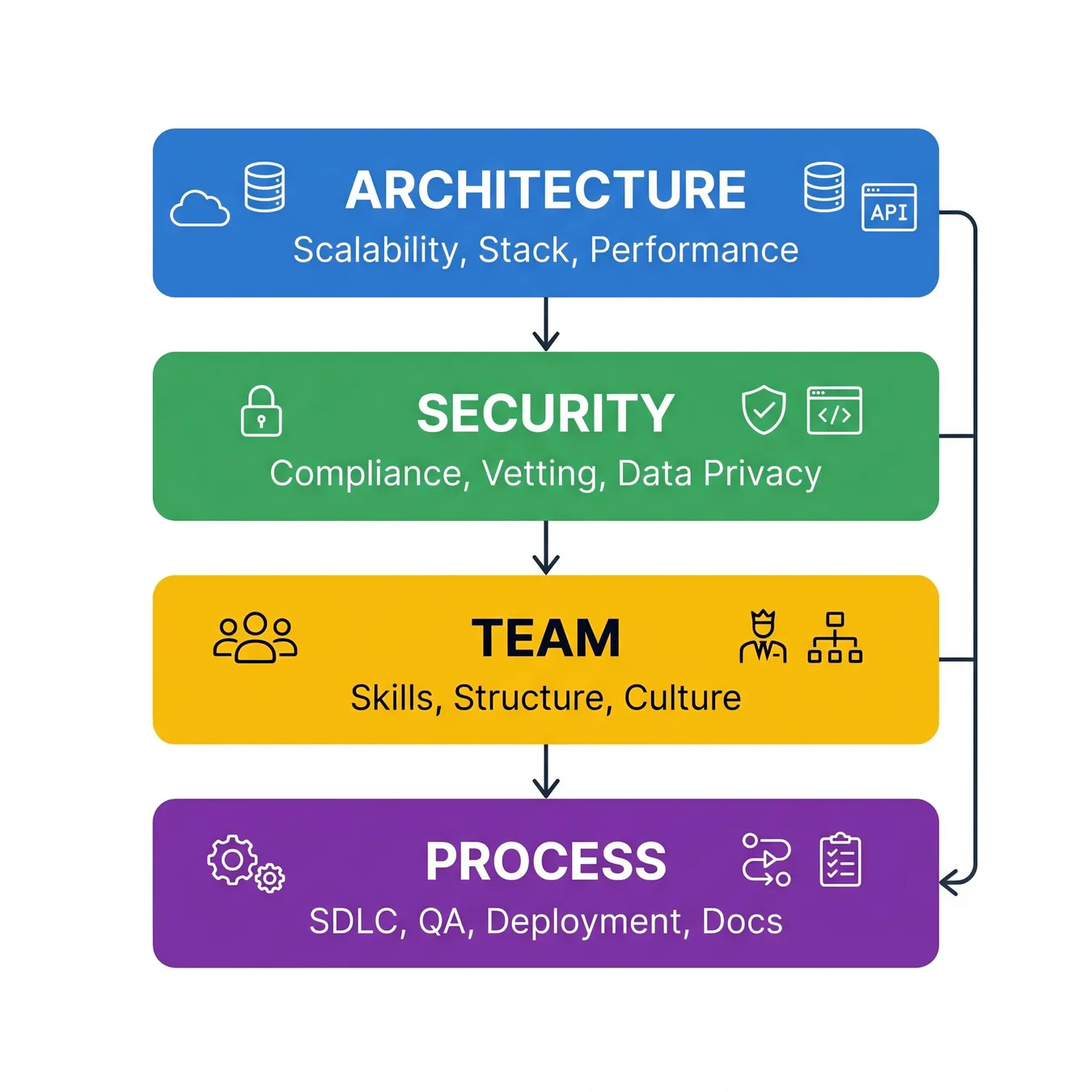
The four pillars of a comprehensive technical audit.
The Technical Due Diligence Template: Architecture & Infrastructure
A robust technology due diligence template starts with the foundation. Auditors look for modularity, clear separation of concerns, and a deployment pipeline that doesn't rely on manual intervention.
High-level architecture diagram (current and future state)
Cloud infrastructure provider details and IAM policies
Database schema and data flow documentation
API documentation (Swagger/OpenAPI)
Disaster recovery and business continuity plans
Code Quality and Technical Debt Management
Auditors will perform a code review to assess readability and test coverage. A major part of the audit involves managing technical debt and ensuring the codebase isn't a 'vibe-coded' prototype that will break under pressure.
Trade-off
3 pros · 3 cons
Pros
High automated test coverage
Consistent coding standards
Automated CI/CD pipelines
Cons
Hard-coded secrets in repo
Lack of documentation
Circular dependencies
Security and Compliance Readiness
Security is often a deal-breaker. Investors check for SOC2 compliance, encryption at rest and in transit, and a history of regular penetration testing.
Tip.
// Security Tip
Evaluating the Engineering Team and Process
Investors want to know how you ship. They look at your sprint velocity, your code review culture, and how to hire software engineers who can maintain high standards as the company grows.
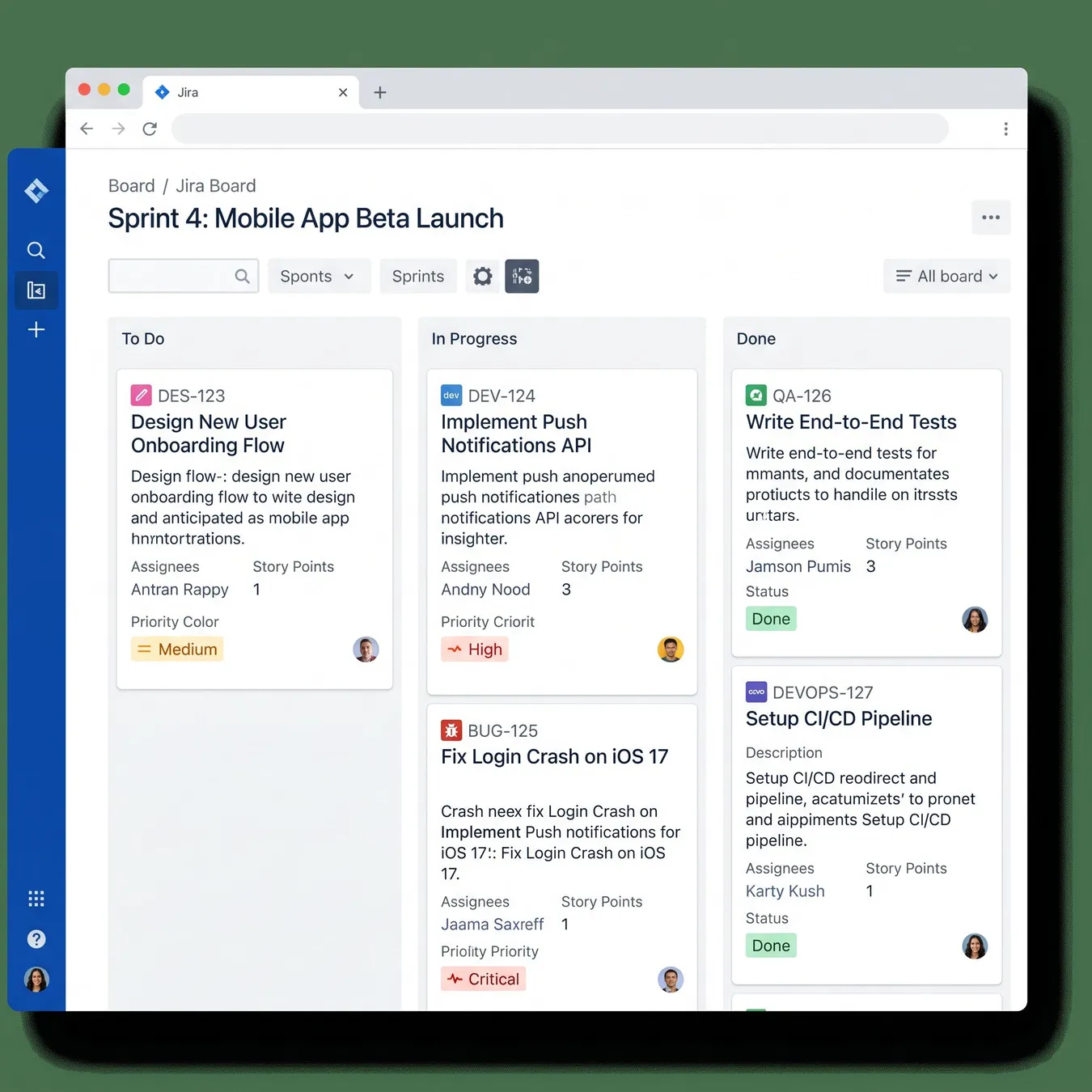
Evidence of a mature engineering process.
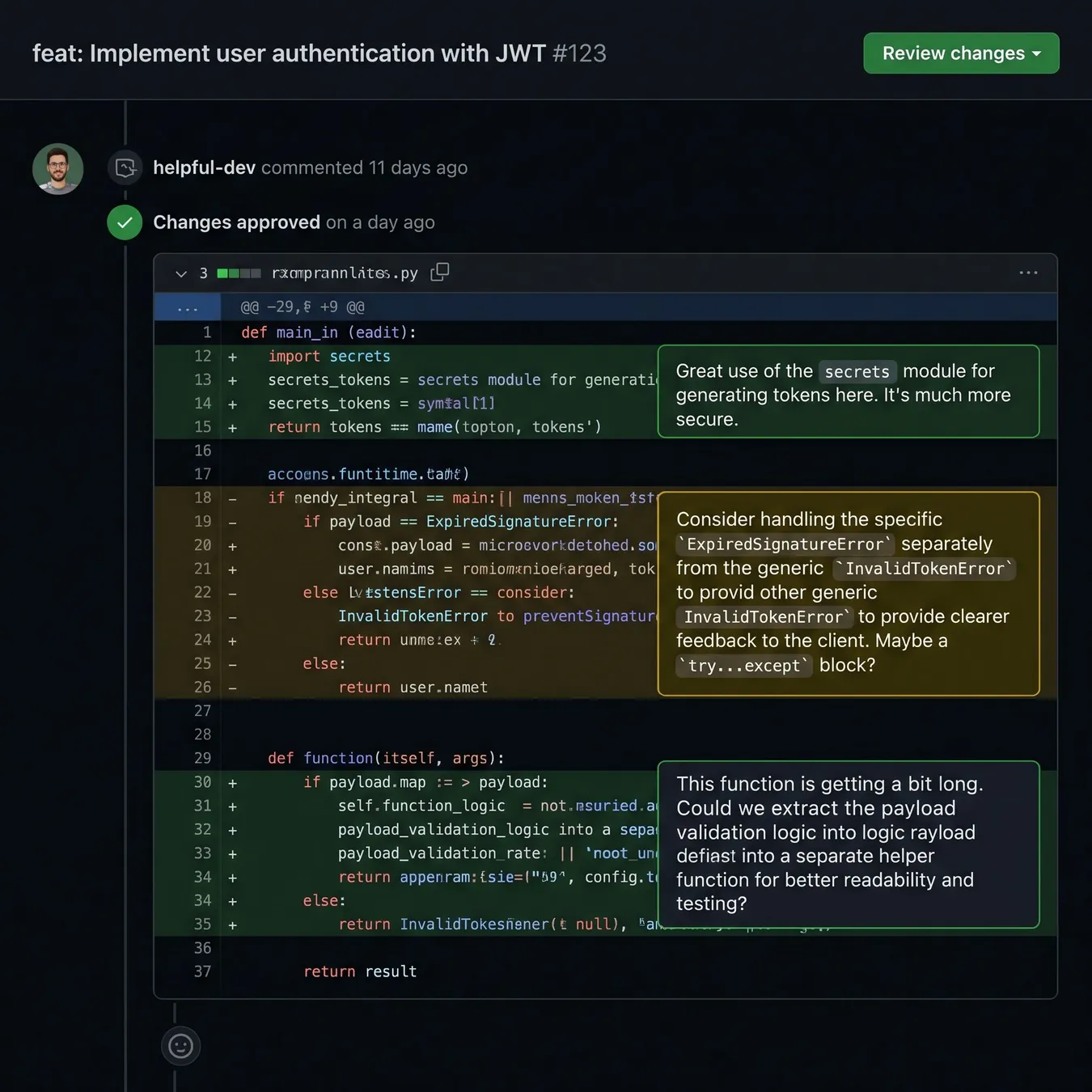
Healthy code review culture in action.
Technical Due Diligence Example: A Growth-Stage Audit
In a typical technical due diligence example, an auditor might spend three days reviewing the AWS environment and another week interviewing the CTO and lead engineers about architectural choices.
01 / 04
phase 01 / 04
Information Request
phase 02 / 04
Deep Dive Interviews
phase 03 / 04
Code & Infra Review
phase 04 / 04
Risk Reporting
How to Pass Technical Due Diligence
The best way to understand how to pass technical due diligence is to run a self-audit early. This is especially true during the mvp stage of startup when technical shortcuts are most common.
Document all architectural decisions
Keep an updated list of all SaaS tools
Automate your deployment process
Hide known security vulnerabilities
Ignore open-source license conflicts
Rely on a single developer for all knowledge
Scalability and Future-Proofing
Investors check what happens when your traffic doubles. They look for bottlenecks in the database, inefficient API calls, and monolithic structures that prevent horizontal scaling.
| Metric | Target for Audit | Red Flag |
|---|---|---|
| Uptime | 99.9%+ | Frequent unplanned outages |
| API Latency | < 200ms | Timeouts under load |
| Test Coverage | 70%+ | < 20% or no tests |
Intellectual Property and Licensing
You must prove that you own your code. This includes verifying that all contractors have signed IP assignments and that no 'copyleft' licenses (like GPL) are contaminating your proprietary software.
The Role of AI in Modern Due Diligence
In 2026, auditors are increasingly looking at how AI is integrated. They check for data leakage in LLM prompts and ensure that AI-generated code meets the same quality standards as human-written code.
Common Red Flags in Technical Audits
- Lack of a clear disaster recovery plan
- Manual database migrations
- Single point of failure in the engineering team
- Unpatched high-severity security vulnerabilities
- Inconsistent environment configurations
Preparing Your Data Room
Organize your technical documentation in a dedicated data room. This should include your roadmap, architecture diagrams, and a summary of your security posture.
Post-Audit Remediation
If the audit reveals gaps, don't panic. Investors often provide a 'remediation period' where you can fix high-priority issues before the deal closes.
Frequently Asked Questions
Bridging the Gap to Production Excellence
Navigating a technical audit is about more than just checking boxes; it is about demonstrating that your product is built on a foundation that can survive the real world.
At Studio 402, we help founders prepare for these high-stakes moments. Whether you need a pre-audit hardening of your infrastructure or a complete rescue of a fragile prototype, we provide the engineering depth to ensure you pass with confidence.
The best time to fix your architecture was six months ago. The second best time is before the due diligence auditor logs into your GitHub.
Studio 402 Engineering Team
Ready for Your Technical Audit?
Don't let technical debt kill your deal. Let's audit and harden your systems for venture-scale success.
Deep Dives & Related Resources
Keep reading
More in Technical Consulting & Venture Strategy
Key Takeaways for Founders
- 01
Start documenting your architecture today.
- 02
Prioritize security and compliance early in the build.
- 03
Be transparent about technical debt and your plan to fix it.
- 04
Ensure your team processes are repeatable and documented.
- 05
Use a third-party audit to validate your readiness.
Technical due diligence is an opportunity to prove your team's competence. By following this checklist, you can turn a stressful audit into a powerful signal of your company's maturity.
Trusted by venture-backed teams to secure over $500M in funding rounds.
Studio 402 Technical Advisory
- Fundraising
- M&A Readiness
- Architecture
- Security
- 2026 Updated
Infrastructure Checklist Details
When examining infrastructure, auditors look for 'Infrastructure as Code' (IaC) implementations. This ensures that environments are reproducible and not subject to manual configuration drift.
Data Privacy Compliance
Data privacy is no longer optional. Your audit will include a review of how you handle PII (Personally Identifiable Information) and whether your data retention policies are enforced.
Operational Resilience
Can your system survive a regional cloud outage? Resilience testing and multi-region failover strategies are high-value indicators of a production-ready system.
Open Source Management
Auditors use tools like Snyk or FOSSA to scan your dependencies. They are looking for vulnerabilities and restrictive licenses that could impact your IP value.
The Human Element
Finally, the audit evaluates the 'bus factor'—how much knowledge is trapped in the heads of a few key individuals. Documentation and cross-training are the only cures.