
Modernizing SAP Product Lifecycle Management (PLM) Systems
Legacy SAP PLM environments often become bottlenecks for engineering velocity due to rigid on-premise architectures and siloed data structures. Modernizing these systems is essential for teams moving toward an agile product lifecycle management plm approach.
40%
Average reduction in engineering cycle time after cloud modernization
Zero
Production downtime during phased migration windows
3x
Increase in cross-departmental data accessibility
The Challenges of Legacy SAP PLM Architectures
Many enterprises still rely on monolithic SAP installations that were customized decades ago. These systems struggle to integrate with modern CAD tools, AI-driven simulation software, and real-time supply chain data.
- High maintenance costs for on-premise server infrastructure
- Inflexible data models that prevent rapid product iteration
- Lack of native API support for modern cloud integrations
- Fragmented user experiences across different engineering modules
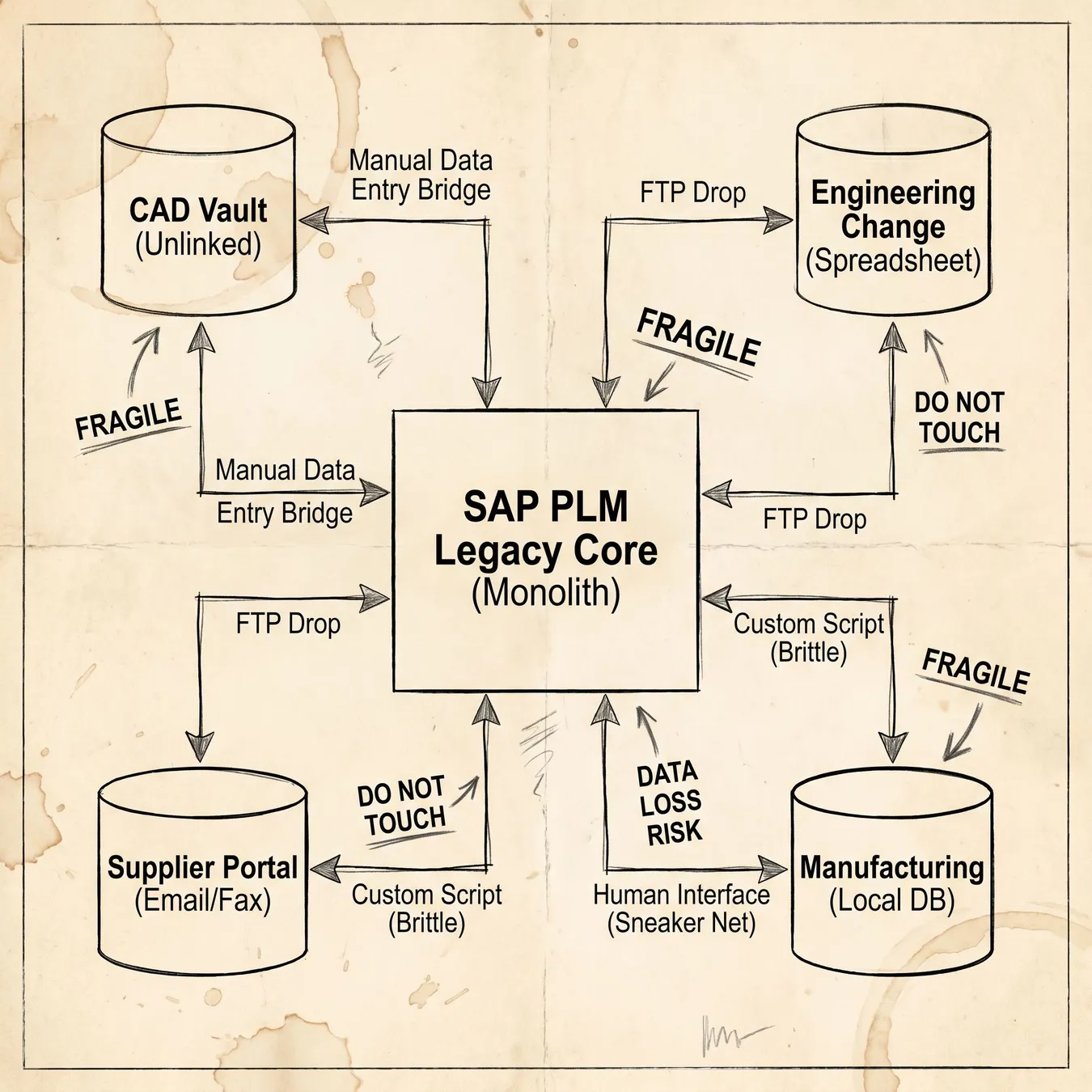
Visualizing the complexity of traditional on-premise PLM silos.
Developing a Legacy System Migration Strategy
A successful transition requires a comprehensive legacy system migration strategy that prioritizes business continuity. Engineering leaders must balance the need for new features with the stability of current production lines.
- 01
Audit existing SAP customizations and data dependencies
- 02
Define the target cloud-native architecture and integration points
- 03
Establish a phased migration roadmap to minimize risk
- 04
Execute data cleansing and validation protocols
Infrastructure Shifts: Legacy to Cloud Migration
Moving PLM workloads to the cloud is not just about hosting; it is about leveraging elastic compute and modern security protocols. A successful legacy to cloud migration ensures that engineering data is available globally without latency.
Info.
// Cloud-Native Advantage
Managing Data Integrity During Transition
The most significant risk in SAP modernization is the loss or corruption of historical engineering records. Implementing legacy data modernization techniques helps preserve the digital thread while moving to modern databases.
| Data Type | Legacy Format | Modern Target | Migration Priority |
|---|---|---|---|
| CAD Metadata | Proprietary Blob | JSON/NoSQL | High |
| BOM Structures | Relational Tables | Graph Database | Critical |
| Change Logs | Flat Files | Event Store | Medium |
Modernization Best Practices
Use a strangler pattern to migrate modules incrementally
Automate data validation at every step of the ETL process
Involve end-users early in the UI/UX redesign phase
Attempt a 'big bang' migration for the entire SAP suite
Ignore legacy API dependencies in third-party tools
Underestimate the time required for data cleansing
The Role of Microservices in PLM Modernization
Breaking down the SAP monolith into microservices allows teams to update specific PLM functions—like Bill of Materials (BOM) management or change control—without affecting the entire system.
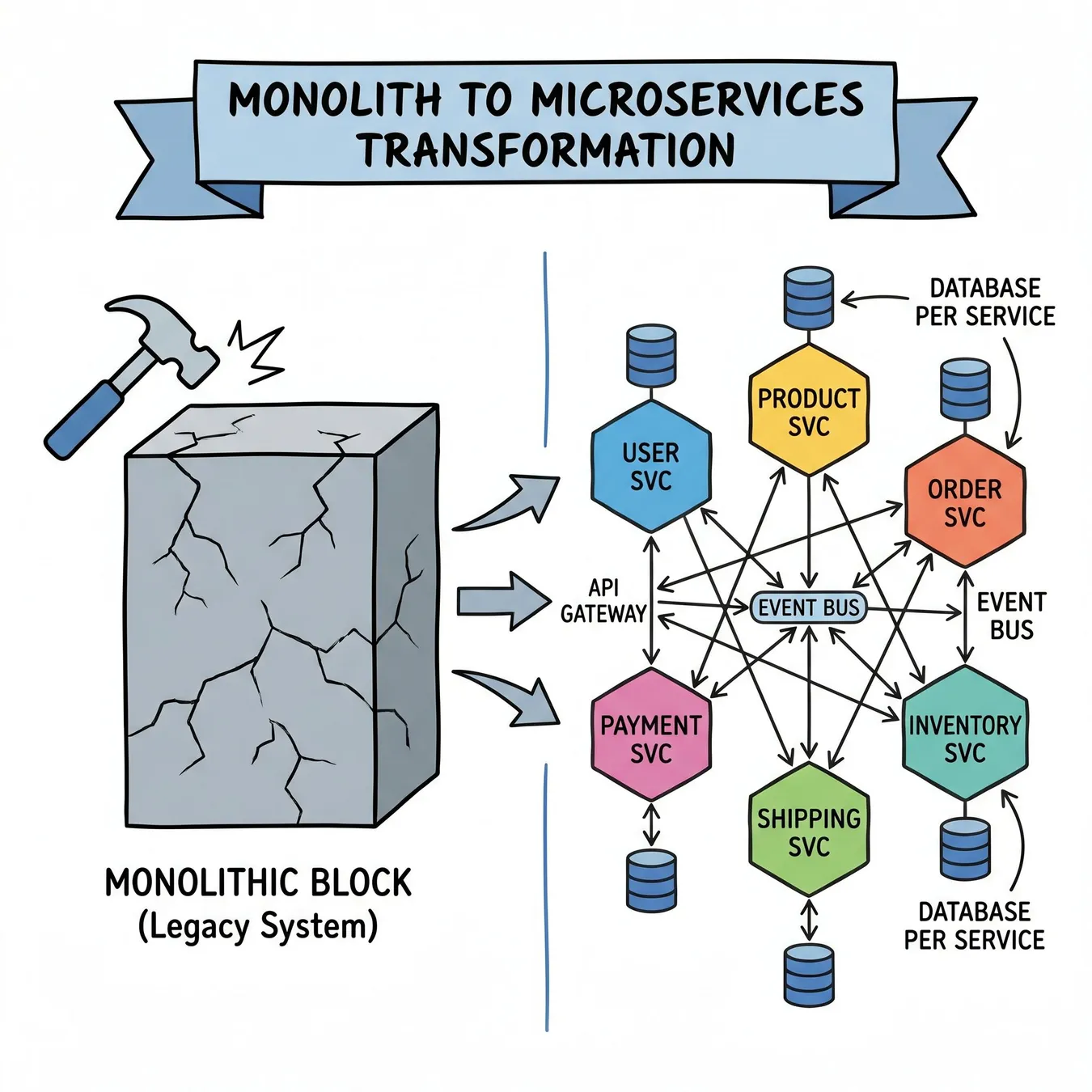
Decomposing the SAP monolith into agile services.
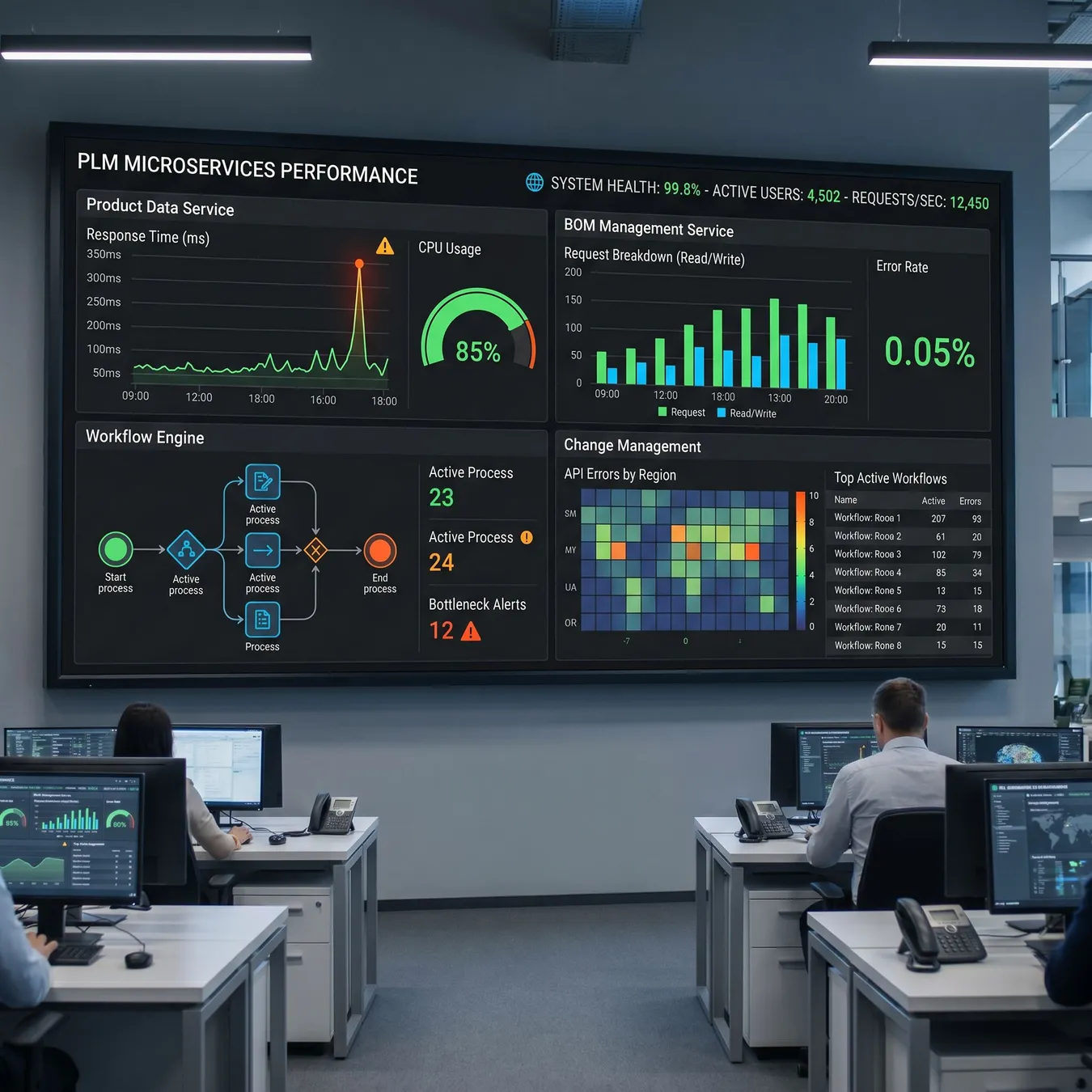
Monitoring individual service health post-migration.
Phased Migration Timeline
01 / 04
phase 01 / 04
Discovery & Audit
phase 02 / 04
Pilot Migration
phase 03 / 04
Core Data Transition
phase 04 / 04
Full Production Cutover
Integrating AI into Modernized PLM
Once SAP PLM is modernized and cloud-accessible, enterprises can leverage AI for predictive maintenance, automated part classification, and generative design workflows.
Tip.
// AI Readiness
Security and Compliance in the Cloud
Modernizing SAP requires a shift in security thinking. Moving from perimeter-based security to Zero Trust architectures ensures that intellectual property remains protected in a distributed environment.
Cost Considerations and ROI
While the upfront cost of modernization can be significant, the long-term ROI is driven by reduced infrastructure overhead and significantly faster time-to-market for new products.
Trade-off
3 pros · 3 cons
Pros
Lower long-term operational costs
Faster feature deployment cycles
Improved global collaboration
Cons
Significant initial engineering effort
Temporary dual-run costs
Required staff upskilling
User Adoption and Training
A modernized system is only effective if the engineering team uses it. Training programs should focus on the new collaborative features enabled by cloud-native PLM.
Future-Proofing Your PLM Environment
Modernization is not a one-time event. By adopting a cloud-native architecture, you build a foundation that can evolve as new technologies and engineering standards emerge.
Frequently Asked Questions
Bridging to Production-Grade Execution
Modernizing a legacy SAP environment is a high-stakes engineering challenge. At Studio 402, we specialize in rescuing complex systems and transitioning them into durable, cloud-native architectures.
Whether you are facing technical debt in your current PLM setup or need to build a new integration layer for AI-native workflows, our team provides the senior engineering depth required to ship without breaking production.
Next Steps for Engineering Leaders
Identify the most critical bottleneck in your current SAP PLM workflow
Review your current cloud readiness and infrastructure gaps
Schedule a technical audit of your legacy data structures
Define success metrics for the first phase of modernization
Explore More Resources
Modernize Your Engineering Systems
Stop letting legacy SAP bottlenecks slow down your product team. Let's build a scalable, cloud-native PLM foundation together.
Technical Consulting for Legacy Systems
Studio 402 provides the architecture review and execution support needed to turn fragile legacy setups into production-ready platforms. We speak the language of both legacy SAP and modern cloud engineering.
Trusted by growth-stage engineering teams to modernize mission-critical infrastructure.
Updated July 2026
Our Approach to System Rescue
We don't just provide slides; we write the code and build the pipelines that move your business forward. From API development to cloud infrastructure, we are your senior build partner.
- SAP Modernization
- Cloud-Native
- Product Engineering
- Legacy Rescue
Ready to Scale?
If your current PLM is holding back your roadmap, it's time for a change. Reach out to discuss your specific environment and modernization goals.
The goal of modernization isn't just to move to the cloud; it's to unlock the speed and innovation that legacy systems have been suppressing for years.
Studio 402 Engineering Team
Related Categories
Finalizing your modernization roadmap requires a partner who understands the nuances of SAP data and the demands of modern product engineering. Contact us today at studio@402.studio.