
Mainframe to Google Cloud: Modernization Strategies
Migrating legacy mainframe workloads to Google Cloud Platform (GCP) is no longer just about cost reduction; it is about unlocking the agility required for modern enterprise operations. Transitioning from monolithic COBOL or PL/I systems to cloud-native architectures allows for better data accessibility and faster release cycles.
70%
Reduction in operational overhead
5x
Faster deployment frequency
99.99%
Target availability on GCP
Assessing Your Mainframe Environment for Migration
Before moving a single line of code, you must perform a comprehensive audit of your existing mainframe footprint. This involves mapping dependencies between CICS transactions, batch jobs, and DB2 databases to ensure no critical business logic is lost during the transition.
Inventory all COBOL, JCL, and Assembler codebases
Map data dependencies and EBCDIC to ASCII requirements
Identify high-priority 'low-hanging fruit' workloads
Audit security and compliance (HIPAA, PCI-DSS) constraints
Common Migration Patterns: Rehost, Replatform, or Refactor
The path you choose depends on your timeline and technical debt. While rehosting (emulation) is the fastest, refactoring into microservices provides the most long-term value. Effective cloud infrastructure planning and design is essential to determine which pattern fits each specific workload.
| Strategy | Speed | Risk | Cloud-Native Value |
|---|---|---|---|
| Rehosting | High | Low | Low |
| Replatforming | Medium | Medium | Medium |
| Refactoring | Low | High | High |
Modernizing Data: Moving from DB2 to Cloud Spanner
Data is the gravity of the mainframe. Moving large-scale relational data from DB2 or IMS to Google Cloud Spanner or BigQuery requires a robust synchronization strategy to prevent downtime during the cutover phase.
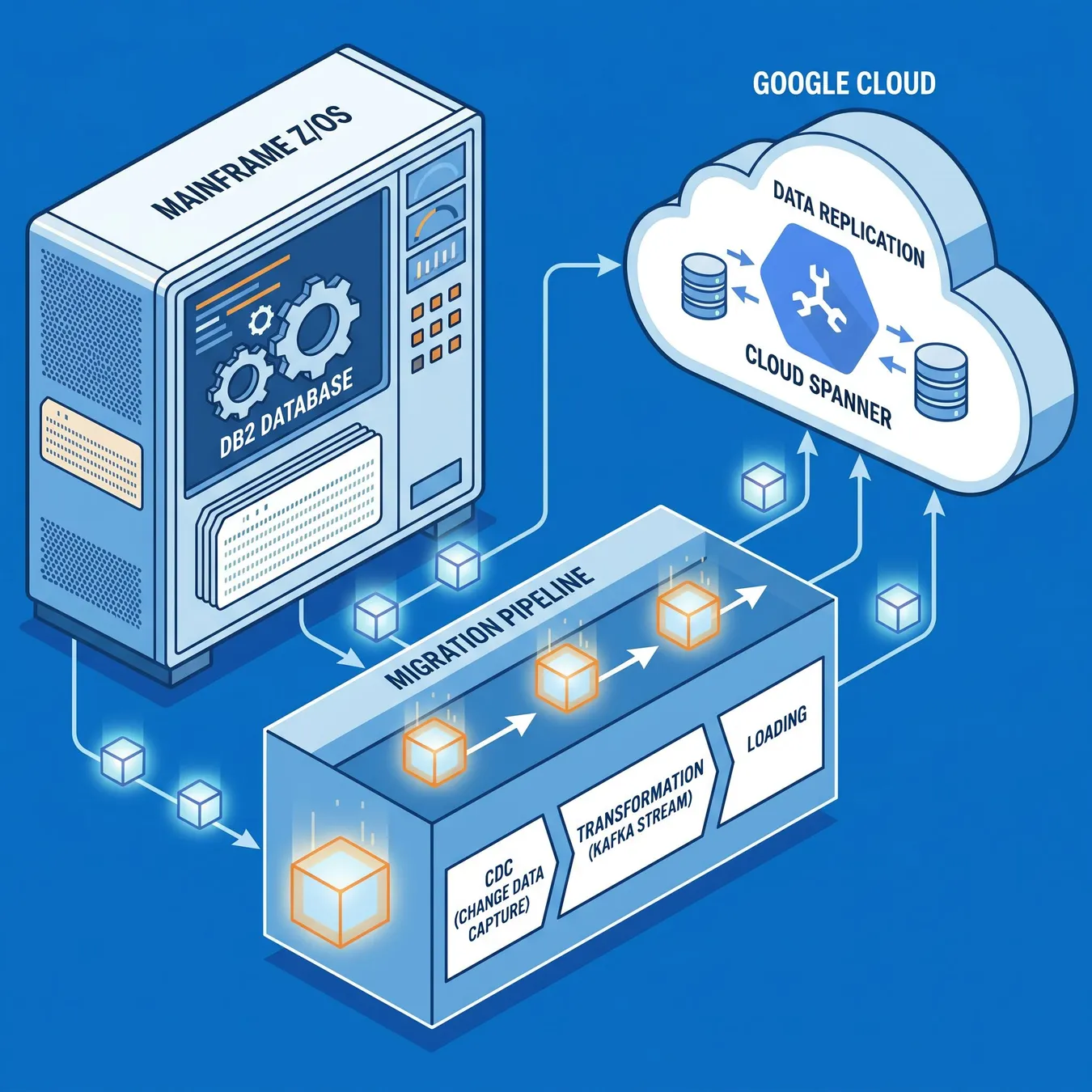
Architectural overview of mainframe data migration to GCP.
Step-by-Step Migration Process
01 / 05
phase 01 / 05
Discovery & Analysis
phase 02 / 05
Landing Zone Setup
phase 03 / 05
Pilot Migration
phase 04 / 05
Full Scale Execution
phase 05 / 05
Optimization
Architecting for Scalability on GCP
Once on GCP, the goal is to move away from the 'big iron' mentality. Adopting a monolithic to microservices roadmap allows teams to deploy independent services without risking the entire system's stability.
Using GKE for Mainframe Containerization
Google Kubernetes Engine (GKE) provides the ideal runtime for containerized mainframe applications. By wrapping legacy logic in containers, you gain the benefits of auto-scaling and self-healing infrastructure.
Tip.
// Pro Tip
Security and Compliance in the Cloud
Mainframes are known for their security. Replicating this on GCP requires a Zero Trust approach, utilizing tools like VPC Service Controls and Cloud Identity-Aware Proxy (IAP) to protect sensitive data.
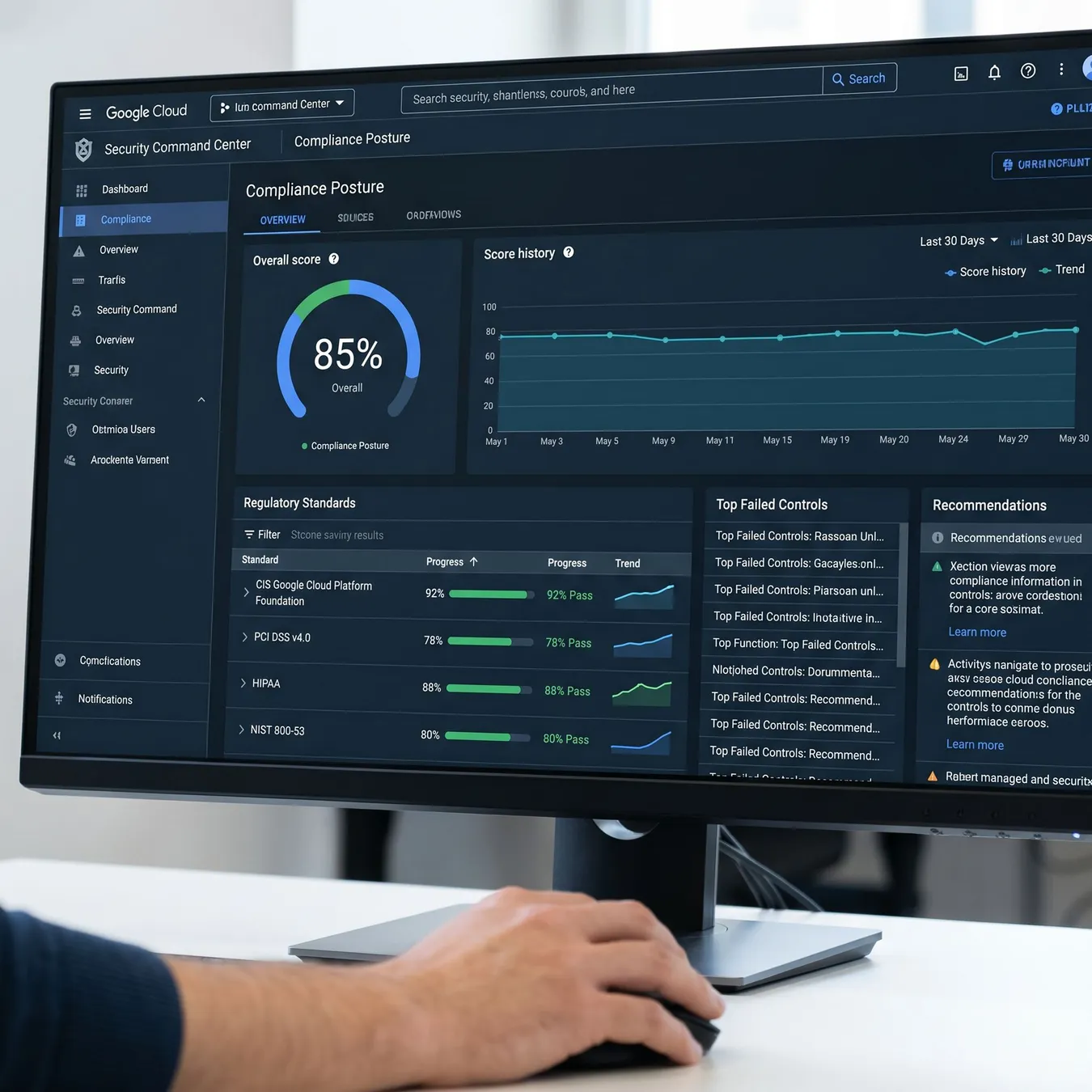
Monitoring security compliance during and after migration.
Managing Operational Risk During Cutover
The 'Big Bang' approach to migration is often too risky for mainframe environments. Instead, use a phased approach with parallel processing to ensure the new GCP environment produces identical results to the legacy system.
Run parallel tests for at least one full business cycle
Automate data validation between source and target
Maintain a clear rollback plan for every migration wave
Attempt to migrate the entire mainframe in one weekend
Ignore the latency between on-prem and cloud during hybrid phases
Hard-code IP addresses in the new cloud environment
Infrastructure as Code for Legacy Systems
Modernizing the infrastructure means adopting infrastructure deployment automation. Using Terraform or Config Connector allows you to manage your GCP resources with the same rigor as your application code.
Mainframe Migration FAQ
The Role of AI in Mainframe Modernization
Generative AI is revolutionizing how we handle legacy code. LLMs can now assist in documenting undocumented COBOL, generating unit tests for legacy logic, and even suggesting refactored code structures in modern languages.

AI-assisted code analysis.
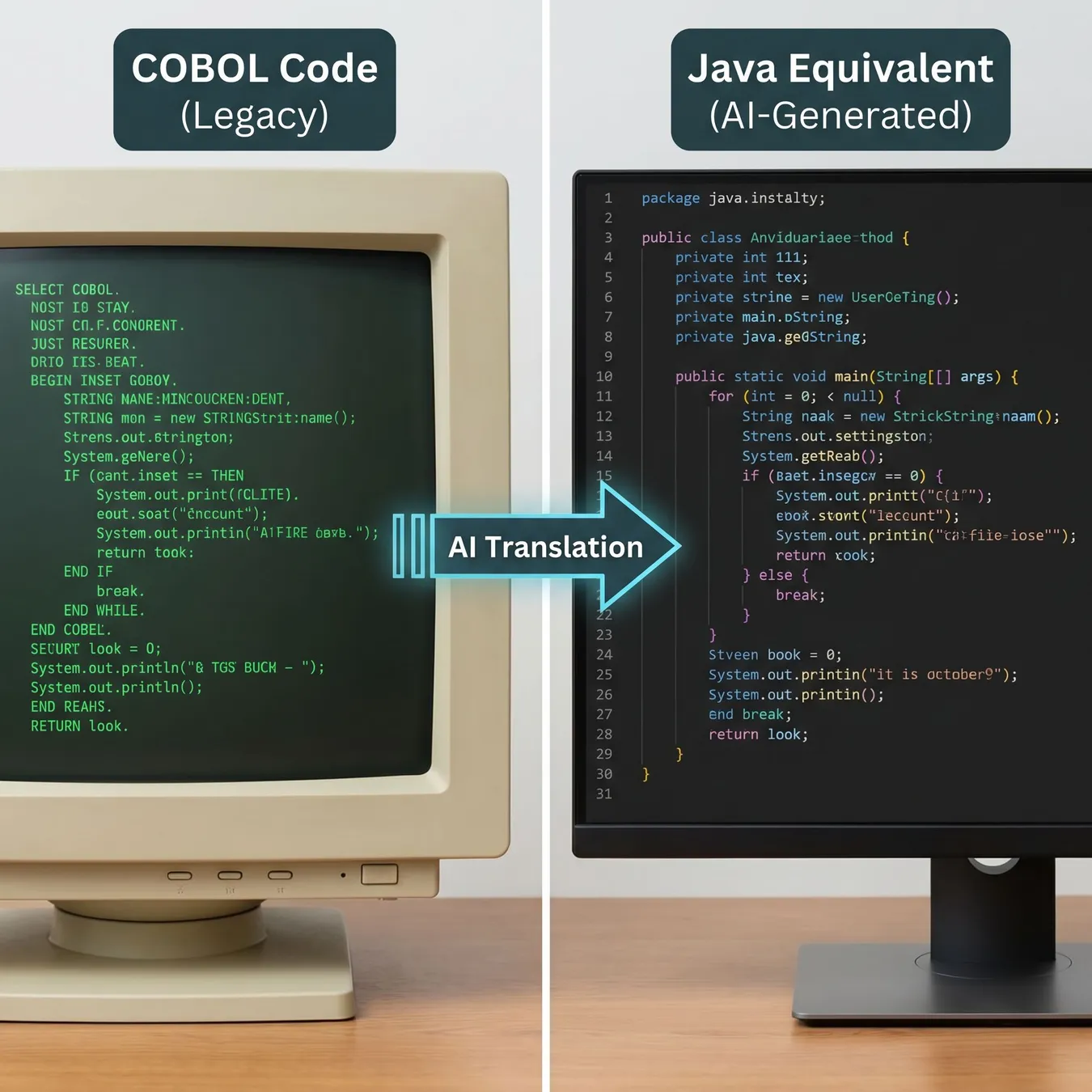
Automated code translation.
Cost Management on Google Cloud
Moving to the cloud shifts costs from CapEx to OpEx. It is vital to implement FinOps practices early to monitor consumption and ensure that the elastic nature of GCP is working in your favor.
- FinOps
- Cost Optimization
- GCP Billing
- Resource Tagging
Real-World Migration Success
The transition from our legacy mainframe to GCP allowed us to process transactions in real-time for the first time in our company's history.
Sarah Jenkins · CTO of Global Financial
Choosing the Right Migration Partner
A mainframe migration is a high-stakes engineering challenge. You need a partner who understands both the 'old world' of JCL and batch jobs and the 'new world' of Kubernetes and serverless functions.
How Studio 402 Rescues Legacy Migrations
At Studio 402, we specialize in taking complex, high-risk legacy systems and turning them into durable cloud-native platforms. Whether your migration has stalled or you are just beginning the journey, we provide the senior engineering depth required to ship production-ready outcomes.
- Deep audit of legacy codebases and infrastructure
- Custom migration toolchains for data and logic
- GKE and Cloud Spanner architecture design
- Post-migration performance hardening and security
Next Steps for Your GCP Journey
Modernization is a continuous process. Once your core workloads are on Google Cloud, you can begin to leverage advanced AI and data analytics features that were previously impossible on the mainframe.
Modernize Your Infrastructure Today
Ready to move your legacy mainframe workloads to a scalable GCP environment? Let's build a migration plan that works.
Related Resources
Explore more technical guides on cloud operations and legacy system management.
Trusted by enterprise leaders for complex cloud migrations.
Studio 402 Engineering Excellence
Continuous Modernization
The end of the migration is just the beginning of your cloud-native evolution. Stay updated with the latest in GCP DevOps and infrastructure automation.
- 01
Establish a Cloud Center of Excellence
- 02
Implement continuous CI/CD pipelines
- 03
Monitor and iterate on cloud costs
- 04
Expand AI and ML capabilities
Technical Support
For ongoing support and architectural reviews, our team is available to ensure your systems remain performant and secure.
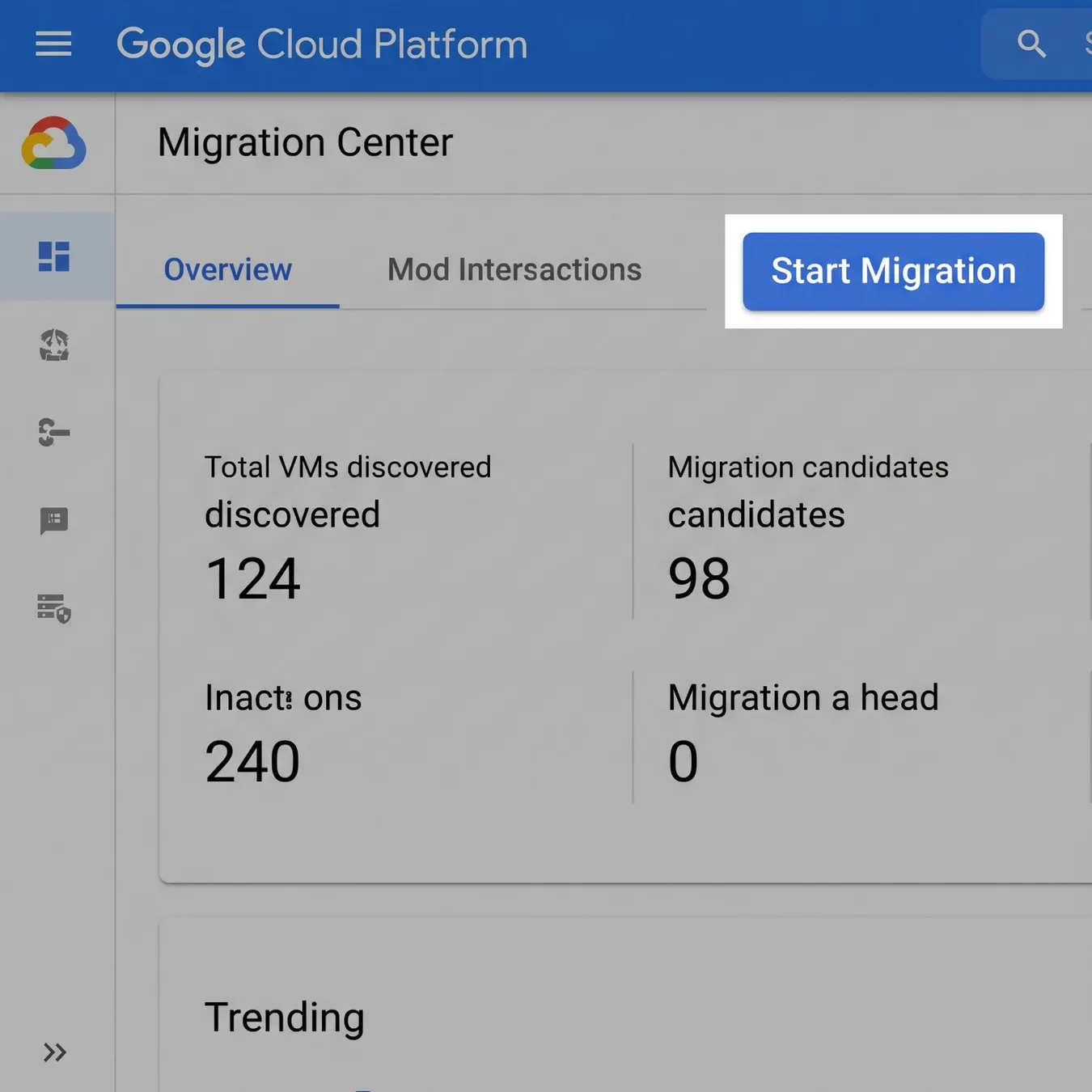
Visualizing the GCP migration experience.
Final Considerations
Mainframe modernization is a journey of transformation. By following these strategies, you can ensure a successful transition to Google Cloud.