
Mainframe to Cloud: Legacy Data Migration Guide
Migrating legacy mainframe data to the cloud is a high-stakes operation that requires more than just moving bits. It involves a fundamental shift in how data is stored, accessed, and governed to ensure long-term scalability.
Engineering leaders must prioritize a strategy for legacy data modernization that addresses schema conversion and data integrity. This ensures that modern cloud-native databases can handle the throughput required by today's applications.
70%
Corporate data still on mainframes
50%
Reduction in operational costs post-migration
Zero
Acceptable downtime for mission-critical systems
Understanding the Risks of Migration Delay
The longer an organization waits to modernize, the more they are exposed to the risks of legacy systems, including security vulnerabilities and the lack of skilled COBOL developers to maintain the environment.
- Increasing maintenance costs for aging hardware
- Inability to integrate with modern AI and ML tools
- Fragile data pipelines that break during peak loads
- Compliance gaps in outdated security protocols
Core Strategies for Mainframe Data Extraction
Successful extraction requires choosing between Change Data Capture (CDC) and bulk ETL processes. CDC is often preferred for maintaining real-time synchronization during the transition phase.
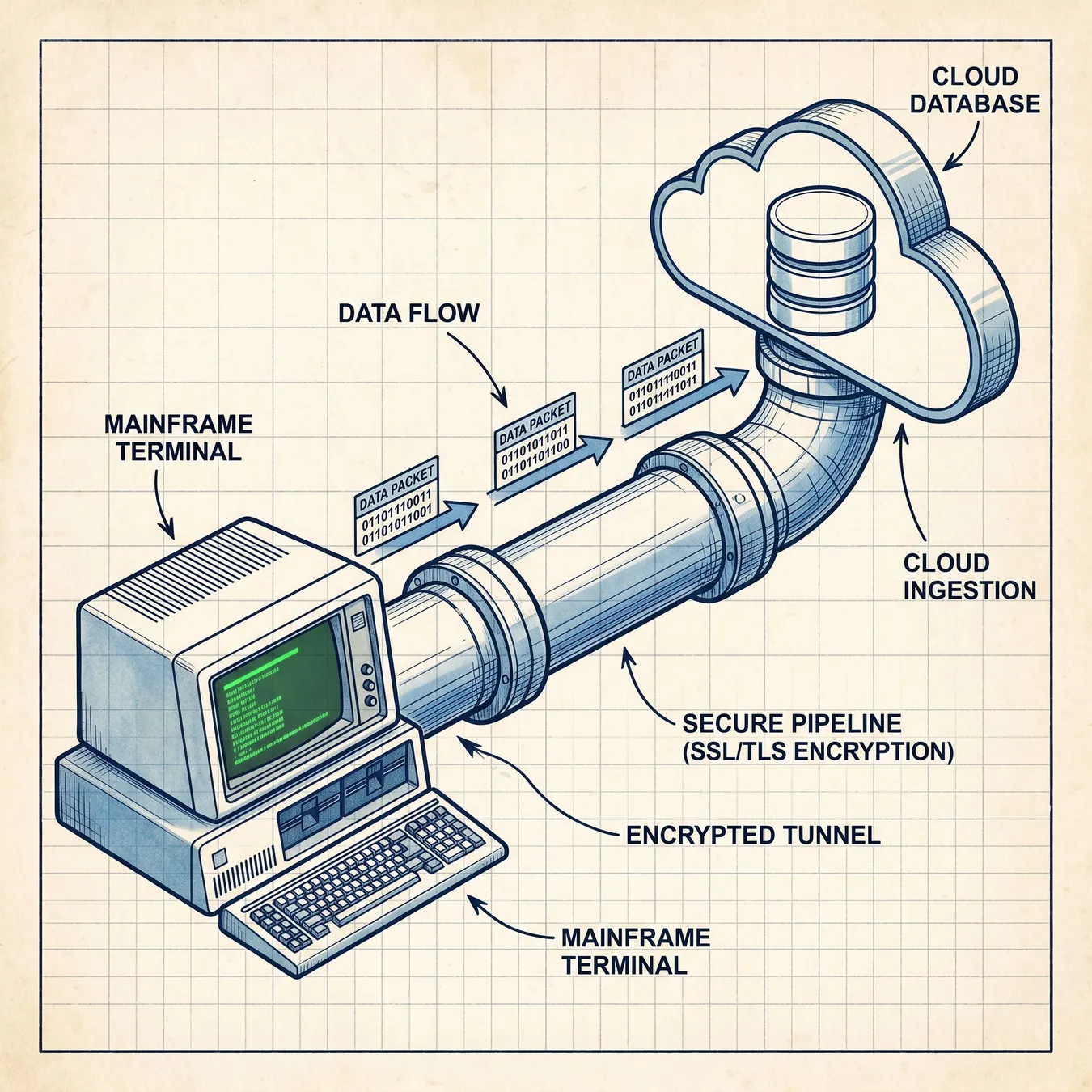
Visualizing the flow from legacy EBCDIC formats to modern UTF-8 cloud storage.
Mapping Monolithic Data to Microservices
Mainframe data is typically stored in large, flat files or hierarchical databases. To move to the cloud, you need a monolithic to microservices roadmap that breaks these structures into domain-driven datasets.
Trade-off
3 pros · 3 cons
Pros
Improved data isolation and security
Independent scaling of data services
Faster iteration on individual features
Cons
Increased complexity in data consistency
Higher initial architectural overhead
Need for robust distributed tracing
Solving Database Performance Bottlenecks
Initial cloud deployments often face database performance bottlenecks when legacy queries are ported without optimization. Proper indexing and caching strategies are essential for cloud-native performance.
Tip.
// Optimization Tip
The Migration Lifecycle: A Step-by-Step Approach
01 / 05
phase 01 / 05
Discovery & Audit
phase 02 / 05
Schema Mapping
phase 03 / 05
Pilot Migration
phase 04 / 05
Parallel Run
phase 05 / 05
Final Cutover
Data Transformation and Cleansing
Legacy data often contains decades of inconsistencies. Migration is the perfect opportunity to implement automated cleansing routines that improve data quality for downstream AI applications.
Automate data validation at every stage
Use immutable backups for the source data
Involve domain experts in schema mapping
Ignore data latency between on-prem and cloud
Migrate 'dirty' data without cleansing
Underestimate the time for security audits
Ensuring Security and Compliance
Moving data out of the mainframe perimeter requires strict encryption in transit and at rest. Cloud-native IAM roles should replace legacy RACF permissions to maintain a zero-trust posture.

Monitoring encryption health during transfer.
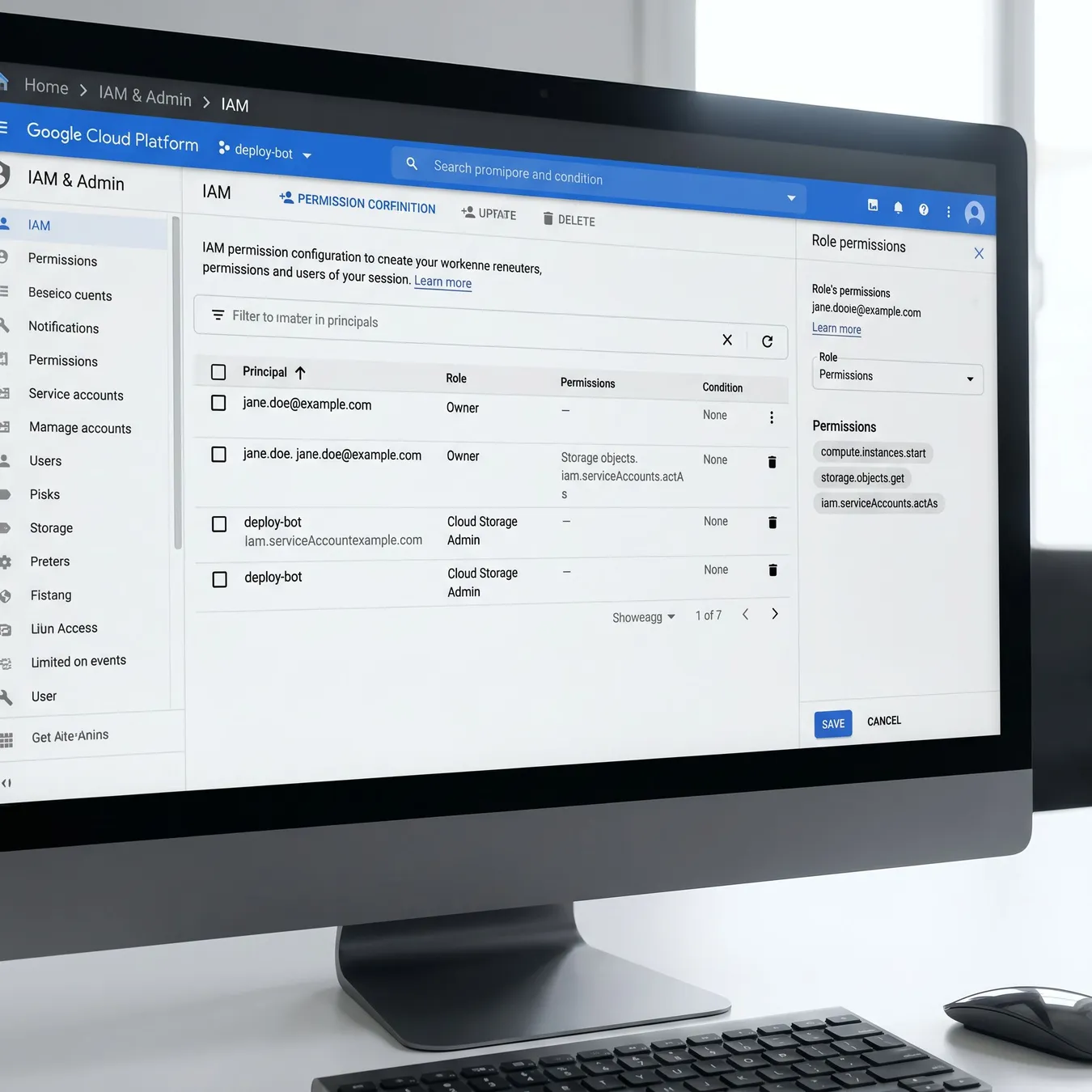
Configuring role-based access for the new cloud database.
Handling Operational Downtime
The goal of any strategic migration is near-zero downtime. This is achieved through blue-green deployment patterns where the new cloud environment is fully hydrated before traffic is switched.
Common Pitfalls in Mainframe Migration
Verify EBCDIC to ASCII character conversion logic
Test network bandwidth for massive bulk transfers
Validate all stored procedures for cloud compatibility
Audit third-party integrations for data dependencies
Post-Migration: Monitoring and Scaling
Once the data is in the cloud, the focus shifts to observability. Use distributed tracing to monitor how applications interact with the new data layer and identify any latent performance issues.
The Role of Automation in Modernization
Manual migration is prone to human error. Leveraging automated migration tools and CI/CD pipelines ensures that the process is repeatable and auditable across different environments.
Cost Management During Transition
| Phase | Cost Driver | Optimization Strategy |
|---|---|---|
| Extraction | Mainframe MIPS | Off-peak batch processing |
| Transfer | Data Egress Fees | Dedicated cloud interconnects |
| Storage | Cloud DB Instances | Auto-scaling and tiered storage |
Building a Modern Data Culture
Modernization is as much about people as it is about technology. Training your engineering team on cloud-native data patterns is essential for the long-term success of the migration project.
Future-Proofing with AI and Real-Time Analytics
With data in the cloud, you can finally unlock the power of real-time analytics. This allows for faster business decision-making and the integration of AI agents into your core workflows.
Case Study: Scaling Legacy Data
The migration wasn't just about moving data; it was about unlocking our ability to ship features twice as fast without the fear of breaking the mainframe.
Sarah Chen · VP of Engineering
How Studio 402 Accelerates Modernization
At Studio 402, we specialize in rescuing complex legacy systems and moving them to production-grade cloud infrastructure. We don't just build prototypes; we build durable systems that scale.
Whether you are dealing with technical debt from a vibe-coded MVP or a decades-old mainframe, our team provides the architectural depth needed to ensure a safe and successful transition.
Frequently Asked Questions
Next Steps for Engineering Leaders
The path from mainframe to cloud is complex, but it is the only way to unlock modern product velocity. Start with a comprehensive audit of your data dependencies today.
Ready to Modernize Your Legacy Data?
Stop letting legacy debt hold back your product growth. Let's build a migration strategy that works.
- Enterprise
- Cloud Native
- Data Strategy
- Modernization
Trusted by growth-stage teams to harden and scale legacy infrastructure.
Studio 402: Production-ready engineering.
Our approach combines deep architectural consulting with hands-on execution. We ensure your data migration isn't just a move, but a foundation for the next decade of growth.
Technical Due Diligence
Before any code is moved, we perform a deep-dive audit of your existing stack to identify hidden risks and opportunities for immediate performance gains.
Custom Migration Tooling
We often build custom internal tools to automate the mapping and validation process, reducing the manual overhead and increasing the reliability of the migration.
Contact us at studio@402.studio to discuss your specific migration challenges and how we can help you reach production-grade cloud stability.